
Every industrial operation uses water in some way. Cooling equipment, cleaning components, manufacturing products, or transporting materials all create industrial wastewater that carries contaminants. Without proper treatment, these substances can enter waterways through discharge, affecting both the surrounding environment and nearby communities. Facilities that understand the value of responsible wastewater management protect their operations while also supporting environmental stability.
That is where industrial wastewater treatment systems come in. These systems help facilities remove contaminants from wastewater before release or reuse. When designed properly, they support regulatory compliance, improve operational reliability, and reduce environmental impact. In the sections ahead, we will walk through how wastewater treatment works in industrial settings, the technologies commonly used, and practical strategies facilities use to manage wastewater more efficiently.
What Industrial Wastewater Contains and Why Treatment Matters
Every industrial process generates a unique wastewater stream, and the composition of that water often reflects the activities inside the plant. In most facilities, industrial wastewater contains a mix of contaminants such as organic compounds, inorganic compounds, and traces of heavy metals released during production, cleaning, or cooling operations. Many systems also carry organic matter, oils, and a wide range of suspended solids that increase total suspended solids levels in the water.
These substances can cause serious environmental impact when operators release untreated water into natural systems. High solids, chemicals, and metals can harm aquatic life and threaten public health if they reach drinking water sources. Effective treatment helps facilities control these risks before discharge, ensuring wastewater leaves the plant in a safer and more responsible condition.
Key Stages of Industrial Wastewater Treatment
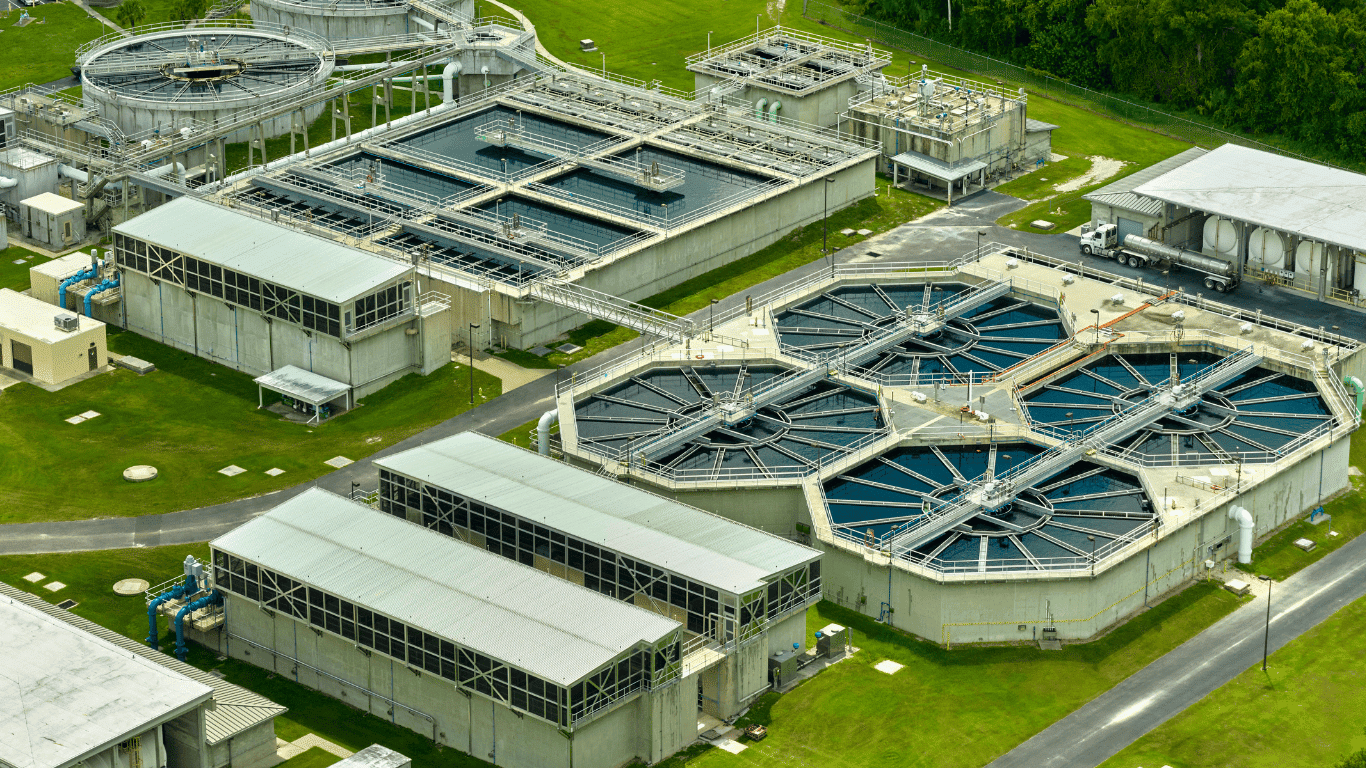
Industrial wastewater treatment typically follows a series of structured wastewater treatment processes designed to remove contaminants effectively. The first step is primary treatment, which focuses on physical separation. In this stage, large debris, oils, and organic materials settle out or are skimmed from the water. This process reduces the load for downstream treatment and prepares the wastewater for more detailed purification. Simple screening and sedimentation tanks are often used to treat wastewater at this stage.
Next comes secondary treatment, which relies on biological processes to break down remaining organic matter. Microorganisms consume biodegradable compounds, converting them into less harmful byproducts. Maintaining proper dissolved oxygen levels is critical here, as it supports the microbes’ activity. This stage significantly reduces pollutants and prepares the water for final polishing.
Tertiary treatment ensures adequate disinfection and the removal of any remaining solids or chemicals. Techniques such as filtration, chemical oxidation, or ultraviolet treatment refine the water to produce high-quality treated water ready for discharge or reuse. Together, these three stages create an efficient and reliable framework for managing industrial wastewater.
Common Technologies Used in Industrial Wastewater Treatment Systems
Modern industrial wastewater treatment systems use a combination of treatment technologies to handle the wide variety of contaminants found in industrial facilities. One of the most common methods is filtration, which removes solids and suspended particles from the water. Simple sand filters or multi-media filters often handle larger particles, while finer filtration stages target smaller solids that could affect downstream equipment or water quality.
Another widely used approach is membrane filtration. These membrane filtration technologies use semipermeable membranes to separate contaminants at the molecular level, including organic compounds, inorganic compounds, and total dissolved solids. Membrane systems are particularly efficient for producing high-quality treated water, and they can be combined with reverse osmosis to further reduce contaminants for reuse or safe discharge. For more on membrane systems, see ProChem’s membrane filtration solutions.
Chemical methods also play a role in modern treatment systems. Chemical treatment and chemical oxidation help remove pollutants that physical or biological processes cannot fully address, including trace heavy metals or stubborn organic compounds. Combining these technologies ensures an efficient system that meets environmental standards while supporting water reuse and operational reliability.
Filtration and Solid Removal in Wastewater Treatment
Filtration is a critical step in many industrial wastewater treatment systems because it physically removes particles that can harm equipment or reduce water quality. Sand filters are commonly used to capture larger suspended solids, while more advanced filtration stages target finer particles that remain in the feed water or process water. Proper filtration helps lower total dissolved solids and ensures that downstream systems, like biological or chemical treatment units, operate efficiently.
Operators must also consider water flows and water chemistry when designing a filtration system. The type of contaminants, particle size distribution, and flow rates determine the best combination of filters for a facility. For industrial facilities looking to optimize this step, well-designed industrial water filtration systems ensure that suspended solids are effectively removed, protect equipment, and improve overall treatment efficiency.
Water Reuse and Recycling Opportunities
With increasing water scarcity and environmental regulations, industrial wastewater recycling has become a key strategy for modern facilities. Treated water can be safely reused in industrial applications, reducing demand for fresh water and minimizing the environmental impact of facility operations. Systems designed for water reuse capture high quality effluent from treatment processes and redirect it as process water for cooling, cleaning, or other operational needs.
Implementing water recycling not only supports sustainability but also helps facilities meet regulatory compliance requirements. Operators often combine biological, chemical, and physical treatment methods to ensure the treated water meets strict quality standards. Facilities exploring this approach can benefit from proven water recycling systems for industrial facilities that optimize water reuse, reduce operational costs, and safeguard the environment.
Choosing the Right Wastewater Treatment Solution for Your Facility
Selecting the right treatment solutions starts with understanding your facility’s wastewater management goals and treatment needs. Each industrial facility produces a unique mix of contaminants, flow rates, and water chemistry, so what works for one operation may not be the best solution for another. Teams often begin with pilot testing or small-scale trials to see how a system performs under real conditions, helping identify the most effective combination of treatment technologies.
Operators should also consider regulatory standards and local regulations when designing a system. A treatment solution that meets discharge requirements while maintaining operational efficiency ensures the facility runs smoothly without unexpected downtime or compliance risks. Watching how the system operates in day-to-day conditions allows facilities to make adjustments and select equipment that balances performance, cost, and environmental responsibility.
Supporting Wastewater Treatment Performance with the Right Expertise
Even the most advanced industrial wastewater treatment systems perform best when paired with the right expertise. Understanding how different treatment technologies interact, monitoring water quality, and adjusting operations based on real-time conditions ensures a system remains efficient and reliable. Facilities that invest in expert guidance often prevent common issues, reduce maintenance needs, and extend the life of their treatment systems.
Proper oversight also protects the environment by making sure treated water meets quality standards before discharge. Teams looking to optimize performance and compliance can benefit from partnering with specialists who understand both the technology and the operational challenges.
Looking to streamline operations and maintain compliance? Let ProChem help you fine-tune your industrial wastewater treatment system for maximum efficiency and consistent performance.
