
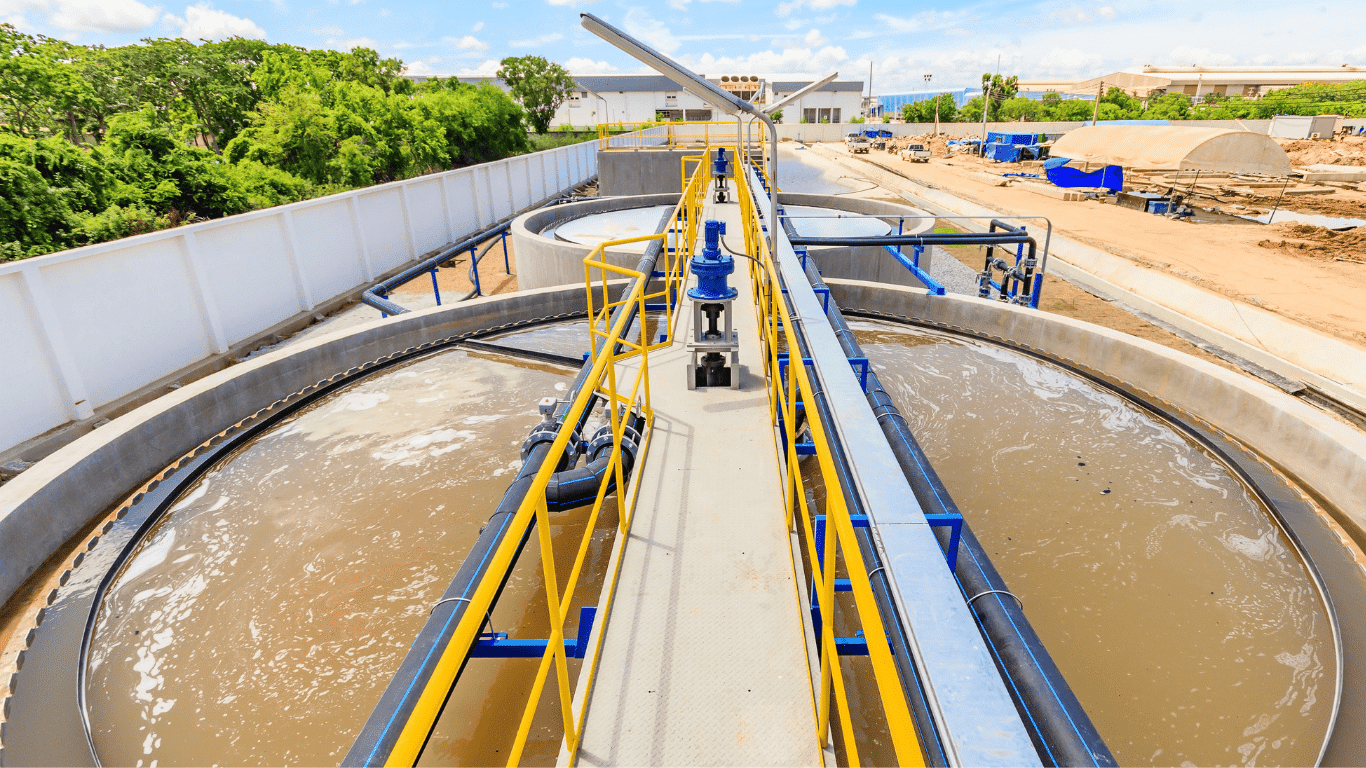
Landfill water treatment plays a critical role in managing complex landfill effluent that continuously forms as solid waste breaks down and interacts with rainfall and internal site conditions. This process handles highly variable wastewater streams, especially landfill leachate, which contains a mix of dissolved organics, ammonia, salts, heavy metals, and other contaminants that can quickly impact water quality if left unmanaged.
For landfill operators, maintaining reliable treatment is not only about controlling wastewater discharge but also about protecting surrounding groundwater and surface water from negative environmental impact. Effective landfill water treatment ensures that treatment systems stay stable under fluctuating loads, support regulatory compliance, and maintain consistent operational performance across the entire landfill lifecycle.
Understanding Landfill Leachate and Waste Streams
Landfill leachate forms as rainwater, moisture from solid waste, and internal decomposition processes move through a landfill. As this liquid passes through layers of solid waste, it creates a concentrated landfill wastewater stream known as landfill leachate. This waste stream is collected through engineered leachate collection systems designed to control flow and prevent uncontrolled migration into surrounding areas. Within landfill operations, managing this liquid is essential because it carries a complex mix of contaminants, including ammonia, heavy metals, organics, nutrients, and dissolved salts. Without proper control, these pollutants can significantly increase environmental impact and contribute to long-term negative environmental impact on surrounding ecosystems.
Effective landfill leachate treatment requires a clear understanding of how these waste streams behave under varying site conditions. Leachate water treatment becomes more challenging as landfill age, weather patterns, and waste composition change over time, influencing contaminant strength and variability. If not properly treated, landfill leachate can threaten groundwater and surface water quality, creating serious compliance and environmental risks for operators. Advanced treatment strategies help stabilize these fluctuations and protect downstream systems. Many facilities rely on engineered membrane systems to improve separation efficiency and support consistent landfill leachate treatment performance across diverse operating conditions.
Key Treatment Challenges in Landfill Systems
Landfill water treatment presents ongoing challenges because landfill leachate is highly variable and difficult to stabilize. As solid waste continues to break down, landfill leachate can shift in strength and composition, often showing high levels of chemical oxygen demand and biochemical oxygen demand alongside elevated total suspended solids. At the same time, landfill wastewater typically contains fluctuating concentrations of ammonia, metals, compounds, total dissolved solids, and salinity, all of which complicate consistent leachate treatment performance. These variations make it difficult for landfill operators to maintain steady treatment outcomes, especially when influent quality changes daily or seasonally across active landfill sites.
From an operational standpoint, landfill leachate treatment must consistently meet strict regulatory compliance requirements and tight effluent limits, even under unstable conditions. Because landfill wastewater is heavily regulated, any deviation can increase disposal costs and overall operational costs, especially when additional treatment or hauling is required. These challenges are compounded by rising landfill management demands, where waste characteristics directly influence treatment system load and efficiency. For many facilities, managing landfill leachate is not just a technical issue but a long-term cost and compliance balancing act that impacts both environmental performance and overall landfill operations.
Treatment Technologies for Landfill Leachate
Landfill water treatment relies on a combination of physical, chemical, and advanced separation technologies to manage complex landfill leachate streams. A typical treatment process often begins with chemical treatment methods that target unstable compounds, reduce contaminants, and condition the wastewater for downstream stages. These methods support improved efficiency by lowering solids, heavy metals, and organic load before more advanced systems are applied. Because leachate treatment conditions can shift quickly, operators often design flexible process configurations that can adapt to varying influent quality while maintaining stable performance across the full treatment system.
Membrane-based technologies play a central role in leachate water treatment, especially reverse osmosis systems that use osmosis principles to separate dissolved salts, metals, and other fine contaminants from water. These membranes are highly effective in improving water quality and supporting consistent wastewater treatment outcomes, particularly where strict discharge requirements apply. In many landfill applications, membranes are paired with evaporation technology to further concentrate waste streams and reduce overall liquid discharge volumes, improving system efficiency and control.
For facilities targeting advanced sustainability goals, zero liquid discharge (ZLD) systems combine evaporation and membrane processes to eliminate liquid discharge entirely. This approach allows landfill operators to recover and reuse treated water while minimizing environmental impact and reducing reliance on external disposal options. In many landfill water treatment strategies, ZLD systems help stabilize operational performance by managing high-strength landfill leachate and supporting long-term compliance. You can explore advanced system configurations here: reverse osmosis systems and zero liquid discharge solutions.
ProChem Integrated Landfill Water Treatment Solutions
Landfill water treatment requires more than standalone equipment, it demands fully integrated systems that can adapt to fluctuating landfill leachate characteristics. ProChem works closely with landfill operators to design landfill leachate treatment strategies that address complex landfill wastewater streams, ensuring stable performance across varying loads. Each system is engineered around real operating conditions, combining treatment process design, control strategy, and chemical optimization to improve overall system reliability and long-term efficiency.
Our approach to leachate treatment integrates multiple technologies into a single coordinated system. This includes advanced chemical programs, membrane filtration, reverse osmosis, and evaporation technologies, all configured to work together within a unified treatment process. By aligning systems with site-specific landfill conditions, ProChem helps improve contaminant reduction, stabilize system output, and support consistent water treatment performance even under high-strength wastewater variability. The goal is to ensure each system operates efficiently while maintaining flexibility for changing landfill conditions.
Beyond design and installation, ProChem supports ongoing monitoring and operational optimization to maintain compliance and efficiency over time. We help landfill operators manage system performance, reduce operational disruptions, and maintain regulatory compliance through continuous adjustments and technical support. For facilities looking to strengthen their landfill leachate treatment approach, explore our integrated solutions here: landfill leachate treatment systems.
Implementation Approach for Landfill Facilities
Successful landfill water treatment begins with a structured implementation process that starts on-site with a detailed assessment of landfill conditions. ProChem evaluates landfill leachate characteristics, landfill operations, and overall wastewater variability to define clear treatment goals aligned with compliance and regulatory requirements. This early-stage analysis helps identify how waste composition, flow rates, and contaminant loads will influence the final leachate treatment system design, ensuring the approach matches real operational conditions rather than assumptions.
Once site conditions are understood, ProChem develops a tailored process and system configuration that may include staged treatment for liquid discharge reduction or advanced configurations such as zero liquid discharge where required. Each landfill leachate treatment system is engineered to ensure wastewater is consistently treated to meet discharge standards while maintaining operational stability. After commissioning, ongoing monitoring, optimization, and chemical adjustments are applied to keep the system performing under changing landfill conditions, ensuring reliable treatment outcomes and long-term compliance across all landfill water treatment operations.
Closing Overview and Operational Support
Landfill water treatment remains a critical part of managing long-term landfill performance, especially as landfill leachate continues to evolve in strength, composition, and treatment complexity over time. Effective treatment ensures wastewater is consistently controlled through a reliable system and process that protects environmental impact while supporting sustainability goals across landfill operations. For landfill operators, the focus stays on maintaining compliance, improving recovery opportunities, and sustaining efficiency even as waste conditions shift and system demands increase.
ProChem supports this effort by helping facilities strengthen landfill leachate treatment strategies through engineered systems, process optimization, and ongoing operational guidance. Looking to improve treatment performance, stabilize wastewater outcomes, or refine your landfill water treatment approach? Reach out to ProChem to design a solution tailored to your site conditions and long-term compliance goals.
