
Water is at the heart of every industrial and commercial operation, yet not all water is created equal. Impurities, dissolved solids, and other contaminants can quietly compromise equipment, processes, and even product quality. That’s where reverse osmosis water treatment comes in. This technology has become a cornerstone for facilities aiming to achieve reliable, high-quality water for a wide range of applications.
Reverse osmosis works by forcing water through a semi-permeable membrane, separating pure water from impurities. While the science might sound complex, the goal is simple: deliver clean, consistent water that protects your systems and supports operational efficiency. Understanding how this process works, what it removes, and how to maintain it can make a huge difference for any facility.
In this article, we’ll walk through the fundamentals of reverse osmosis water treatment, explore its key components and industrial applications, and share practical guidance for operators.
Understanding Reverse Osmosis: How It Works
Reverse osmosis is a water filtration method that might sound technical, but it becomes much clearer once you break it down. The reverse osmosis process begins with feed water, which typically passes through pre-filters to remove larger particles. From there, water is pushed under pressure through a semi-permeable membrane. This membrane acts like a selective barrier, allowing water molecules to pass while blocking dissolved solids, heavy metals, and other harmful contaminants. The result is clean, purified RO water on the output side, ready for use across a range of applications.
A high-pressure pump plays a critical role in making reverse osmosis work. It provides the force needed to overcome natural osmotic pressure and drive water through the membrane efficiently. System performance depends heavily on maintaining stable pressure and flow. Operators often notice pressure drops or reduced output when membranes need attention, making routine monitoring an important part of day-to-day operation.
One of the biggest advantages of reverse osmosis is its ability to deliver consistent water quality. Unlike basic filtration, this process removes a wide spectrum of impurities that can damage equipment or disrupt processes. For facilities that rely on dependable water, understanding how reverse osmosis functions helps teams spot issues early and keep systems running smoothly.
Components of an RO System
Every reverse osmosis system relies on a series of components working together to deliver consistent, high-quality water. It starts with pretreatment. A sediment filter removes sand, rust, and other particulate matter that could damage downstream equipment. This is followed by a carbon filter, which protects the system by removing chlorine and organic compounds that can degrade membranes. Teams should inspect cartridge filters regularly to prevent fouling, because clogged pretreatment is one of the most common causes of RO performance issues.
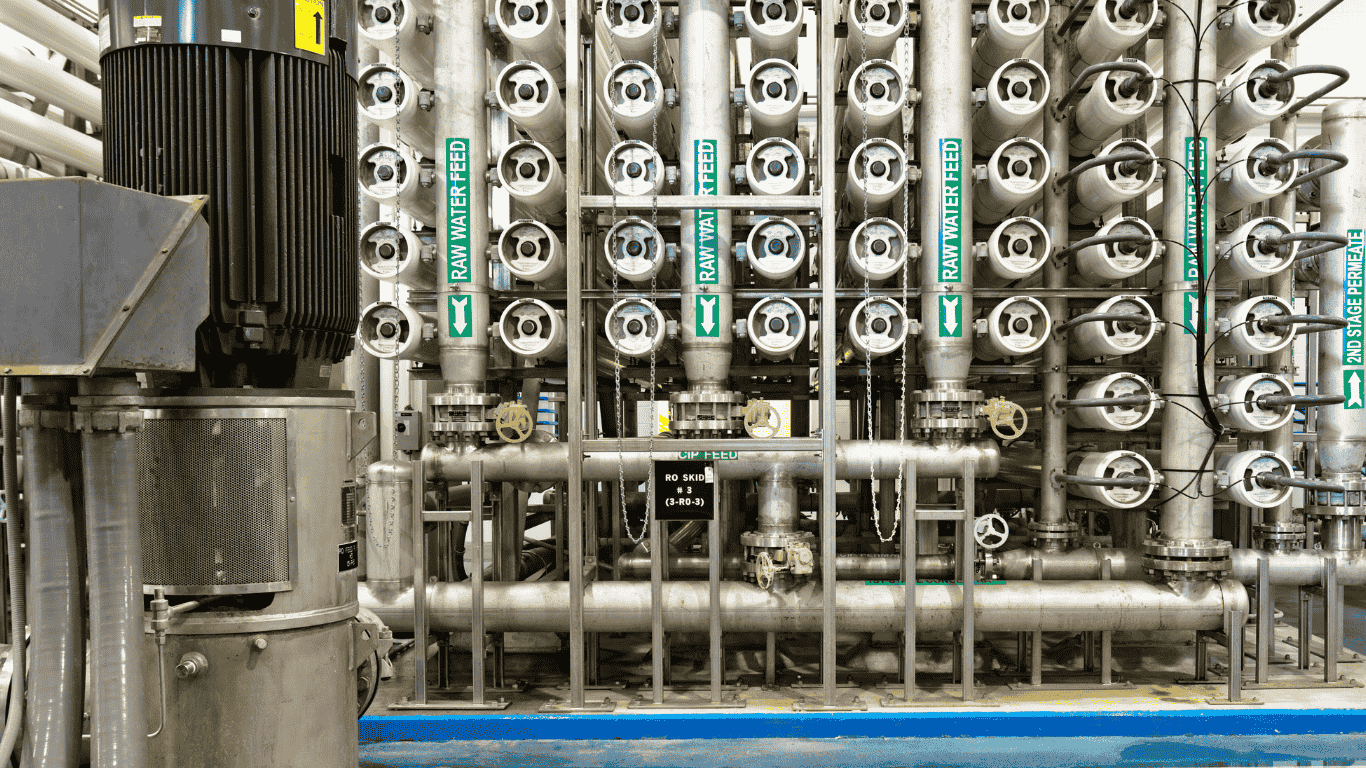
At the heart of the reverse osmosis system is the high pressure pump and the membrane assembly. The pump provides the force needed to move water through the RO membrane, overcoming osmotic pressure. The membrane itself sits inside a pressure vessel, where separation takes place. Clean water passes through the membrane, while rejected contaminants are carried away. Monitoring pressure and flow across each RO membrane helps operators catch scaling or fouling early, before it affects production.
Downstream, a water tank stores treated water for consistent supply, especially during peak demand. Storage tanks should be kept clean and inspected periodically to avoid recontamination. When these components are properly selected and maintained, the entire system operates more efficiently and delivers more reliable results. For a deeper look at membrane configurations and options, see our overview of RO membrane systems.
Types of Reverse Osmosis Systems
Not all RO systems are built the same, and the right design depends on how a facility uses water. Commercial systems are often designed for moderate demand and consistent operation, such as office buildings, healthcare facilities, or food service applications. Industrial RO systems are built for higher flow rates, tougher feed water conditions, and continuous operation. These systems typically handle higher pressures and larger volumes while maintaining stable performance.
Another key distinction is system layout. Modular designs allow facilities to scale capacity by adding units as demand grows. This approach offers flexibility and easier maintenance, especially when uptime matters. Centralized reverse osmosis RO systems, on the other hand, are engineered to serve large operations from a single location. They often achieve higher efficiency but require more planning upfront. In either case, system recovery plays a major role in water use efficiency, balancing how much water is purified versus how much is discharged.
Selecting the right reverse osmosis system means considering feed water quality, daily demand, and operational priorities. Higher recovery rates can reduce water use but may increase power consumption and maintenance needs. Facilities that evaluate these factors early tend to see better reliability, lower operating costs, and fewer surprises once the system is online.
The Science Behind RO Filtration
At the center of reverse osmosis filtration is the membrane itself. A semi permeable membrane is engineered to allow only water molecules to pass through while rejecting dissolved salts, minerals, and other contaminants. This selectivity is what makes reverse osmosis so effective. As water moves across the membrane surface, impurities remain behind and are flushed away, leaving cleaner water on the permeate side.
Under natural conditions, water would flow toward a more concentrated solution due to osmotic pressure. Reverse osmosis flips that process. High-pressure pumps apply enough force to overcome this natural pressure, pushing water in the opposite direction. In doing so, the system separates pure water from contaminants with a high level of precision. This is why reverse osmosis filtration is widely used in applications where consistency and reliability matter.
The RO membrane does the heavy lifting, but it also needs attention to perform well over time. Membrane surfaces should be monitored to avoid scaling and biofouling, which can restrict flow and reduce efficiency. Tracking pressure changes and water quality trends helps operators maintain performance and extend membrane life, keeping the system operating as designed.
Benefits of Reverse Osmosis Water Treatment
One of the most immediate advantages of reverse osmosis water treatment is the improvement in overall water quality. For industrial processes, boiler feed, and cooling towers, consistent water chemistry is critical. Removing unwanted impurities helps prevent scale formation, corrosion, and fouling, which directly supports system reliability. Facilities that rely on reverse osmosis water treatment often see smoother operation because the water entering their systems is more predictable and easier to control.
This process is highly effective at reducing harmful contaminants, including heavy metals and excess dissolved solids. The result is purified water that meets tight quality requirements across a wide range of applications, including bottled water production. Compared to basic filtration, reverse osmosis delivers a deeper level of separation, producing filtered water that protects equipment and supports product quality.
From an operator’s perspective, the benefits extend beyond water chemistry. Well-designed RO systems deliver consistent RO water with fewer adjustments and less reactive maintenance. Operators spend less time chasing water-related issues and more time focusing on performance and efficiency. When water quality is stable, downstream systems last longer, maintenance becomes more predictable, and facilities gain confidence in the reliability of their water supply.
Industrial Applications of RO Systems
A well-designed reverse osmosis system supports a wide range of industrial and commercial applications where water quality directly impacts performance. In food and beverage operations, RO helps deliver consistent water for processing, cleaning, and ingredient blending. Pharmaceutical facilities rely on RO as part of a broader purification strategy to maintain tight quality standards. In boiler feed and cooling tower applications, RO-treated water reduces scaling and corrosion, protecting heat transfer surfaces and extending equipment life.
In high-tech environments such as microelectronics manufacturing, even trace impurities can cause defects or downtime. RO systems provide reliable pretreatment, helping facilities meet strict water specifications without constant manual adjustment. Commercial buildings and campuses also benefit from RO when treating drinking water, where consistent taste, clarity, and safety matter to occupants and operators alike.
Operationally, these applications share a common challenge: keeping performance stable as conditions change. Feed water quality can fluctuate seasonally or with changes in supply. Operators often catch early issues by monitoring total dissolved solids regularly, which provides a quick snapshot of system health. When TDS starts to rise, it is usually a signal that maintenance is needed. Integrated water filtration strategies help teams respond early, avoid disruptions, and keep critical systems running smoothly. For a closer look at system configurations designed for these environments, see our overview of Commercial Reverse Osmosis Systems.
Common RO Challenges and How to Address Them
Even well-designed systems face challenges over time, and most issues in reverse osmosis operations are tied to changes in feed conditions or maintenance gaps. RO membrane fouling is one of the most common problems, often caused by suspended solids, biological growth, or mineral scaling. When fouling begins, operators usually see reduced flow, rising pressure, or declining water quality. Paying attention to trends, rather than waiting for alarms, helps teams stay ahead of these issues.
Changes in feed water chemistry also play a major role. Residual disinfectants such as residual chlorine can damage membranes if pretreatment is not working as intended. Scaling from hardness minerals further restricts flow and shortens membrane life. Teams should flush membranes and inspect pre-filters regularly, especially after changes in source water or operating conditions. These small, routine steps often prevent larger problems down the line.
Energy use is another area worth watching. As membranes foul or scale, systems require more energy input to maintain production. This not only increases operating costs but also stresses pumps and components. Monitoring pressure across the RO filter stages helps identify inefficiencies early. When operators and maintenance teams take a proactive approach, RO systems remain more stable, more efficient, and far easier to manage over the long term.
Best Practices for Maintaining RO Systems
Maintaining a reverse osmosis system is less about reacting to problems and more about building good habits. Regular monitoring of pressure, flow, and water quality helps teams spot changes early. Routine cleaning, when performed at the right time, restores performance and prevents long-term damage. Chemical treatments also play an important role in controlling scaling, fouling, and biological growth, especially as source water conditions change.
Pretreatment is the foundation of a stable RO process. Pre-filters protect membranes by removing particles before they reach sensitive components. Selecting the right filter media and replacing it on schedule reduces stress on the system. Proper feed pressure is equally important. Too little pressure reduces production, while excessive pressure can accelerate wear on pumps and membranes. Balancing pressure keeps the entire water system operating efficiently.
From an operational standpoint, tracking performance metrics makes maintenance more predictable. Operators find it useful to track system recovery and waste ratio for efficiency, especially in facilities where water use and costs are closely monitored. When maintenance, chemistry, and monitoring are aligned, systems operate more smoothly. To see how chemical strategies support long-term performance, explore our overview of Chemical Programs for RO Systems.
Steps for Implementing an RO Water Treatment Program
Implementing a successful reverse osmosis water treatment program starts with understanding your water. Teams should begin by assessing source water quality, daily demand, and how treated water will be used across the facility. This helps determine the right system size, recovery targets, and pretreatment needs. Selecting the appropriate RO unit at this stage prevents underperformance and avoids unnecessary operating costs later on.
Once the system is in place, integrating monitoring and training staff becomes just as important as the equipment itself. Operators should be comfortable tracking pressure, flow, and water quality indicators to confirm the system is producing clean water consistently. Routine checks and clear response plans help ensure filtered water meets operational needs day after day.
If you want guidance on building a reliable RO water treatment program, our experts at ProChem can help improve water quality, efficiency, and system reliability.
Frequently Asked Questions (FAQs)
Does reverse osmosis remove everything from water?
Reverse osmosis removes a wide range of contaminants, producing clean RO water by separating dissolved solids and impurities. It does not selectively target only harmful compounds, which is why post-treatment is sometimes used depending on the application.
Is reverse osmosis suitable for bottled water production?
Yes. Many bottled water operations use reverse osmosis to create a consistent base water. Some bottled water producers then adjust mineral content to achieve a desired taste profile.
What happens to essential minerals during RO treatment?
A reverse osmosis water filter removes most dissolved minerals, including calcium carbonate. In some applications, essential minerals are added back to improve taste or meet product requirements.
Can RO systems reduce organic chemicals in water?
Yes. RO systems help reduce volatile organic compounds, especially when paired with a carbon block filter as part of pretreatment.
How can operators tell if RO water quality is changing?
Monitoring trends in water quality and system performance helps catch issues early. Changes in flow or taste often signal that RO water treatment components need inspection or maintenance.
