
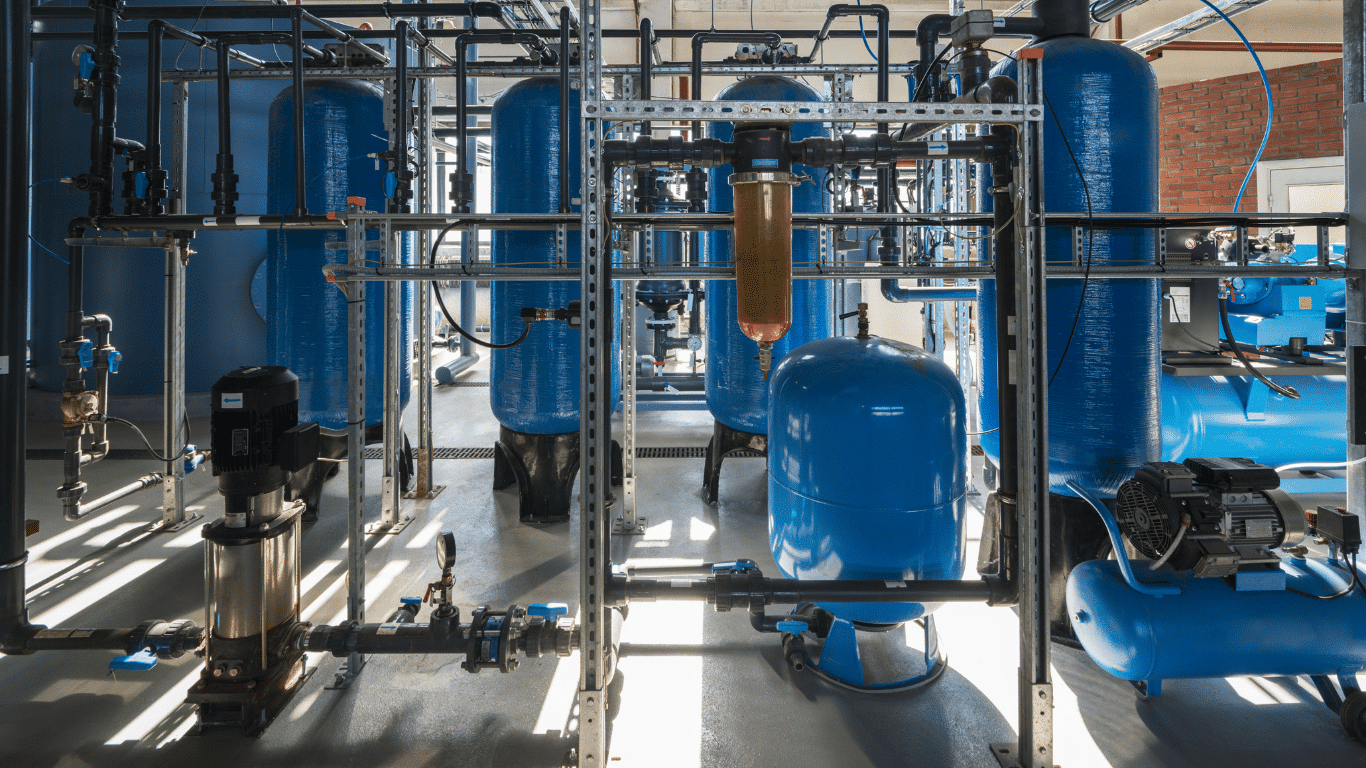
Water is part of daily operations in many industrial and commercial facilities. A reliable water softener solution helps manage one of the most common challenges in these systems, which is hard water coming from the municipal water or city water supply. When water contains excess minerals, it directly affects water quality, leading to long-term inefficiencies across equipment and processes. This is where a properly designed water softener system becomes essential for stable operations.
Operators often notice the early signs without realizing the cause. Reduced efficiency, inconsistent performance, and gradual buildup inside pipelines usually trace back to untreated hard water conditions. A structured approach to water conditioning helps maintain consistent water quality, protects infrastructure, and keeps systems running closer to their intended performance levels.
The Problem with Hard Water and Scale Formation
Hard water creates some of the most persistent operational issues in both commercial and industrial systems. It carries high levels of calcium and magnesium ions, which naturally react with heat and surfaces inside plumbing networks. Over time, these hard water minerals settle and begin forming deposits that restrict flow and reduce system efficiency.
As temperatures rise inside equipment like water heaters, the reaction becomes even more aggressive. Calcium ions combine with carbonate in the water to form calcium carbonate, which hardens into stubborn deposits. This process drives scale buildup and eventually leads to visible limescale buildup on pipes, heating elements, and internal surfaces. In many facilities, washing machines and other water using equipment lose efficiency simply because hard water continuously narrows flow paths and forces systems to work harder than necessary.
Beyond mechanical systems, hard water also affects everyday user experience. It reacts with soaps and detergents, creating soap scum buildup on fixtures and surfaces instead of producing a clean rinse. Over time, this leaves residue on skin and hair, often contributing to dry skin and reduced comfort in daily use. When left unmanaged, hard water doesn’t just impact equipment, it affects the overall usability and reliability of water across the entire system.
How a Water Softener System Works (Ion Exchange Process)
A water softener system typically relies on a controlled process called ion exchange, where dissolved minerals responsible for hard water are removed and replaced. Inside the system, resin beads within a resin bed attract and capture calcium and magnesium ions, which are the main contributors to hardness. As water passes through, these hardness minerals are swapped with sodium ions, resulting in conditioned water that flows more freely through the system.
Over time, the resin becomes saturated and can no longer effectively treat incoming water. This is where the regeneration cycle begins. During regeneration, a concentrated sodium chloride solution, commonly referred to as salt, flushes through the resin bed to restore its capacity. This process allows salt based softeners to continue operating efficiently, ensuring the water softener system maintains consistent performance even under heavy demand. You can see how these systems integrate into broader treatment setups here.
Not all systems rely on traditional salt use. A salt free water softener works differently by conditioning water without removing minerals in the same way, and salt free systems are often designed to reduce scaling potential rather than fully exchange ions. While salt based softeners physically remove hardness minerals, salt-free technologies focus on altering how minerals behave in water. Choosing the right water softener system depends on application needs, water quality goals, and operational conditions.
Benefits of Softened Water in Industrial Operations
When facilities switch to softened water, the difference shows up quickly across both performance and maintenance. Equipment runs with less resistance because minerals that normally cause hard water issues have already been reduced at the source. In whole house water softeners or large-scale industrial setups, this consistency helps stabilize operations and improves overall system reliability. You can explore more about the effects of untreated conditions here.
One of the most noticeable improvements happens in how water using appliances operate. Boilers, cooling systems, and other water based appliances perform more efficiently when scaling is minimized. With reduced buildup, heat transfer stays consistent in water heaters, and systems maintain better water pressure throughout the network. In practice, soft water helps equipment operate closer to design specifications instead of struggling against ongoing hard water stress.
Long-term benefits go beyond performance. Effective scale prevention reduces wear on internal components, which helps facilities save money on energy and maintenance. Without the constant buildup caused by hard water, operators avoid frequent breakdowns and costly repairs that often come from neglected water treatment. Over time, adopting softened water creates a more stable and predictable operating environment, especially in systems designed for continuous industrial demand.
Salt-Based vs Salt-Free Water Softening Systems
Choosing between salt based systems and alternative technologies often comes down to how aggressively a facility needs to treat hard water. A traditional water softener system using salt based systems works through ion exchange, physically removing hardness minerals from the water. This approach requires regular salt refills, but it delivers highly consistent results in environments where scaling must be tightly controlled.
On the other side, salt free water conditioners focus on changing how minerals behave rather than removing them. These salt free conditioners condition salt free water so that calcium and magnesium are less likely to form deposits. In many applications, salt free water systems are chosen when facilities want to reduce maintenance tied to chemical handling while still aiming to prevent scale formation across equipment and piping networks.
There are also hybrid approaches that combine both strategies depending on system demand. Some water conditioner setups integrate salt free water conditioners with partial treatment zones to balance efficiency and operational simplicity. While salt based systems remain the standard for heavy-duty applications, many facilities now evaluate salt free water solutions as part of a broader optimization strategy, especially when scaling control is needed without full mineral removal.
Choosing the Right Water Softening Solution for Facilities
Selecting the correct water softener solution starts with understanding how water moves through your facility. Every water softener system must match real operating conditions, not just theoretical demand. Factors like flow rate, peak water usage, and daily consumption patterns all influence performance. When these are aligned correctly, whole house systems or industrial setups can maintain consistent output without pressure drops or inefficiencies.
Water quality also plays a major role in system selection. Facilities dealing with high water hardness from either municipal water or a private well should always have their water tested before choosing equipment. This step helps identify the right capacity and ensures the right system is installed for actual conditions rather than assumptions. When properly sized, a water softener system can handle fluctuations in demand without compromising performance.
In most industrial and commercial cases, professional installation makes a significant difference in long-term reliability. Technicians ensure the system integrates correctly with existing infrastructure and matches real-world water usage patterns. For facilities exploring tailored solutions, you can review system options here. A properly designed water softener solution doesn’t just treat water, it supports stable operations across the entire facility.
Maintenance, Salt Levels, and Long-Term System Performance
Keeping a softening system reliable over time comes down to simple but consistent maintenance habits. At the core of most salt-based setups is the brine tank, where salt is stored and prepared for the treatment process. Monitoring salt levels regularly ensures the system can properly support each regeneration cycle, especially in facilities with continuous tap water demand. When salt runs low, performance drops quickly, and the system cannot produce properly treated water.
During normal operation, the regeneration cycle is what keeps the system functioning at full capacity. This process flushes the resin bed using salt from the brine tank, restoring its ability to handle incoming tap water. If salt refills are delayed, the system loses efficiency, and scaling risks return. Operators often notice inconsistent consistent flow when salt levels are not properly maintained, which is an early sign that the system needs attention.
Long-term performance depends on understanding how systems work under real load conditions. A well-maintained softening system ensures steady consistent flow and stable output of treated water, even during peak demand. When salt management, salt refills, and regeneration timing are handled correctly, the system continues to perform reliably without unnecessary downtime or efficiency loss.
Building a Reliable Water Softening Strategy
A well-planned water softener solution is more than just equipment selection, it is a long-term strategy for protecting infrastructure and maintaining stable operations. The right water softener system helps facilities manage hard water challenges at the source, ensuring consistent water quality across all processes. When systems are properly sized and maintained, scale prevention becomes a built-in advantage rather than a constant corrective effort, reducing strain on equipment and improving overall efficiency.
The strongest results come from pairing the right system with the right operational strategy. Teams that take time to assess conditions early usually avoid recurring issues tied to hard water and unplanned downtime later on. Evaluating options or planning an upgrade? Reach out to ProChem to discuss a tailored water softener solution that fits your facility’s needs and long-term performance goals.
