
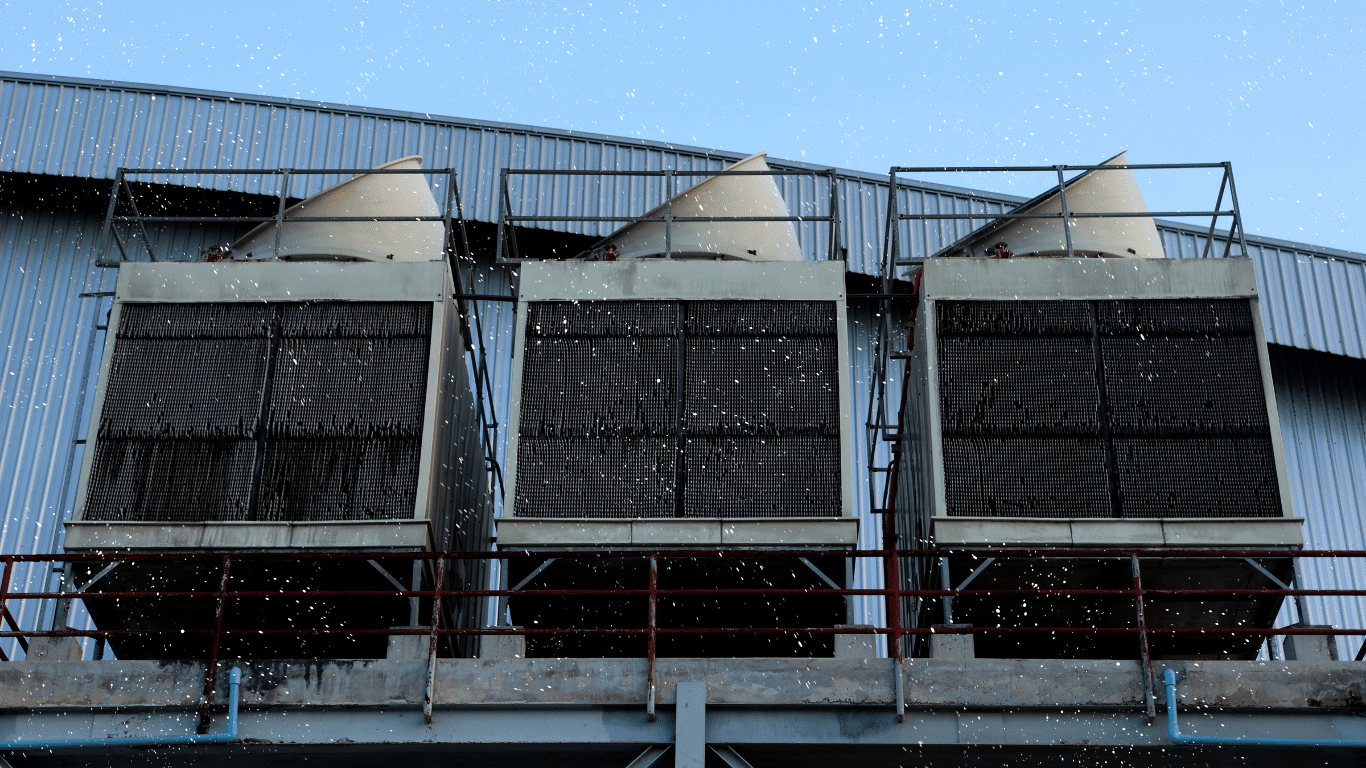
Winter conditions can create problems for cooling systems that continue operating or sit idle for extended periods. When temperatures drop, water inside outdoor basins, pipes, pumps, and other components can freeze and expand, putting significant stress on equipment. Good cooling tower freeze protection starts with understanding where water can collect and how your operating conditions change during the colder months.
Why Cooling Towers Need Protection During Winter
Freezing presents a different challenge depending on how your facility operates its cooling towers. A tower that runs continuously may need to manage ice formation while maintaining enough heat transfer capacity. A system that shuts down for the season faces another concern because stagnant water can remain inside exposed components. In both cases, operators need a clear plan before the cooling season ends.
Water expands by roughly 9% when it freezes, which can create enough mechanical stress to damage pipes, coils, basins, valves, and other components. The resulting damage may not become obvious until the system starts again. Frozen pipes can also interrupt operations and lead to emergency repairs, especially when critical equipment depends on the cooling system. That is why freeze protection should form part of routine winter maintenance rather than an emergency response.
Clean the Tower Before Winter
One of the most useful steps you can take before winter is to clean the tower thoroughly. Cooling towers accumulate scale, sediment, biological growth, rust, and other contaminants during normal operation. If you leave these materials in place during a shutdown, they can contribute to corrosion and create conditions for microbial growth in stagnant water. Annual or semi-annual cleaning gives operators a better starting point for winterization and spring startup.
The timing matters. Cleaning before winter removes deposits before temperatures drop and reduces the amount of material that can interfere with pumps, flow paths, tower fill, and other components. It can also reduce the work required when the tower returns to service. For a closer look at the cleaning process, see our guide to cooling tower cleaning, which explains how routine cleaning supports equipment condition and system performance.
Drain Components During Seasonal Shutdowns
If your tower will not operate during winter, draining outdoor components should be one of the first steps in your tower winterization procedure. Outdoor basins, exposed piping, pumps, and other low points can retain water after the system stops. Operators should identify every location where water can collect, then follow the equipment manufacturer’s procedures for draining those components completely.
Do not assume that draining the basin alone protects the entire system. Water can remain in pipes, valves, coils, heat exchangers, and other equipment after a shutdown. A complete inspection should confirm that exposed sections have drained properly and that trapped water cannot freeze. Proper drainage also limits stagnant water conditions that can encourage scale, corrosion, and biological growth while the system remains idle.
Maintain Flow When the Tower Stays Online
Some facilities cannot shut down their cooling towers during winter. In those cases, maintaining circulation can help prevent stagnant water and reduce the chance of ice formation. Operators should maintain enough flow through exposed areas and keep water temperatures within the range required by the equipment. A minimum leaving-water temperature can also help limit rapid ice formation during very cold weather.
At lower heat loads, the tower may remove more heat than the process actually needs. That can push water temperatures too low and increase the freeze risk. Bypass valves can help route warmer water toward colder areas, while appropriate fan control can reduce unnecessary cooling. The goal is to maintain reliable flow and heat transfer without allowing the tower to overcool its circulating water.
Protect Exposed Pipes and Components
Start your inspection with small-diameter pipes because they can lose heat quickly and freeze sooner than larger water lines. Where the design permits, use electric heat tracing and insulation to protect outdoor piping and vulnerable sections of the distribution system. Check the insulation regularly because damaged or wet insulation can reduce its effectiveness when temperatures fall.
Also inspect basins, valves, pumps, spray distribution equipment, and exposed connections. Basin immersion heaters can help maintain water above freezing during idle periods when the tower design requires water to remain in the basin. The right protection method depends on the equipment, operating temperature, weather exposure, and required water flow, so operators should follow the tower manufacturer’s specifications when selecting and installing these measures.
Use Controls to Manage Cold Conditions
Cold-weather operation should not rely entirely on manual adjustments. Controls can help operators respond to changing temperatures and reduce the likelihood of freezing. Freeze-cycle interlocks can prevent fan operation when temperatures fall below a defined threshold, while variable frequency drives can adjust fan speed instead of allowing excessive airflow and unnecessary cooling.
Temperature sensors also provide valuable information during cold-weather operation. Teams should monitor entering and leaving water temperatures, ambient conditions, pump operation, and other relevant readings. If temperatures drop unexpectedly, operators can respond before ice accumulation becomes severe. A well-designed control strategy gives the facility another layer of protection while helping maintain stable cooling performance.
Consider Indoor Storage and Closed-Circuit Protection
Facilities with seasonal shutdowns can reduce outdoor freeze exposure by using indoor storage tanks where the system design allows it. Moving water to a protected indoor location can eliminate the freezing risk associated with an exposed tower basin during shutdown. However, operators still need to consider water quality, chemical treatment, and the condition of connected piping before placing the system into layup.
Closed-circuit cooling systems require their own approach. Depending on the application, glycol solutions can provide freeze protection for coils and other enclosed components. Heat exchangers and associated piping still require inspection because poor circulation, inadequate concentration, or damaged components can create localized freeze risks. The important point is to match the protection strategy to the actual system rather than applying the same winter procedure to every cooling application.
Protect Water Quality During Winter Layup
Winterization does not end when the water leaves the tower. Layup procedures should also protect internal metal surfaces from corrosion, scale, and biological activity. If water remains inside the system, operators may need an appropriate protective chemical program based on the equipment design and the length of the shutdown. Regular monitoring helps confirm that the treatment approach continues to support the condition of the equipment.
Stagnant water deserves particular attention. When circulation stops, water chemistry can change and biological growth can develop. Bacteria such as Legionella can proliferate when water systems provide favorable stagnant conditions, which makes proper cleaning, treatment, drainage, and restart procedures important. A broader cooling tower water treatment program can help facilities manage scale, corrosion, and biological control as part of year-round tower maintenance.
Building a Reliable Winterization Program
A practical winter plan should begin before temperatures drop sharply. Review the tower’s operating requirements, identify exposed components, inspect pipes and insulation, clean the equipment, and decide which systems will continue operating and which will undergo seasonal shutdown. For operating towers, focus on circulation, temperature control, fan operation, and freeze-cycle controls. For idle towers, focus on complete drainage, layup chemistry, and protection of exposed equipment.
It also helps to document the work. Record inspection findings, drained components, treatment steps, control settings, and repairs so the team has a clear reference when the tower returns to service. This approach can reduce unexpected downtime and help protect equipment lifespan. Facilities with more complex process cooling requirements can also review industrial water cooling systems to better understand how water flow, heat transfer, and system design affect overall cooling performance.
Practical Steps for Winter Protection
The best time to address winter risks is before the first serious cold weather arrives. Start by cleaning the tower, inspecting the basin and exposed piping, and identifying components that need to remain operational. Next, determine which sections require complete drainage and which require continuous circulation, heat tracing, insulation, heaters, or other controls. Finally, review water treatment and layup procedures so corrosion, scale, and biological growth do not create another problem while the system is idle.
From there, keep monitoring the system throughout the winter instead of treating winterization as a one-time job. Watch temperatures, flow, pumps, controls, and exposed equipment, and investigate unusual changes early. Need help reviewing your facility’s cooling water equipment or winter operating strategy? Reach out to us. ProChem can help you evaluate the system and develop a practical approach that supports reliable operation and equipment protection.
