
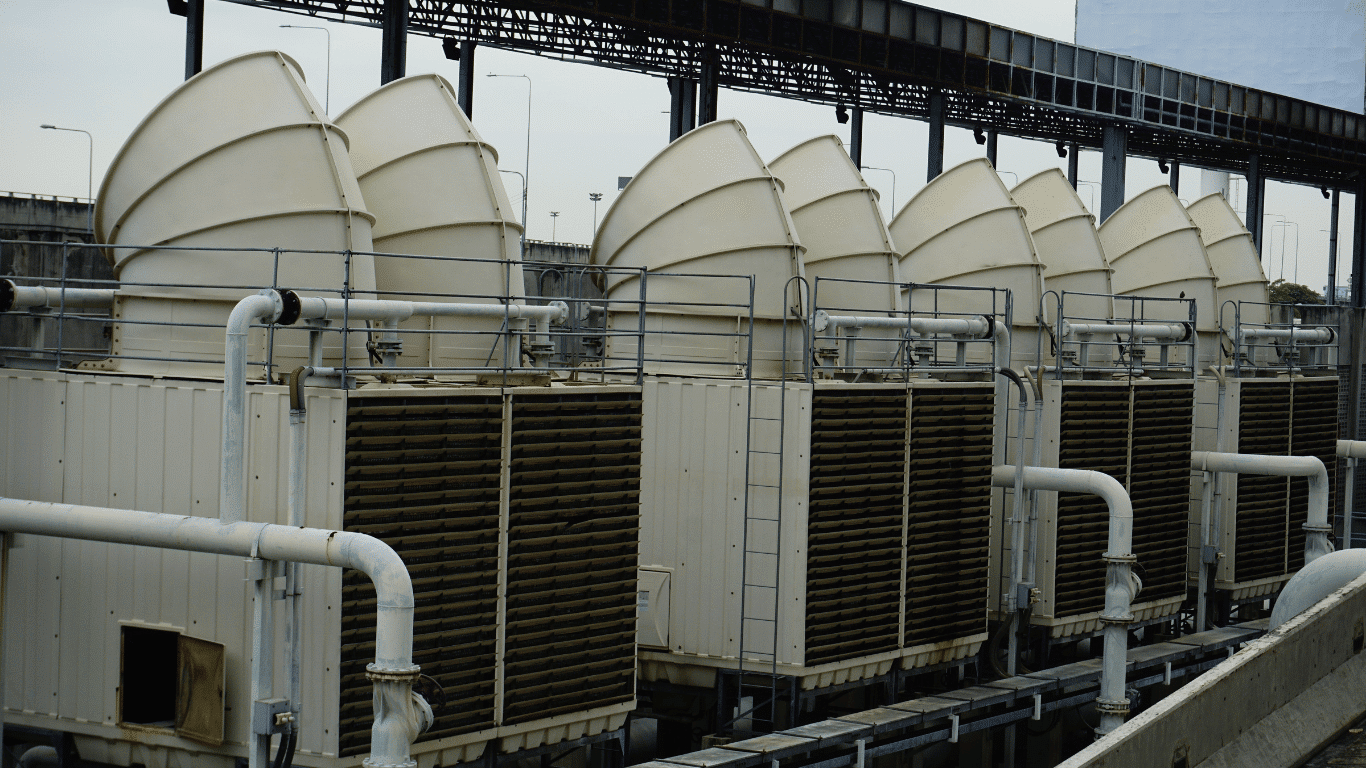
A cooling tower basin collects the water that circulates throughout the cooling system. Over time, dirt, minerals, organic matter, and other debris settle at the bottom, affecting water quality and equipment performance. Regular cooling tower basin cleaning helps prevent these problems before they interfere with daily operations. For facility managers, understanding when and how to clean the basin is an important part of maintaining a reliable cooling system.
Why Cooling Tower Basin Cleaning Matters
The basin plays an important role in keeping a cooling tower operating properly. It collects cooled water before pumps send it back through the system. However, airborne dust, rust, mineral deposits, and biological matter can accumulate as water circulates. These materials eventually settle at the bottom and form sludge, especially when the system operates continuously without adequate filtration.
As sediment builds up, it can restrict water flow, interfere with pump operation, and affect the distribution of cooling water. Sludge can also collect around strainers, piping connections, and other critical components. Over time, these conditions contribute to corrosion, increased maintenance requirements, and reduced heat transfer efficiency. Keeping the basin clean helps maintain reliable operation and protects equipment life.
Another important concern is biological growth. Warm water, accumulated debris, and stagnant areas create conditions that support bacterial activity, including the growth of Legionella. Sediment and biofilm can also shield microorganisms from biocides, making chemical treatment less effective. Regular cleaning and disinfection help control these risks and maintain better water quality throughout the cooling tower.
Signs Your Cooling Tower Basin Needs Cleaning
You don’t always need to wait for a major equipment problem before scheduling cleaning. In many facilities, operators can identify early warning signs through routine inspections. Changes in basin appearance, unusual water conditions, and recurring filtration problems often indicate that sediment is accumulating faster than the system can manage.
Watch for these common indicators:
- Visible sludge and sediment: Mud-like deposits, sand, and other solids collecting along the basin floor.
- Floating debris: Leaves, dirt, airborne particles, and other materials accumulating on the water surface.
- Discolored water: Cloudy or unusually dark water that may indicate suspended solids, rust, or organic matter.
- Unusual odors or slime: These conditions may indicate biological growth or accumulated organic material.
- Strainer and filter problems: Frequent clogging can suggest that the system carries more solids than its filtration equipment can handle.
Pay attention to recurring issues, even when the cooling tower appears to operate normally. Sediment accumulation can accelerate under-deposit corrosion, particularly in areas where deposits trap moisture and contaminants against metal surfaces. Early inspection helps maintenance personnel address these conditions before they lead to leaks or equipment damage.
How Often Should You Clean a Cooling Tower Basin?
Cleaning frequency depends on several factors, including cooling tower design, operating conditions, environmental exposure, and water treatment performance. Facilities exposed to heavy dust, construction debris, or high levels of airborne contaminants may need more frequent cleaning. Systems with poor solids removal or recurring biological activity also require closer attention.
As a practical maintenance target, schedule basin inspections weekly or monthly, depending on operating conditions. Cooling towers should also undergo full cleaning and disinfection at least twice a year as a preventive maintenance practice, with additional cleaning when site conditions or water quality indicate a need. The CDC recommends at least annual offline cleaning and disinfection, while OSHA recommends cleaning and disinfecting cooling towers at least twice a year. Follow applicable regulations, manufacturer guidance, and your facility’s water management program.
Don’t rely on a fixed schedule alone. If operators notice recurring sludge, visible biofilm, or changes in water quality, investigate the cause rather than waiting for the next scheduled cleaning. A consistent inspection routine helps identify problems early and prevents unnecessary maintenance expenses.
Preparing for Cooling Tower Basin Cleaning
Before starting any cleaning activity, prepare the system and establish appropriate safety procedures. Cooling tower maintenance can expose workers to chemical disinfectants, contaminated water, and potentially harmful aerosols. Improper cleaning can disperse pathogens into the surrounding air, increasing exposure risks for maintenance personnel and nearby building occupants.
A controlled cleaning procedure should begin with a risk assessment and appropriate personal protective equipment (PPE). Depending on the task, workers may need protective clothing, chemical-resistant gloves, boots, goggles, and suitable respiratory protection. Also, coordinate the work with facility operations, shut down the cooling tower when required, and isolate equipment according to the manufacturer’s instructions. Keep nearby air intakes protected during cleaning when the risk assessment or applicable guidance calls for it.
Chemical treatment also requires careful planning. An appropriate biocide shock treatment before mechanical cleaning can help reduce bacterial populations and prepare the system for cleaning. However, the treatment must follow a site-specific disinfection procedure, product label instructions, and professional guidance. Never assume that a routine chemical dose is sufficient to disinfect a contaminated cooling tower. Coordinate chemical treatment, contact time, pH control, and wastewater disposal before beginning the work.
Steps for Effective Cooling Tower Basin Cleaning
Once the facility establishes the necessary safety measures, maintenance personnel can proceed with the cleaning process. The goal is to remove accumulated solids, clean basin surfaces, and restore suitable conditions for water circulation.
Shut down and drain the system.
First, shut down the cooling tower and follow the facility’s isolation and lockout procedures. Turn off associated fans and equipment as required, and prevent the system from operating during offline cleaning. Drain the basin completely using the designated drain connection. Manage the discharge according to applicable environmental requirements and facility procedures.
Remove debris and accumulated sludge.
After draining, remove leaves, sand, dirt, rust, and other visible debris. Manual cleaning often provides the most thorough results because workers can reach corners and areas where sludge collects. For larger systems, vacuum trucks and industrial suction equipment can help remove heavy deposits. High-pressure water jetting may also loosen stubborn sludge, but workers should use controlled methods that minimize aerosol generation and avoid damaging basin surfaces.
Scrub, flush, and inspect basin surfaces.
Next, scrub the basin floor, walls, and accessible surfaces to remove remaining deposits and biofilm. Flush the cleaned areas with suitable water and collect the resulting waste for proper disposal. Inspect the basin for corrosion, cracks, damaged coatings, and other signs of deterioration. Once cleaning and required disinfection are complete, refill the basin with appropriately treated water and restore the chemical treatment program before returning the cooling tower to normal operation.
Cleaning Methods and Filtration Options
Manual cleaning remains one of the most effective ways to remove heavy sludge and stubborn deposits. However, facilities can use additional methods to manage solids between scheduled cleaning activities. The right approach depends on the amount of debris, system configuration, available maintenance resources, and required water quality.
Common cleaning and solids removal methods include:
- Manual removal: Workers use appropriate tools to collect sludge and debris from accessible basin areas.
- High-pressure water cleaning: Controlled water jetting loosens deposits from basin surfaces and difficult-to-reach areas.
- Vacuum and suction removal: Industrial vacuum equipment removes accumulated solids without requiring workers to manually collect every deposit.
- Flushing and blowdown: Controlled flushing helps mobilize minor sludge accumulations, while blowdown removes a portion of concentrated circulating water.
In addition to these methods, installing a suitable filtration system can help reduce the amount of suspended solids entering and accumulating in the basin. Side stream filtration is particularly useful because it continuously treats a portion of the circulating water instead of relying entirely on periodic basin cleaning. This approach helps remove suspended solids before they settle and form additional sludge.
Several filtration technologies can support this process:
- Sand filters: These filters capture suspended particles as water passes through the filter media. Properly designed sand filtration systems can remove particles down to approximately five microns, depending on the media, operating conditions, and filtration configuration.
- Centrifugal separators: These units use centrifugal force to separate heavier particles from circulating water. They can reduce sediment loading while using relatively little water during the purge process.
- Bag filters: These filters capture particles in replaceable filter bags and can support higher-flow applications when properly sized.
- Cartridge filters: These provide finer particle removal for applications that require additional filtration.
- Self-cleaning strainers: These units automatically remove collected solids through a flushing mechanism, reducing manual cleaning requirements.
The facility should select filtration equipment based on particle characteristics, flow requirements, and system operating conditions. For additional information, explore ProChem’s guide to cooling tower filtration.
Maintaining a Cleaner Cooling Tower Basin
Cleaning the basin is only one part of an effective maintenance strategy. Facilities also need to control the factors that contribute to sediment accumulation, corrosion, and biological activity. Without consistent monitoring, debris can return quickly, especially in cooling towers exposed to heavy environmental contamination.
Start with regular visual inspections and water quality monitoring. Check for sludge, floating debris, unusual odors, and changes in water clarity. Monitor important chemical parameters, including pH, conductivity, and disinfectant residuals, according to your water treatment program. Proper chemical treatment helps control scale, corrosion, and biological growth while reducing the conditions that encourage deposits.
You should also evaluate the performance of your filtration equipment. Check filters for excessive pressure differences, inspect strainers for collected debris, and confirm that pumps maintain the required flow. Basin sweepers can help keep sediment suspended so filtration equipment can capture and remove it. For facilities experiencing recurring buildup, consider improving cooling tower water treatment to address the underlying water quality factors.
Building a Consistent Basin Maintenance Program
An effective maintenance program combines scheduled cleaning, regular inspections, water treatment, and solids removal. Instead of waiting for visible sludge or equipment problems, establish procedures that help operators identify developing issues and respond before they affect cooling performance.
A practical maintenance checklist should include:
- Inspect the basin weekly or monthly, depending on operating conditions.
- Remove floating debris and check strainers regularly.
- Monitor water chemistry and disinfectant levels.
- Review filtration performance and investigate recurring pressure changes.
- Schedule full basin cleaning and disinfection at least twice a year as a preventive target.
- Document cleaning activities, inspection findings, and corrective maintenance.
Most importantly, review your maintenance schedule whenever operating conditions change. Increased dust exposure, construction activities, higher cooling loads, and recurring biological problems may require adjustments to your cleaning and filtration strategy. Need help keeping your cooling tower clean and operating efficiently? Contact ProChem today to discuss our operation and maintenance services and find the right cleaning, filtration, and water treatment solutions for your facility.
Learn more about our operation and maintenance services.
