
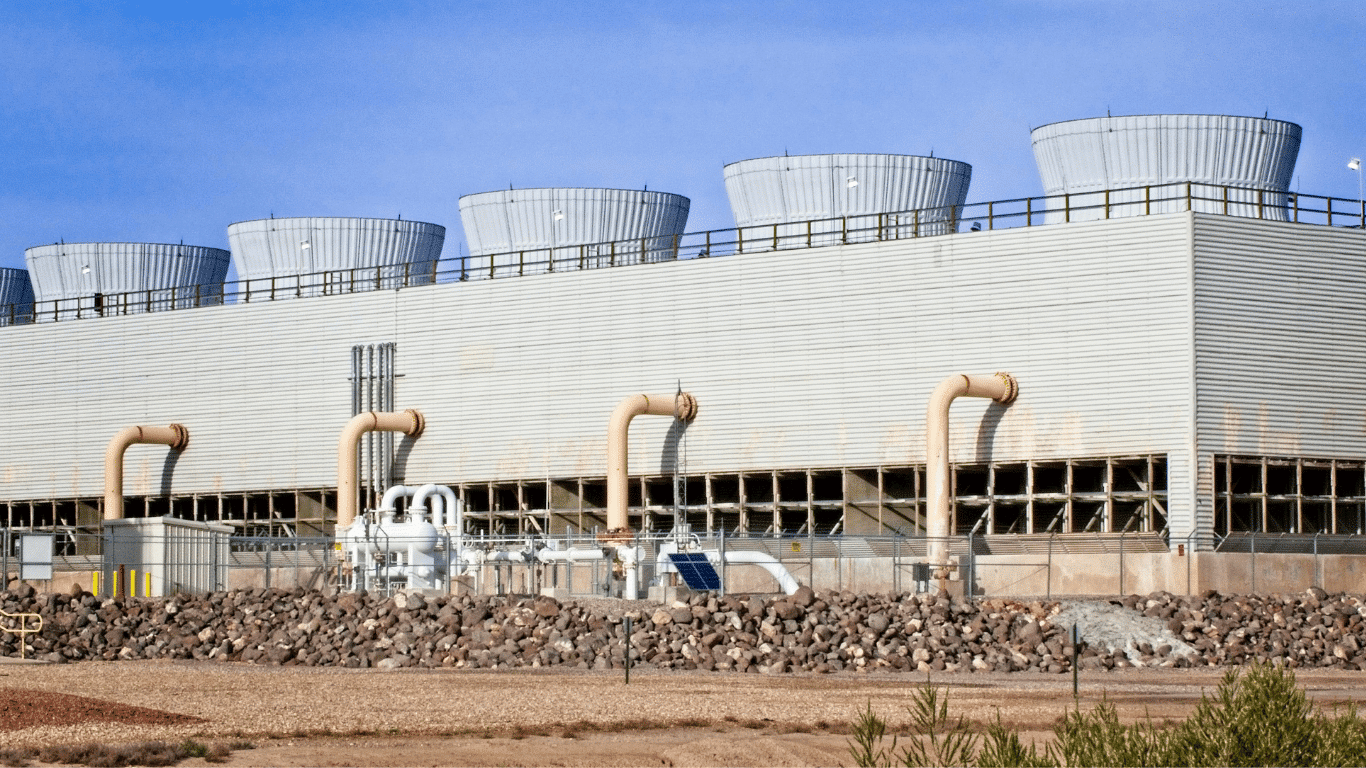
In any cooling tower system, water is constantly working behind the scenes to remove heat from industrial equipment and processes. As the cooling tower operates, a portion of that water evaporates, leaving behind dissolved minerals and impurities. This is where cooling tower blowdown comes in. It is the controlled removal of a small portion of circulating water from the system to prevent these contaminants from building up and affecting performance.
This process directly influences water consumption and overall cooling system efficiency. When blowdown is properly managed, it helps stabilize system performance and keeps water chemistry under control. It also supports maintaining the right cycles of concentration, which is critical for balancing water use, reducing waste, and keeping operations running smoothly over time.
What Cooling Tower Blowdown Is
Inside a cooling tower, water does not stay “fresh” for long. As it continuously circulates as recirculated water, it picks up minerals and impurities that gradually increase dissolved solids in the system. The cooling tower water becomes more concentrated over time because evaporation removes pure water while leaving these solids behind. As concentration rises, the water chemistry starts shifting away from ideal operating conditions, which is where problems begin to form if nothing is done to correct it.
This is why operators rely on managing cycles of concentration, which essentially describes how many times water is reused before it becomes too concentrated. As total dissolved solids increase, the system needs a controlled discharge to maintain balance. That control keeps the cooling process stable and prevents inefficiencies from building up. In practical terms, cooling tower blowdown is the method used to reset that balance so the system can operate within safe and efficient limits.
Why Blowdown Is Necessary
When a cooling system runs without proper control, problems start forming quietly inside the water loop. As dissolved solids continue to concentrate, minerals like calcium carbonate and magnesium begin to drop out of solution and create scale formation on metal surfaces. At the same time, unbalanced water chemistry can accelerate corrosion, slowly weakening equipment from the inside. Over time, both issues reduce efficiency and make it harder for the system to operate as intended.
These conditions directly affect overall reliability. Scale buildup on heat exchange surfaces acts like an insulating layer, forcing the cooling system to work harder to transfer heat. That added resistance lowers system performance and increases energy demand. In many facilities, ignoring these signs leads to reduced efficiency and unplanned maintenance, which is why controlled cooling tower blowdown remains essential for long-term stability.
How the Blowdown Process Works
The blowdown process is straightforward, but it plays a critical role in keeping a cooling tower system stable. As circulating water moves through the tower, it collects heat and returns to the cooling tower basin before being sent back into the loop. During this continuous cycle, impurities gradually build up. To manage this, a controlled portion of water is discharged from the system, allowing cleaner water to replace it and maintain balance within the tower operation.
At the same time, evaporation naturally occurs as the system rejects heat, and water evaporates into the atmosphere during cooling. This lost volume must be replaced with makeup water, which is typically sourced as fresh water. Without proper balance between evaporation losses and controlled discharge, the system would quickly shift toward high contamination levels. Managing both processes together ensures stable operation and helps maintain consistent water quality in the long run.
Controlling Blowdown in a Cooling Tower System
One of the most reliable ways to manage cooling tower blowdown is through conductivity-based control. As dissolved minerals build up in the water, conductivity increases, giving operators a clear signal of how concentrated the system has become. A conductivity controller continuously monitors this value and triggers the blowdown valve when thresholds are reached. This automated response helps maintain stable water chemistry without constant manual adjustments, keeping the tower system within safe operating limits.
To refine that control further, many facilities rely on simple but effective monitoring tools. Flow meters help track how much water is being discharged, while real-time data on blowdown rate allows operators to adjust settings as needed. With careful monitoring, teams can avoid over-discharging or under-discharging water, both of which can affect efficiency. When these tools work together, the cooling tower system operates more predictably and maintains better balance under changing load conditions.
Optimizing Performance and Chemical Balance
In most cooling tower systems, water chemistry does not stay stable on its own. That is where treatment chemicals come in, especially corrosion inhibitors that protect metal surfaces from degradation. These products help manage chemical usage so operators can maintain effective control over water quality without over-treating the system. When applied correctly, they support stable operation and reduce the risk of internal damage caused by aggressive water conditions.
The real challenge is finding the right balance to optimize blowdown without wasting water or chemicals. As higher concentration levels build up, operators must ensure the system’s water quality remains within safe limits to avoid scaling and corrosion issues. Adjusting blowdown alongside treatment strategy allows the system to run efficiently while protecting equipment. In practice, this balance is what keeps a cooling tower operating reliably under varying loads and environmental conditions.
Efficiency, Cost, and Environmental Impact
Managing cooling tower blowdown always comes back to balancing performance with resource use. Every time blowdown water is discharged, the system also loses treated water that had already gone through conditioning and energy exchange. If the water consumption is not properly controlled, this can increase operating costs over time, especially in facilities where large volumes are circulating continuously. The goal is not to eliminate blowdown, but to manage it in a way that helps conserve water while still maintaining stable system conditions.
From an environmental standpoint, every cooling tower system has an impact that needs to be managed responsibly. Along with controlled discharge, drift loss can also contribute to water loss if not properly contained. This makes system efficiency and control even more important, especially in industrial operations where sustainability targets are becoming stricter. When operators understand how blowdown interacts with overall system behavior, they can reduce unnecessary losses and improve long-term environmental performance without compromising reliability.
ProChem Cooling Tower Water Treatment Support
Effective cooling tower blowdown control always comes back to one thing, consistent water treatment. When treatment is properly designed for the specific industrial processes, it helps stabilize chemistry across the entire system, making blowdown more predictable and far easier to manage. Instead of reacting to problems like scaling or corrosion, operators can maintain balance early and keep the tower operating within its ideal range. If you want a deeper look at how treatment strategies support long-term tower efficiency, you can explore our guide on cooling tower water treatment.
Beyond basic treatment, every facility benefits from a more tailored approach to control. A water treatment specialist helps fine-tune chemical programs so the system performance stays consistent even when loads, temperatures, or water quality shift. This level of support ensures better control over scaling potential, corrosion risk, and overall stability. In many cases, custom-designed programs make the difference between a system that struggles and one that runs efficiently over time. For more information on tailored approaches, see our custom chemical solutions.
Next Steps
Proper cooling tower blowdown management sits at the center of a reliable and efficient tower system. When operators maintain the right control over concentration levels, they protect equipment, stabilize water chemistry, and improve overall efficiency. Throughout this discussion, we have seen how cooling tower blowdown is not just a maintenance step, but a core operational practice that directly influences performance, water use, and long-term system stability.
In day-to-day operations, consistency matters more than reactive fixes. A well-managed system depends on steady monitoring, balanced cooling tower operation, and effective water treatment practices that support every stage of the process. When these elements work together, the result is fewer disruptions and more predictable performance. Need to strengthen your facility’s approach, explore how the right water treatment equipment can help improve control and efficiency.
Reach out to our team today so we can help you build a more reliable and efficient cooling strategy for your system.
