
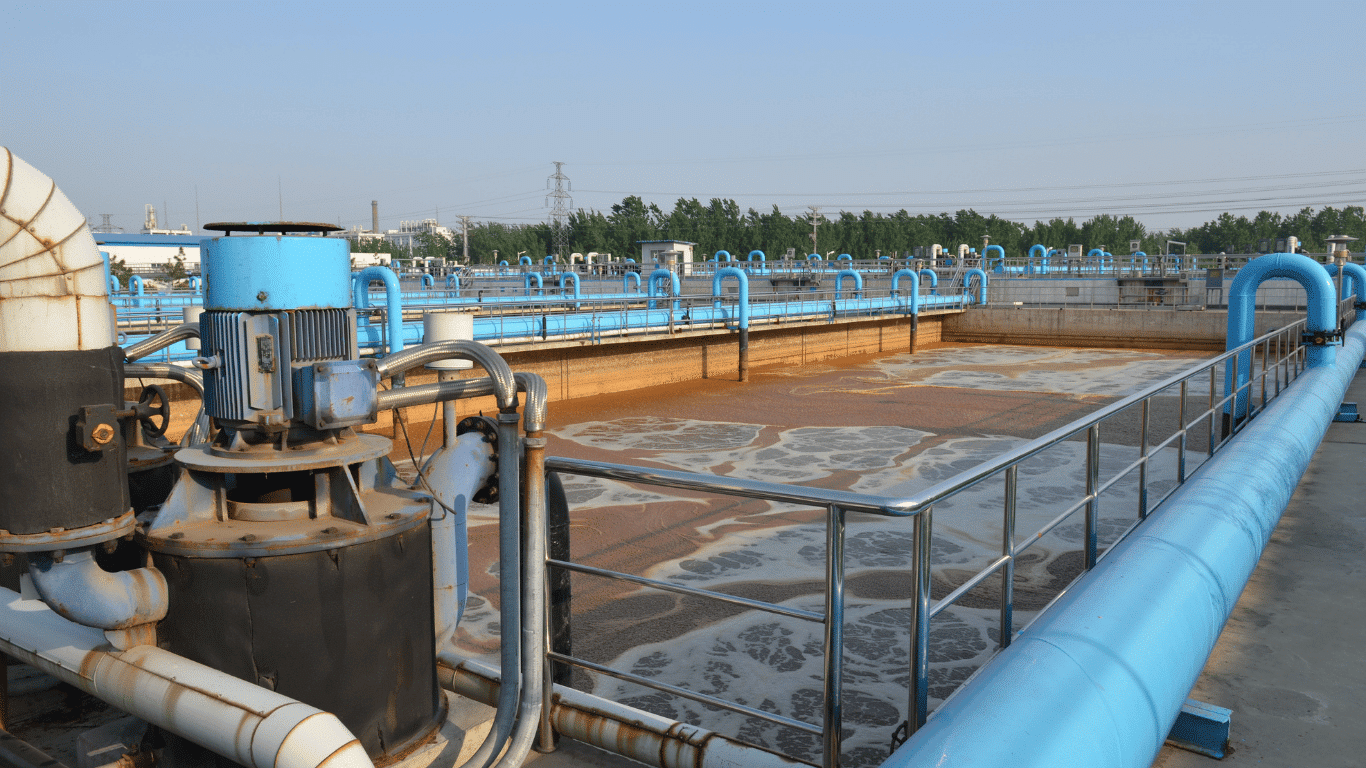
Textile manufacturing depends on water for processes such as washing, bleaching, dyeing, and finishing. These operations generate wastewater containing dyes, chemicals, salts, suspended solids, and organic pollutants that can complicate treatment and discharge. For facility managers, understanding textile industrial wastewater is an important step toward protecting water quality, meeting discharge requirements, and improving resource efficiency. A well-planned treatment strategy helps manufacturers manage these challenges while supporting reliable production and long-term water conservation.
Understanding Textile Industrial Wastewater
Textile industrial wastewater varies according to the materials, chemicals, and production methods a facility uses. Desizing, scouring, bleaching, dyeing, printing, and finishing can each produce wastewater with different contaminant profiles. Dyeing and finishing operations often contribute strong color, dissolved salts, and chemical residues, while washing processes may generate substantial volumes of wastewater containing suspended solids and organic compounds.
These differences matter when selecting a treatment process. Some textile wastewater streams contain readily biodegradable organic material, while others carry synthetic dyes designed to resist fading and chemical breakdown. Wastewater characteristics can also change throughout a production shift as operators switch colors, fabrics, recipes, or cleaning procedures. Teams should characterize individual wastewater streams instead of assuming that one sample represents every operating condition.
Key Challenges in Textile Wastewater Treatment
Color is one of the most visible challenges in textile wastewater treatment, but appearance alone does not indicate treatment performance. Synthetic dyes, including certain azo dyes, can remain in water after conventional biological treatment. Even at relatively low concentrations, residual color may affect receiving waters and reduce light penetration, which can disrupt aquatic ecosystems.
Organic pollution creates another concern. Chemical oxygen demand (COD) measures the oxygen equivalent required to chemically oxidize substances in water, while biochemical oxygen demand (BOD) indicates the oxygen microorganisms consume as they break down biodegradable material under defined test conditions. High organic loads can deplete dissolved oxygen in receiving waters. Facilities may also encounter suspended solids, extreme pH, high salinity, and trace heavy metals such as chromium and copper, depending on their materials and chemical formulations.
These contaminants require careful management because no single treatment technology removes every pollutant. High salt concentrations can inhibit biological treatment, and some dissolved contaminants pass through conventional clarification. Poorly treated or improperly discharged textile effluent can damage aquatic habitats and contaminate soil or groundwater. Operators should monitor discharge quality, manage chemical handling carefully, and confirm applicable permit limits rather than relying on general industry benchmarks.
Primary and Secondary Treatment Methods
An effective textile wastewater treatment process typically starts with preliminary treatment. Screens remove fibers, lint, and larger debris, while equalization tanks help balance fluctuations in flow and contaminant concentrations. Facilities may also adjust pH before downstream treatment. These steps protect equipment, reduce sudden changes in treatment conditions, and create a more stable feed for subsequent processes.
During primary treatment, coagulation and flocculation help separate suspended solids, particulate matter, and some insoluble dyes from wastewater. Coagulants destabilize fine particles, while flocculants help them gather into larger aggregates that settling or flotation equipment can remove. Dissolved air flotation can provide another separation option when wastewater contains fine particles or other materials that respond well to flotation. Jar testing helps operators select suitable chemicals and doses before implementing a full-scale program.
Secondary treatment generally uses biological treatment to reduce biodegradable organic pollution. Activated sludge systems introduce microorganisms that consume suitable organic compounds under controlled conditions. Membrane bioreactors combine biological treatment with membrane filtration, allowing facilities to retain biomass while separating treated water from suspended material. However, biological treatment alone often cannot remove persistent dyes, dissolved salts, or every trace contaminant. Operators should assess the remaining pollutant load before choosing additional treatment stages.
Advanced Treatment Technologies for Color and Pollutant Removal
When conventional treatment leaves persistent color or dissolved contaminants, advanced treatment technologies can improve effluent quality. Advanced oxidation processes generate highly reactive species, including hydroxyl radicals, that break down many organic compounds. Ozonation uses ozone to oxidize dyes and other susceptible contaminants, while hydrogen peroxide-based systems can support different oxidation reactions depending on water chemistry and process design.
Fenton’s reagent combines hydrogen peroxide with an iron catalyst to generate reactive radicals. Under suitable operating conditions, Fenton treatment can achieve very high color removal, with some studies reporting results above 98%. Advanced oxidation processes can also exceed 95% color removal in suitable applications. These figures are not universal guarantees. Actual removal efficiency depends on dye chemistry, pH, oxidant dose, reaction time, wastewater composition, and the selected process. Pilot testing helps determine whether the benefits justify chemical consumption and operating costs.
Membrane filtration offers another option when the treatment target includes fine particles, dissolved contaminants, or water recovery. Ultrafiltration can retain suspended material and larger molecules, while reverse osmosis separates water from many dissolved salts and other constituents. Facilities can consider reverse osmosis when they need lower total dissolved solids for reuse, but they must also account for membrane fouling, pretreatment requirements, energy consumption, and concentrated reject streams. A membrane filtration system may form part of a broader treatment train when the wastewater characteristics and recovery targets support its use.
Tertiary treatment provides the final polishing stage when secondary effluent does not meet reuse or discharge requirements. Depending on the target, this stage may combine advanced oxidation, adsorption, membrane separation, or additional filtration. Teams should select technologies based on measured contaminants and intended water quality rather than adding equipment without a clear performance objective.
Water Reuse and Zero Liquid Discharge
Water reuse can help textile manufacturers reduce freshwater demand and manage wastewater volumes. After appropriate treatment, recovered water may serve non-product-contact applications such as selected washing operations or utility processes, provided the water meets the quality requirements for that use. A successful reuse program starts by matching the quality of recovered water to the needs of each process and checking for contaminants that could affect fabric quality, equipment, or production chemistry.
Zero liquid discharge (ZLD) takes water recovery further by treating wastewater to recover reusable water while minimizing or eliminating routine liquid discharge from the defined system boundary. ZLD systems commonly combine pretreatment, membrane concentration, and thermal processes when necessary. They also generate concentrated brine or solid residues that facilities must manage responsibly. Because energy demand, capital cost, and residual disposal can be substantial, operators should assess the water balance and economic case before adopting ZLD.
Building an Effective Textile Wastewater Treatment Strategy
Start with a wastewater assessment that identifies flow rates, pH, COD, BOD, suspended solids, color, conductivity, total dissolved solids, and relevant metals. Sampling should capture changes across production cycles and operating conditions. Teams should also identify which streams contribute the highest contaminant loads and determine whether they can segregate concentrated dye baths, cleaning solutions, or other high-strength wastewater from less contaminated streams. Segregation can improve targeted treatment efficiency and reduce unnecessary chemical use.
Next, establish treatment objectives based on discharge permits, reuse requirements, and operating priorities. Bench-scale testing can compare coagulants, oxidation methods, and other treatment options before a facility commits to full-scale changes. A chemical treatment program can support the selection and control of treatment chemicals, but operators should verify dosing against actual wastewater conditions. Excessive dosing can increase costs and sludge generation, while insufficient dosing can reduce removal performance.
Finally, build routine monitoring and maintenance into daily operations. Track treatment performance, chemical consumption, sludge production, membrane pressure, and key water quality indicators. Investigate sudden changes instead of adjusting chemical feed without understanding the cause. A well-managed wastewater treatment plant combines suitable equipment, trained operators, reliable monitoring, and regular performance reviews.
Developing a More Effective Treatment Approach
Textile manufacturers can improve wastewater performance when they connect source control, treatment technology, and water reuse planning. Start by identifying the most challenging wastewater streams, then establish measurable treatment targets and test solutions against real operating conditions. Review the entire treatment train regularly so each stage supports the next without creating unnecessary energy use, chemical demand, or residual waste.
If your facility needs to improve color removal, manage difficult wastewater streams, or evaluate opportunities for water recovery, talk to our ProChem experts and discuss your industrial water treatment requirements. Our team can help you assess suitable treatment technologies and develop an approach that aligns with your facility’s water quality goals and operational needs.
