
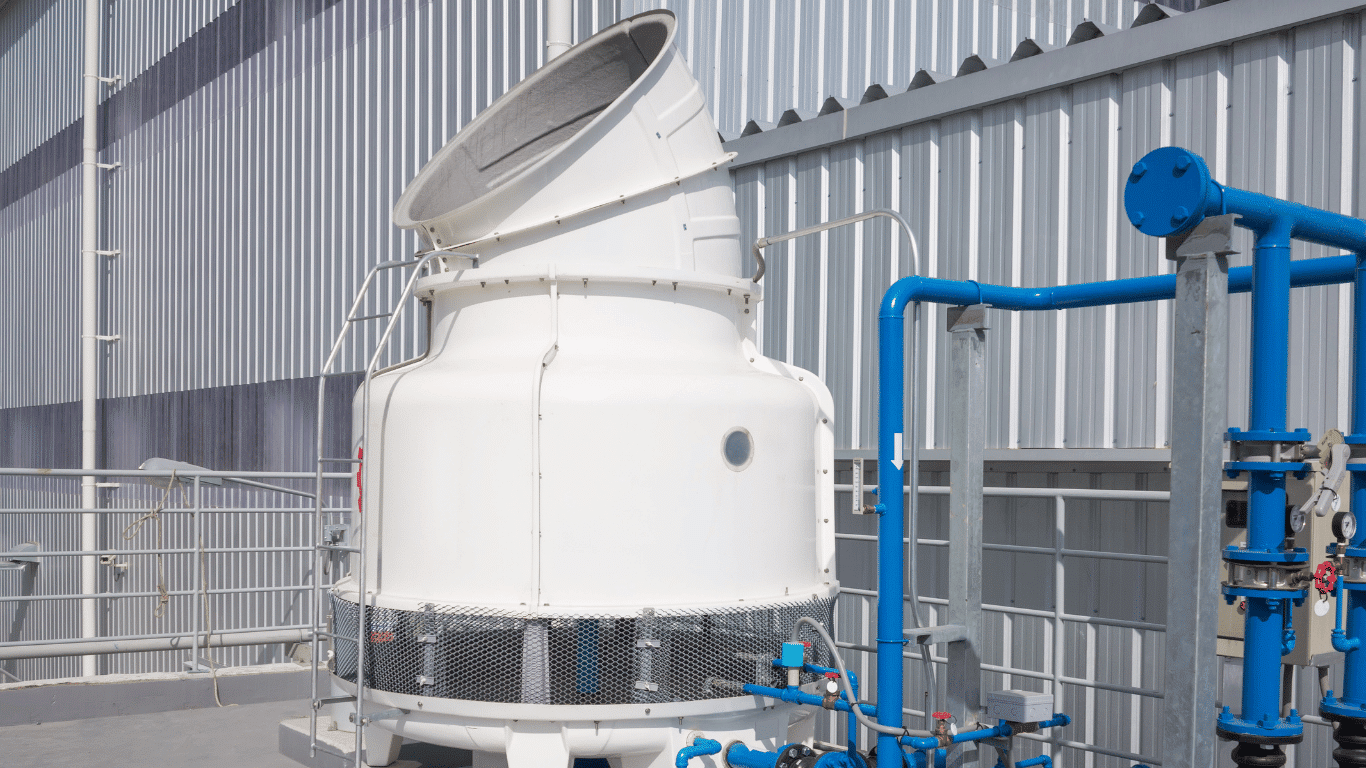
A cooling tower depends on sound structural components and stable water chemistry to operate reliably. However, newly installed galvanized steel surfaces face a particular risk during their first exposure to circulating water. Without proper protection, the zinc coating can react with the water and develop white rust, which can shorten equipment life and increase maintenance demands. Cooling tower passivation helps address this early corrosion risk and establishes a more stable protective surface for long-term operation.
Understanding Cooling Tower Passivation
Cooling tower passivation is a chemical treatment process that helps galvanized steel develop a protective film against corrosion. Manufacturers commonly use hot-dip galvanizing to protect cooling tower structures, basins, and other steel components. This process applies a zinc coating to the underlying steel, creating a barrier against moisture and other corrosive elements. However, freshly galvanized surfaces need time and suitable water conditions to develop a stable protective layer.
The passivation process encourages the formation of a more stable surface film through controlled water chemistry and, when appropriate, chemical treatment. This film helps limit direct contact between the zinc coating and aggressive substances in tower water. In galvanized systems, proper passivation also reduces the likelihood of premature coating deterioration, particularly during initial operation. Teams should treat this stage as an important part of commissioning a new cooling tower rather than an optional maintenance activity.
Why Passivation Matters for Galvanized Cooling Towers
One of the main reasons facilities perform tower passivation is to prevent white rust. This corrosion product typically appears as a white, powdery deposit on newly galvanized surfaces. It develops when zinc reacts with water and oxygen under unfavorable conditions, particularly when the water chemistry promotes the formation of zinc hydroxide and related compounds. High pH, unsuitable water hardness, and inadequate control of treatment chemicals can increase the risk.
White rust deserves attention because it can damage the galvanized coating and expose the underlying steel to further corrosion. Once the protective zinc layer deteriorates, the steel structure becomes more vulnerable to moisture and corrosive ions. This damage can eventually affect structural integrity, increase repair requirements, and shorten the service life of galvanized cooling towers. Proper cooling tower passivation helps preserve the zinc coating, supports corrosion control, and reduces the likelihood of expensive equipment problems.
How the Passivation Process Works
The passivation process focuses on creating conditions that encourage a protective film to develop on galvanized surfaces. Fresh zinc naturally reacts with its surrounding environment, forming compounds that contribute to surface protection. These may include zinc oxide and zinc carbonate, which can help stabilize the outer layer when water chemistry remains suitable. The objective is to encourage a stable passivation layer instead of allowing uncontrolled corrosion reactions to produce white rust.
Depending on the equipment manufacturer’s recommendations and the treatment program, phosphate-based chemicals or silicate formulations may help support this process. Certain programs use stabilized phosphate chemistry to promote zinc passivation while maintaining control over mineral deposition. However, chemical selection requires care. Excessive phosphate dosing can cause calcium phosphate deposition, particularly when water hardness and operating conditions favor precipitation. A qualified water treatment specialist should determine the appropriate chemical formulation and dosing strategy for the specific cooling system.
Preparing a Cooling Tower for Passivation
Before starting a passivation procedure, inspect and clean the cooling system. Dirt, oil, construction debris, and other fouling material can interfere with water circulation and prevent treatment chemicals from reaching the galvanized surfaces evenly. Cleaning also helps remove deposits that may affect the accuracy of water chemistry measurements. If the facility recently installed or repaired a cooling tower, check the basin, fill, distribution system, and accessible steel components for contamination or damage.
Next, establish suitable water conditions before introducing the treatment chemicals. Review the quality of the make up water, particularly its hardness, alkalinity, dissolved solids, and pH. These characteristics influence how the water interacts with the zinc coating during the passivation period. Teams should also evaluate the potential for corrosive ions to concentrate as water evaporation increases dissolved mineral levels. Establishing a controlled starting point makes it easier to maintain consistent conditions throughout the treatment process.
Maintaining the Right Conditions During Passivation
Water chemistry plays a major role in successful passivation. Galvanized steel generally performs best within a controlled pH range, commonly around 6.5 to 8, although the exact target depends on the equipment manufacturer’s guidance and the selected chemical program. Some initial passivation procedures require a narrower operating range. For this reason, avoid applying a universal pH target without considering the system’s specifications. Excessively alkaline conditions can accelerate zinc corrosion and increase white rust formation.
Hardness and alkalinity also require careful attention. Water that is too soft may not provide the conditions needed for stable zinc surface protection, while excessive hardness can increase the potential for scale formation. Similarly, high phosphate dosing without proper control can encourage unwanted mineral deposits. Monitor pH, hardness, alkalinity, and treatment chemical concentrations throughout the passivation period. Operators should also check for changes caused by makeup water additions, water evaporation, and blowdown. Consistent monitoring helps maintain the recommended phosphate concentration and prevents calcium phosphate deposition from interfering with the protective film.
Signs of Successful Passivation and Common Problems
Visual inspections provide a useful way to evaluate the condition of galvanized surfaces during and after treatment. Look for reasonably uniform surface appearance and check for unusual white, powdery deposits, localized discoloration, or signs of coating deterioration. Although a visual inspection cannot confirm the full condition of the protective film, it can help operators identify potential problems before they spread. Water chemistry records and corrosion monitoring provide additional information when evaluating treatment performance.
White rust formation during the initial operating period may indicate that the water chemistry needs adjustment or that the passivation program requires further evaluation. However, do not assume that every white deposit represents the same corrosion condition. Its appearance, location, and extent matter when determining the cause. Teams should investigate recurring deposits, review chemical feed rates, and check for changes in tower pH and hardness. Early corrective action can significantly reduce further zinc coating damage.
Maintaining Long-Term Corrosion Protection
Passivation establishes an important foundation, but it does not replace ongoing cooling tower water treatment. Once the initial protective film develops, facilities still need a consistent corrosion inhibiting chemical program to maintain suitable operating conditions. Corrosion inhibitors help protect exposed metal surfaces, while scale inhibitors manage mineral deposits that can interfere with heat transfer and water circulation. The treatment strategy should account for the tower’s materials, operating temperature, heat load, makeup water quality, and cycles of concentration.
Routine maintenance also helps preserve the results of successful passivation. Monitor water chemistry, inspect galvanized components, maintain appropriate blowdown rates, and investigate unusual changes in water consumption or system performance. Remember that tower water remains subject to changing conditions as the facility adjusts its operating load. A well-managed water treatment program helps protect the galvanized coating while supporting efficient heat rejection and reliable cooling tower operation.
Supporting Reliable Cooling Tower Performance
Protecting galvanized equipment requires more than applying chemicals during initial commissioning. Facilities need a coordinated approach that considers water quality, treatment chemistry, equipment condition, and ongoing maintenance requirements. ProChem Inc. provides industrial water treatment solutions that help facilities manage corrosion, scaling, and other water-related operating concerns. Explore our cooling tower water treatment solutions to learn how a properly managed chemical program can support equipment protection and dependable system performance.
If your facility is commissioning a new cooling tower or addressing recurring corrosion concerns, talk to our experts. The right treatment strategy should reflect your equipment specifications and actual water chemistry. ProChem can help assess your cooling water requirements and identify practical ways to protect galvanized surfaces while maintaining reliable operations.
Frequently Asked Questions (FAQ)
What happens if a new cooling tower does not undergo passivation?
Without proper passivation, freshly galvanized surfaces remain more vulnerable to aggressive water conditions. This can accelerate white rust formation, damage the zinc coating, and expose the underlying steel to corrosion. Over time, the corrosion process can increase maintenance costs and contribute to premature equipment deterioration.
How long does the cooling tower passivation process take?
The passivation period varies according to water chemistry, equipment specifications, chemical formulation, and operating conditions. Some programs require several weeks of controlled operation, while others may take longer. Rather than following a fixed timeline, operators should monitor water chemistry and surface conditions to determine when the treatment has achieved its intended results.
What causes white rust in galvanized cooling towers?
White rust forms when zinc reacts with moisture and oxygen under unfavorable conditions. High pH, unsuitable water hardness, and poor water chemistry control can contribute to its development. The resulting deposits commonly contain zinc compounds such as zinc hydroxide and zinc carbonate. Proper passivation and white rust prevention practices help reduce this risk.
Can corrosion inhibitors replace the passivation process?
No. Corrosion inhibitors support ongoing corrosion control, but they do not automatically replace the initial passivation requirements of newly galvanized equipment. Facilities should follow an appropriate passivation procedure during commissioning and maintain a suitable corrosion inhibiting chemical program afterward.
How can operators maintain zinc coating protection after passivation?
Operators should regularly monitor pH, hardness, alkalinity, and inhibitor concentrations. They should also maintain proper blowdown, inspect galvanized surfaces, and evaluate makeup water quality. Consistent water treatment and proper control of operating conditions help maintain the protective coating and reduce the risk of renewed corrosion.
