
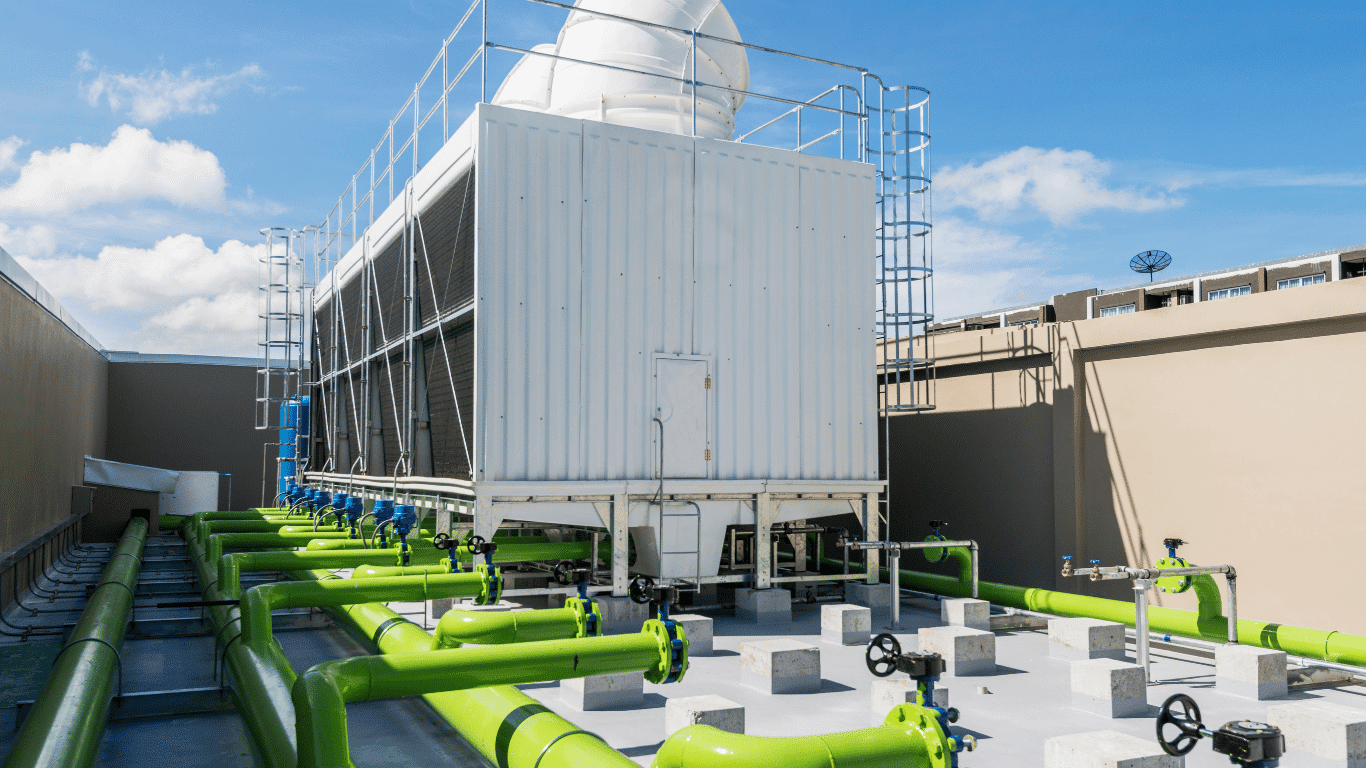
Cooling towers do an important job for industrial and commercial facilities, but they also consume water as they operate. Understanding makeup water for cooling tower systems helps operators keep the tower at the right operating level while managing water quality, treatment costs, and overall efficiency. The key is not simply adding water whenever the level drops. Teams need to understand where the water goes, how much the system actually needs, and what the incoming water brings into the tower. Once you have a clear picture of those factors, it becomes much easier to manage the tower reliably and avoid unnecessary water use.
What Is Makeup Water in a Cooling Tower?
Cooling tower makeup water replaces water that leaves the system during normal operation. The tower continuously circulates water over heat transfer surfaces, and some of that water eventually leaves through evaporation, blowdown, drift, leaks, or other losses. Makeup water restores that lost volume so the tower can continue circulating water at the proper level. In simple terms, it is the fresh, treated, or reclaimed water added to compensate for those losses. Understanding this balance gives operators a practical starting point for determining their makeup water requirements.
It is also important to distinguish makeup water from circulating cooling water. The circulating water remains within the cooling loop and repeatedly passes through the tower, while makeup water enters only to replace what the system has lost. These cooling tower water losses vary with operating conditions, weather, heat load, water chemistry, and equipment condition. For example, a tower operating under a heavy heat load on a hot day may require more makeup than the same tower operating under lighter conditions. Tracking these changes gives operators a better picture of actual water demand.
Why Cooling Towers Need Makeup Water
The largest contributor to cooling tower water consumption is usually evaporation. As warm circulating water contacts moving air, a portion of the water changes into vapor and leaves the tower. This evaporation removes heat and provides the cooling effect the system needs, but the lost water must eventually return to the system as makeup. The amount can change considerably depending on the tower’s heat load, ambient conditions, airflow, and operating schedule. That makes evaporation one of the first factors to consider when evaluating makeup water for cooling tower systems.
Other losses also contribute to total water demand. Blowdown removes a portion of concentrated circulating water, while drift carries small water droplets out of the tower with the exhaust air. Leaks, overflow, poorly adjusted valves, and maintenance activities can create additional losses. Operators should pay attention when makeup-water demand suddenly increases without a corresponding change in production or cooling load. Checking the makeup meter, blowdown rate, basin level, valves, and visible piping can help identify the cause before excessive water consumption becomes a larger operating issue.
How to Calculate Cooling Tower Makeup Water
A basic cooling tower makeup water calculation starts with the total water leaving the system. The fundamental relationship is:
Makeup water = evaporation + blowdown + drift + other losses
Evaporation depends largely on the amount of heat the tower must reject. As the heat load increases, the tower generally evaporates more water. Blowdown depends on the desired cycles of concentration and the concentration of dissolved minerals in the circulating water. Drift depends on tower design and drift-eliminator performance, while leaks and other losses depend on equipment condition and operating practices. Looking at each component separately helps operators understand the actual makeup water flow rate rather than relying on assumptions.
For a simple operating assessment, teams can work through the following steps:
- Determine the cooling tower’s heat load and estimated evaporation rate.
- Measure or estimate the blowdown flow.
- Account for drift and known system losses.
- Add the individual losses to estimate total makeup demand.
- Compare the estimate with the actual makeup-water meter reading.
The cooling tower evaporation rate can change with weather and load, so a single calculation may not represent year-round demand. Actual meter readings provide valuable information because they show what the system consumes under real operating conditions. If measured makeup is consistently higher than the expected amount, investigate blowdown settings, leaks, overflow, drift, and other possible sources of loss.
How Blowdown and Cycles of Concentration Affect Makeup Water
Cooling tower blowdown plays an important role in controlling water chemistry. Evaporation removes water as vapor but leaves most dissolved minerals and other nonvolatile substances behind. As the tower continues operating, those materials become more concentrated in the circulating water. Blowdown removes some of that concentrated water and replaces it with lower-concentration makeup water. This creates a direct relationship between blowdown and overall water demand.
The number of cooling tower cycles of concentration describes how much the dissolved material has concentrated in the circulating water compared with the makeup water. Increasing cycles can reduce blowdown because the tower can operate with a higher concentration before operators need to discharge water. However, that does not mean facilities should simply push the concentration ratio as high as possible. The water still needs to remain within acceptable limits for scale control, corrosion protection, biological control, heat transfer, and equipment reliability.
The right balance depends on the water chemistry and the capabilities of the treatment program. If hardness, alkalinity, silica, chloride, or other constituents reach problematic levels, higher cycles may increase operating risks even if they reduce blowdown. Operators should therefore look at water quality, treatment performance, and equipment condition together. A well-managed system aims for an appropriate cooling tower concentration ratio, not simply the highest number possible.
What Water Quality Should Makeup Water Have?
The quality of incoming water can strongly influence cooling tower performance. Cooling tower water quality affects how quickly minerals concentrate, how much treatment the system needs, and how effectively operators can control scale, corrosion, and biological growth. Hardness and alkalinity can contribute to scale formation, while high levels of dissolved solids can limit how far operators can increase cycles. Suspended solids can also contribute to deposits and fouling if the system lacks adequate filtration.
For that reason, teams should evaluate the source before selecting treated makeup water or a treatment process. Municipal water, well water, surface water, reclaimed water, and other sources can have very different characteristics. Testing pH, hardness, alkalinity, conductivity or TDS, suspended solids, and other relevant parameters provides a better foundation for treatment decisions. If you need to evaluate different treatment technologies, ProChem provides a range of water treatment systems designed around different water-quality and process requirements.
Improving Makeup Water Efficiency
Improving cooling tower water efficiency starts with understanding where the water goes. Excessive blowdown often provides an opportunity because poorly controlled discharge can send usable water down the drain. Teams should review blowdown settings, verify that control systems respond correctly, and monitor conductivity or other indicators used to manage concentration. At the same time, leaks, overflowing basins, faulty valves, and damaged components deserve attention because even a relatively small continuous loss can add up over time.
Facilities can also look beyond conventional fresh-water sources. Improved filtration can help control suspended solids and support more stable operation, while appropriate chemical treatment can help the system operate within its intended water chemistry limits. In some facilities, reclaimed or treated wastewater may also provide an alternative source. A properly designed industrial water reuse strategy can help facilities explore opportunities for reducing cooling tower water use while making better use of available water resources.
Choosing the Right Treatment Approach
There is no single water-quality specification that works for every cooling tower. The appropriate cooling tower water treatment approach depends on the source water, tower design, heat load, operating conditions, cycles of concentration, discharge requirements, and the contaminants present in the makeup supply. Operators should start with actual water testing and operating data rather than selecting treatment equipment based on the tower size alone.
Depending on the application, treatment may include filtration, softening, reverse osmosis, ion exchange, or chemical treatment. Softening can help address hardness, while membrane systems can reduce dissolved solids when the source water requires deeper treatment. Chemical programs can help control scale, corrosion, and biological activity within the circulating system. ProChem’s cooling tower water treatment resources provide additional guidance on how treatment, filtration, and water chemistry management work together in cooling applications.
Building a Better Cooling Tower Water Management Strategy
A practical cooling tower water management program starts with a water balance. Measure makeup water, blowdown, and other known losses, then compare those numbers with the tower’s operating conditions. From there, review source-water chemistry and determine whether the current cycles of concentration make sense for the system. This approach helps teams identify whether excess water use comes from normal evaporation, unnecessary blowdown, equipment problems, or treatment limitations.
Teams should also establish routine monitoring so changes become visible early. Track makeup flow, conductivity, blowdown, chemical feed, water chemistry, and other relevant operating data, then investigate significant changes instead of waiting for scale, corrosion, or performance problems to appear. Good monitoring turns water management into an ongoing process rather than a one-time adjustment.
Next Steps
Managing makeup water for cooling tower systems starts with a clear understanding of water losses and ends with consistent monitoring and treatment. Start by measuring makeup flow and identifying evaporation, blowdown, drift, leaks, and other losses. Next, review your source-water chemistry, cycles of concentration, and treatment program to determine where you can improve efficiency without compromising equipment protection. Finally, continue tracking the system so you can respond when conditions change.
Want a closer look at your cooling tower water requirements and treatment strategy? Connect with ProChem to discuss a practical approach for improving water efficiency and maintaining dependable system performance.
Frequently Asked Questions (FAQ)
How much makeup water does a cooling tower need?
A cooling tower’s makeup-water demand depends mainly on evaporation, blowdown, drift, and other system losses. Heat load and operating conditions also affect the amount of water the tower evaporates. The most reliable approach combines an estimated water balance with actual makeup-water meter readings.
What is the difference between makeup water and blowdown?
Makeup water enters the cooling tower to replace water that the system loses. Blowdown removes a portion of circulating water to prevent dissolved minerals and other contaminants from becoming too concentrated. As a result, blowdown creates an additional demand for makeup water.
Can reclaimed water be used as cooling tower makeup water?
Yes, facilities can use reclaimed or treated water for cooling tower makeup in appropriate applications. However, operators should evaluate the water’s hardness, TDS, alkalinity, suspended solids, biological characteristics, and other relevant parameters before using it. The treatment program must match the quality of the reclaimed source and the tower’s operating requirements.
What affects cooling tower makeup water consumption?
Several factors influence cooling tower water consumption, including heat load, ambient temperature, evaporation, cycles of concentration, blowdown settings, drift, leaks, and water chemistry. Operating schedules and equipment condition can also change demand. Monitoring actual water use helps identify unusual losses.
How can you reduce cooling tower makeup water requirements?
Start with a water balance and determine how much water the tower loses through evaporation, blowdown, drift, and other sources. Then review cycles of concentration, optimize blowdown control, repair leaks, improve filtration, and evaluate suitable water reuse opportunities. The goal is to reduce unnecessary losses while maintaining the water chemistry needed for reliable cooling tower operation.
