
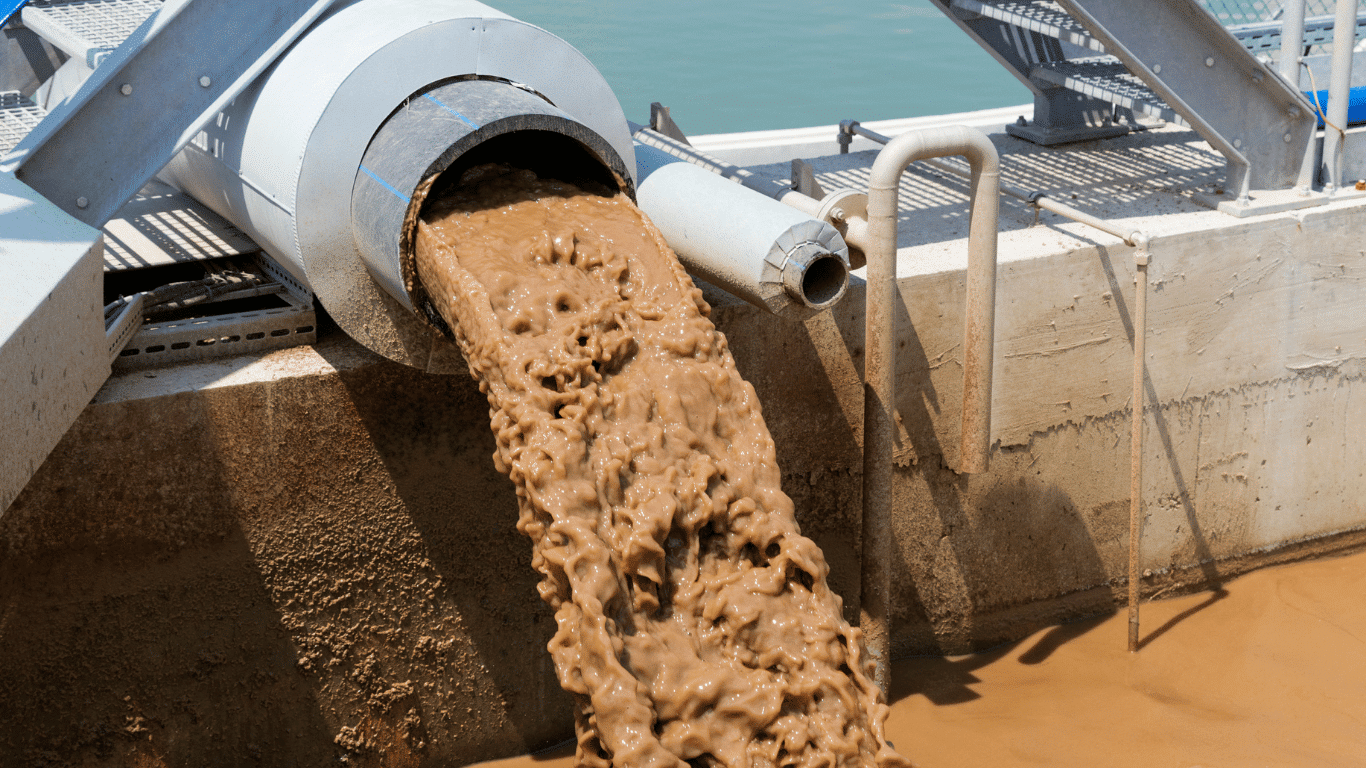
Sludge management is an important part of wastewater treatment, especially when facilities need to control disposal costs and maintain consistent operations. A sludge dewatering polymer helps separate water from accumulated solids, making sludge easier to handle and transport. Choosing the right product and applying it correctly can improve treatment performance while helping operators get more value from their existing equipment.
What Is a Sludge Dewatering Polymer?
A sludge dewatering polymer is a high-molecular-weight synthetic organic compound used to improve solid-liquid separation during wastewater treatment. Wastewater sludge typically contains a high percentage of water, sometimes around 99%, which makes direct handling and disposal costly. Polymers help bind fine particles into larger aggregates, allowing more water to drain from the sludge.
The process starts with sludge conditioning. Polymer chains interact with suspended solids and encourage small particles to form larger clusters called flocs. These flocs release water more readily during mechanical separation, producing a denser sludge cake and clearer liquid. Depending on the treatment objectives, the right polymer can also reduce the volume of waste sludge that a facility needs to transport and dispose of.
How Polymers Improve the Sludge Dewatering Process
Polymers improve dewatering by helping suspended solids separate from the surrounding liquid. Many sludge particles carry a negative surface charge, which causes them to repel one another and remain dispersed in water. Cationic polymers neutralize these negatively charged particles and help polymer chains attach to multiple solids, forming larger flocs through charge neutralization and bridging.
Once flocculation occurs, the conditioned sludge enters dewatering equipment such as belt filter presses, centrifuges, or screw presses. Mechanical forces remove free water from the flocculated material, leaving a more concentrated sludge cake. Effective conditioning can improve throughput, reduce the amount of liquid carried into disposal, and help operators maintain more stable equipment performance.
However, polymer performance depends on more than the chemical itself. Sludge composition, solids concentration, mixing intensity, and equipment settings all influence separation. Operators should assess cake dryness, filtrate or centrate clarity, and solids capture together rather than judging performance by a single measurement. These indicators help determine whether the treatment process achieves the facility’s operating goals.
Types of Polymers Used for Sludge Dewatering
Different polymer types serve different sludge characteristics and treatment conditions. The best choice depends on particle charge, solids composition, and the mechanical separation method.
- Cationic polymers: These positively charged polymers are commonly used for municipal and biological sludge. They neutralize negatively charged particles and help form flocs that release water efficiently.
- Anionic polymers: These negatively charged polymers can support specific industrial sludge dewatering applications. They may improve particle bridging and floc structure, particularly when the sludge chemistry and other conditioning chemicals favor their use.
- Non-ionic polymers: These polymers have little or no ionic charge. Operators may consider them when charge interactions are not the primary factor controlling particle aggregation.
Inorganic coagulants, such as iron or aluminum salts, may also support sludge conditioning. They can destabilize suspended particles or change surface charge before polymer addition. Some facilities use a coagulant and polymer combination when one chemical alone does not deliver the desired separation. Still, adding more chemicals does not automatically improve performance. Operators should confirm that each product contributes to the treatment objectives.
How to Select the Right Polymer
Effective polymer selection starts with understanding the sludge rather than choosing a product based on price or a general recommendation. Municipal biological sludge, industrial waste sludge, and mixed sludge can respond differently because their chemical properties, particle sizes, and solids concentrations vary. A product that works well in one wastewater treatment plant may not produce the same results in another facility.
Start by reviewing the sludge source, existing conditioning chemicals, and the performance of the dewatering equipment. Then compare polymer characteristics such as molecular weight and charge density. High-molecular-weight polymers can create larger flocs through chain bridging, but they are sensitive to excessive shear during mixing. Charge density influences how strongly a cationic polymer interacts with negatively charged particles. The ideal balance depends on the sludge and the operating conditions.
Jar testing gives operators a practical way to compare candidate products and determine an effective polymer dose before making full-scale changes. Test representative sludge samples under controlled conditions, vary the dosage, and observe floc formation, settling behavior, and water release. Whenever possible, follow promising results with equipment trials because laboratory mixing conditions cannot fully reproduce the forces inside a centrifuge or press.
Polymer Dosage and Preparation
Polymer dosage directly affects dewatering efficiency, chemical consumption, and operating costs. A typical starting range may be around 1 to 10 kg of active polymer per metric ton of dry solids (DS), although actual requirements vary significantly with sludge characteristics, product formulation, and equipment. Treat this range as a testing guide, not a fixed operating specification. Confirm the correct basis and dosage with the supplier’s product guidance and site testing.
Too little polymer may leave fine particles dispersed in the liquid, resulting in weak flocs, cloudy filtrate, and poor solids capture. Excessive dosing can waste chemicals, increase operating costs, and sometimes create slippery or gelatinous sludge that separates poorly. Operators should track the relationship between polymer dose, cake dryness, liquid clarity, and solids capture to identify the most economical operating point.
Proper polymer preparation matters just as much as dosage. Dry, liquid, and emulsion polymers have different preparation requirements, so follow the manufacturer’s instructions for concentration, dilution, mixing, and maturation time. Allow sufficient time for the polymer to hydrate or activate before feeding it into the sludge stream. Use controlled mixing to distribute the solution evenly without damaging the polymer chains, especially when working with high-molecular-weight products.
Common Problems That Affect Dewatering Performance
Poor dewatering does not always mean the polymer is unsuitable. Changes in incoming wastewater, solids concentration, temperature, or equipment operation can alter how the conditioning program performs. For example, higher temperatures may change solution viscosity and reaction behavior, while fluctuations in sludge composition can affect floc formation and water release.
Watch for common warning signs such as small or fragile flocs, cloudy filtrate, wet sludge cake, and rising polymer consumption. These symptoms may indicate an incorrect dose, poor polymer preparation, inadequate mixing, or excessive shear. Check feed consistency, solution age, dilution water quality, and the condition of the dosing system before changing several operating variables at once.
A structured troubleshooting approach helps teams identify the cause without wasting chemicals or disrupting production. Compare current performance with operating records, collect fresh sludge samples, and repeat jar testing when feed conditions change. Inspect pumps, feed lines, and mixing points to confirm that the polymer reaches the sludge consistently. Facilities can also review their broader wastewater treatment process to identify upstream conditions that may be affecting solids separation.
Improving Dewatering Efficiency Through Process Control
Consistent performance requires coordination between chemical conditioning and mechanical separation. Establish baseline measurements for polymer consumption, dry-solids throughput, cake solids content, and filtrate or centrate quality. Review these indicators regularly so operators can distinguish normal fluctuations from problems that require corrective action.
Next, coordinate polymer feed with changes in sludge flow and solids concentration. A dosing rate that works during steady operation may become inadequate when the solids load increases. Where practical, use flow and solids measurements to guide dose adjustments, while confirming changes through performance testing. Avoid abrupt changes to mixing speed or feed rate because they can break flocs or destabilize the dewatering process.
Equipment condition also affects results. Worn components, blocked feed lines, and inconsistent feed distribution can limit separation even when polymer conditioning performs well. Regular inspections and preventive maintenance help protect throughput and reduce unplanned downtime. Facilities evaluating broader treatment improvements can also review ProChem’s wastewater treatment systems to understand how treatment stages and equipment work together.
Supporting Reliable Wastewater Treatment Operations
A well-managed polymer program supports more than a drier sludge cake. Better solids capture can reduce the amount of suspended material leaving with the separated liquid, while lower sludge volume can simplify storage, handling, and disposal. These improvements can also help a wastewater treatment plant use its dewatering equipment more effectively and manage chemical consumption with greater consistency.
However, polymer selection should remain part of a broader treatment strategy. Operators need to account for incoming wastewater characteristics, discharge requirements, equipment capacity, and the intended handling or disposal route for the resulting solids. Reviewing the complete process helps teams avoid optimizing one measurement at the expense of another, such as improving cake dryness while allowing excessive solids to escape in the filtrate.
For facilities that need help evaluating chemical conditioning, equipment performance, or treatment system requirements, ProChem provides industrial water and wastewater treatment solutions. Explore our chemical treatment programs to learn more about treatment approaches, and talk to our experts to discuss the needs of your facility and identify practical ways to improve sludge handling and dewatering performance.
