
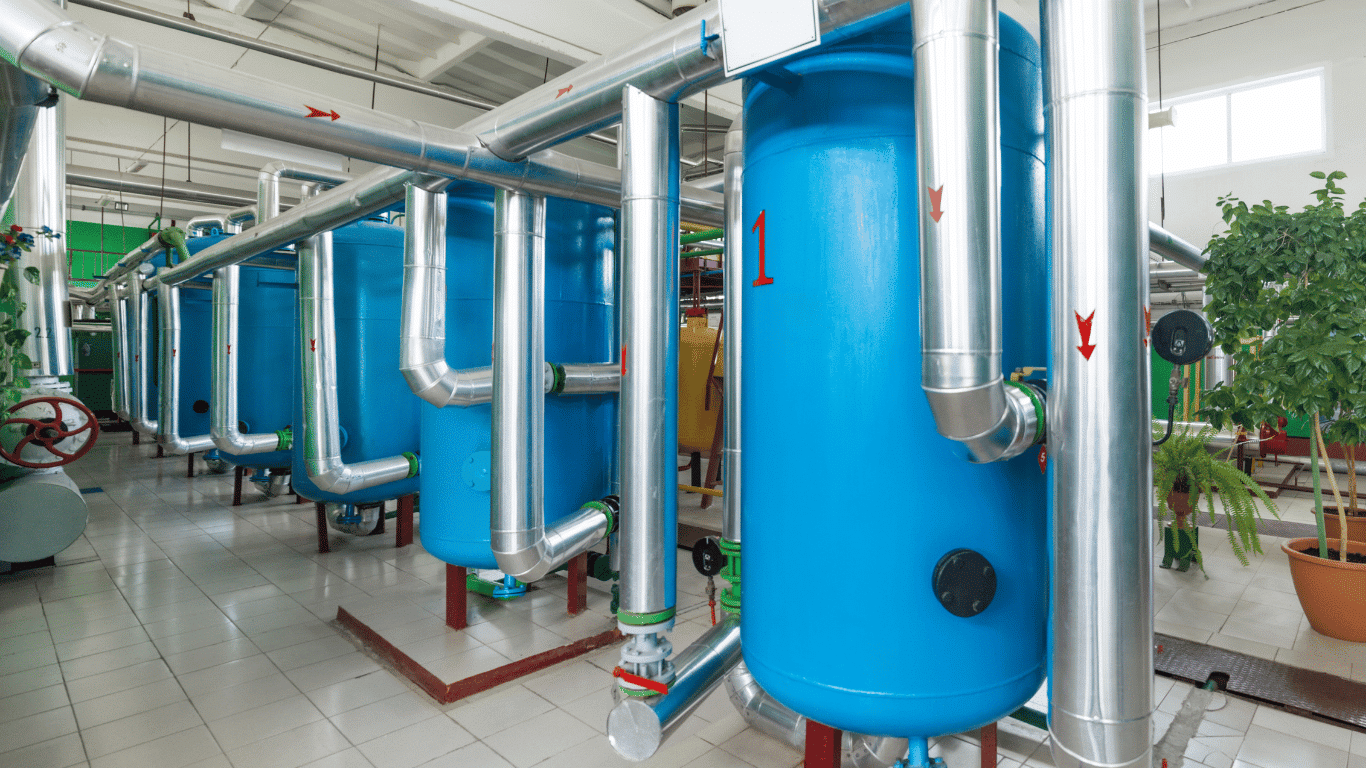
Water purity plays an important role in industrial operations, particularly in facilities that depend on consistent, high-quality process water. Mixed bed systems help achieve this by removing dissolved ions that conventional treatment methods may leave behind. However, these systems need regular attention to maintain their performance.
Mixed bed resin regeneration restores the ion exchange capacity of exhausted resins, allowing the system to continue producing high-purity water. Understanding how this process works, what chemicals it requires, and which operating conditions matter will help your team maintain reliable treatment performance and avoid unnecessary resin replacement.
Understanding Mixed Bed Resin Systems
A mixed bed system combines cation and anion resins inside a single vessel. These ion exchange resins work together to remove dissolved minerals and other charged impurities from water. The cation resin captures positively charged ions, including calcium, magnesium, and sodium, while the anion resin captures negatively charged ions such as chloride and sulfate. Together, they remove dissolved solids that affect water quality.
During operation, the cation resin exchanges positively charged ions for hydrogen ions, while the anion resin exchanges negatively charged ions for hydroxide ions. These hydrogen and hydroxide ions combine to form water. Since both resin types work throughout the same resin bed, the system provides multiple opportunities for ion removal as water passes through the vessel. This makes mixed bed ion exchange particularly useful when a facility needs extremely low conductivity.
You will commonly find mixed bed systems in applications that require ultra-pure water, including pharmaceutical production, electronics manufacturing, semiconductor processing, and power plant operations. They also support boiler feedwater preparation and condensate polishing. For a closer look at the materials behind these systems, explore our guide on what ion exchange resin is and how it works.
How the Mixed Bed Resin Regeneration Process Works
As the resin beads capture dissolved ions, their available exchange sites gradually become occupied. Eventually, the resin reaches exhaustion and can no longer maintain the required water quality. At this point, operators need to initiate the mixed bed regeneration process to restore the cation and anion resins before returning the vessel to service. Although equipment designs vary, most regeneration procedures follow several essential stages.
Backwashing and Resin Separation
Backwashing starts the regeneration cycle. Operators introduce water upward through the vessel to expand and loosen the resin bed, remove accumulated particles, and separate the two resin types according to their density. The heavier cation resin settles at the bottom, while the lighter anion resin rises to the top. Once the backwash ends, the resin settles into two distinct layers.
Flow control matters during this stage. A backwashing rate around 10 to 15 m/h can serve as a reference for certain resin designs, but operators should always follow the resin manufacturer’s specifications and equipment requirements. Too little flow may leave the resins mixed together, while excessive flow can cause resin loss or an unstable separation interface. Accurate resin separation helps prevent chemical cross-contamination during subsequent regeneration steps.
Chemical Regeneration and Rinsing
Once the resin layers separate, operators introduce the appropriate regenerants. Acid regenerates the cation resin, while an alkaline solution restores the anion resin. Many systems use separate chemical distribution paths to keep each regenerant in contact with its intended resin layer. Operators then perform a slow rinse to displace most of the remaining chemicals and prevent excessive regenerant carryover.
Air Mixing and Final Rinsing
After the individual resins complete regeneration and rinsing, operators lower the water level to the specified mixing point. They then introduce compressed air through the bottom of the vessel to thoroughly combine the cation and anion resin beads. Air mixing is essential because it restores the uniform distribution that allows both resins to work together during normal operation. Finally, operators refill the vessel and perform a fast or final rinse until the treated water meets the required quality limits. This completes the regeneration cycle and prepares the mixed bed unit for service.
Chemicals Used in Mixed Bed Resin Regeneration
The regeneration chemicals must match the resin type and the system’s operating requirements. Cation resin regeneration typically uses a strong acid, such as hydrochloric acid or sulfuric acid. These chemicals displace the accumulated positive ions and restore the resin to its hydrogen form. The correct acid concentration and contact time help ensure that the cation resin regains its exchange capacity without unnecessary chemical exposure.
Anion resin regeneration uses sodium hydroxide, commonly known as caustic soda. The sodium hydroxide solution displaces accumulated negative ions and restores the resin to its hydroxide form. Operators must distribute the solution evenly throughout the anion resin bed to achieve consistent regeneration. Insufficient chemical contact can leave portions of the resin exhausted, reducing the performance of the entire system.
Chemical concentration requires particular attention when selecting an acid regeneration method. For example, sulfuric acid can react with calcium released from the cation resin and form calcium sulfate precipitates if operators use unsuitable concentrations. These deposits can restrict water flow and interfere with resin performance. Hydrochloric acid avoids this particular sulfate precipitation concern, although operators must still follow proper chemical handling, dilution, and equipment compatibility requirements.
Best Practices for Effective Resin Regeneration
Good regeneration practices start with consistent monitoring. Operators should track conductivity, resistivity, and silica levels to determine when the resin needs regeneration and whether the treatment system performs as expected. Conductivity indicates the concentration of dissolved ionic substances, while silica monitoring helps identify breakthrough that conductivity alone may not fully reveal. Many mixed bed units target conductivity below 0.1 µS/cm, although the actual specification depends on the application and system design.
Your team should also pay close attention to chemical dosage, flow distribution, and rinse quality. Use the correct regenerant concentration for each resin type, maintain the recommended contact time, and confirm that the distribution system delivers chemicals evenly. During slow rinsing, allow enough water to displace residual acid and caustic. The final rinse should continue until conductivity and other required water quality indicators reach the facility’s operating limits.
Resin condition deserves the same attention as chemical and flow settings. Regular inspections and resin sampling can help identify fouling, bead damage, and changes in exchange capacity. Organic matter, suspended solids, and other contaminants can accumulate on resin surfaces and reduce regeneration efficiency. Appropriate pretreatment, routine maintenance, and timely cleaning can help extend resin life and maintain consistent system performance.
Common Mixed Bed Regeneration Problems and How to Avoid Them
Incomplete Resin Separation
Poor backwashing can leave cation and anion resins partially mixed before chemical injection. This creates an opportunity for acid and alkali to contact the wrong resin type, leading to cross-contamination and incomplete regeneration. Operators should verify the resin interface after backwashing and confirm that the layers have settled correctly before introducing chemicals.
Incorrect Chemical Concentrations
Incorrect regenerant concentrations can affect resin capacity and create operational problems. Excessive sulfuric acid concentration, for instance, can encourage calcium sulfate precipitation when calcium remains in the cation resin. Meanwhile, insufficient acid or sodium hydroxide can leave exhausted resin beads partially regenerated. Follow manufacturer recommendations, verify chemical preparation, and maintain proper injection rates to avoid these conditions.
Poor Rinsing and Inadequate Air Mixing
Insufficient rinsing can leave residual regenerant chemicals inside the vessel, which may contaminate treated water when the system returns to service. Inadequate air mixing creates uneven resin distribution and can produce inconsistent treatment performance. Operators should verify the rinse endpoint, confirm adequate air supply, and allow enough mixing time to achieve a uniform resin bed. These checks help prevent incomplete resin regeneration and unnecessary interruptions.
Applications and Water Quality Requirements
Mixed bed systems serve industries that require consistently high-purity water for sensitive processes. Pharmaceutical facilities use these systems as part of water purification trains, including applications that support water for injection production. Electronics and semiconductor manufacturers rely on high-purity water for wafer cleaning and other processes where even small concentrations of dissolved ions can affect product quality. Power plants also use mixed bed units to polish boiler feedwater and condensate.
For these applications, conductivity and resistivity provide important indicators of treatment performance. A properly designed and operated mixed bed unit can produce water with conductivity below 0.1 µS/cm under suitable conditions. However, operators should also monitor silica and other application-specific contaminants. Meeting the required water quality standards involves more than completing a regeneration cycle. Teams must confirm that the treated water consistently meets the facility’s specifications before returning the system to production.
Supporting Your Industrial Water Treatment System
Reliable resin regeneration depends on more than the resin and chemicals inside the vessel. Pretreatment equipment, chemical distribution, operating conditions, and maintenance practices all influence how effectively an ion exchange system performs. Facilities should evaluate the entire treatment process to identify potential sources of contamination, capacity loss, and inconsistent water quality.
ProChem Inc. supports industrial facilities with water treatment solutions, system operation, and maintenance services. Our team can help assess treatment requirements, review system performance, and identify opportunities to improve your existing water treatment setup. Learn more about our water treatment system operation and maintenance services to see how proper system management supports reliable operations.
Maintaining Consistent Resin Performance
Mixed bed resin regeneration plays an important role in maintaining the quality and reliability of industrial water treatment systems. Proper resin separation, controlled chemical injection, effective rinsing, and thorough air mixing all contribute to successful regeneration. Just as importantly, operators need to monitor conductivity, silica, and other performance indicators to recognize when the system needs attention.
For a more reliable regeneration program, start by reviewing your resin manufacturer’s operating guidelines, establishing appropriate backwash and chemical settings, and checking the quality of the final rinse before returning the unit to service. Keep detailed records of regeneration cycles and investigate changes in resin performance early.
If your facility needs help evaluating its ion exchange equipment or improving its regeneration practices, connect with ProChem’s water treatment team to discuss solutions that support your facility’s water quality requirements.
