
Landfills play an important role in managing municipal solid waste, but they also produce a contaminated liquid that requires careful handling. Landfill leachate forms when rainwater and other moisture pass through waste and pick up dissolved substances, organic matter, and potentially harmful pollutants. Without proper treatment, this liquid can threaten soil, groundwater, surface water, and public health. Understanding how landfill leachate treatment systems work helps operators choose an effective approach, manage costs, and protect the surrounding environment.
Understanding Landfill Leachate and Its Environmental Risks
Landfill leachate develops as water moves through decomposing household waste, food scraps, packaging, and other solid waste. The resulting liquid can contain high concentrations of ammonia, organic pollutants, dissolved salts, and heavy metals. Some sites also produce leachate containing persistent compounds such as per- and polyfluoroalkyl substances (PFAS), depending on the waste accepted. These contaminants make leachate management a critical part of responsible waste management.
A properly designed leachate collection system captures this contaminated liquid before it migrates into surrounding soil or groundwater. However, collection alone does not eliminate the environmental risk. Operators must arrange appropriate storage, treatment, and disposal or reuse based on the leachate characteristics and applicable discharge limits. Poorly managed leachate can degrade groundwater quality, contaminate surface water, harm aquatic organisms, and create risks for human health. Strong controls support environmental protection and sustainable landfill management.
What Affects Landfill Leachate Characteristics?
Leachate composition changes throughout a landfill’s life. Younger waste often releases readily biodegradable organic matter, including volatile fatty acids, which can increase biochemical oxygen demand (BOD) and chemical oxygen demand (COD). Biological treatment can work well against these biodegradable compounds when operators maintain suitable conditions.
Mature leachate often contains more persistent organic matter, including humic substances, alongside high ammonia concentrations. Landfill age, waste type, moisture levels, and site conditions all influence the liquid’s composition. Heavy rainfall can also increase leachate volumes, sometimes overwhelming storage tanks and treatment facilities. Operators should monitor both flow and water quality instead of assuming that yesterday’s treatment settings will work equally well tomorrow.
Main Technologies Used in Landfill Leachate Treatment Systems
No single technology addresses every contaminant found in landfill leachate. Most effective treatment systems combine several processes, with each stage targeting a different group of pollutants. The right combination depends on the incoming liquid, required effluent quality, available space, and the facility’s operating budget.
Biological Treatment
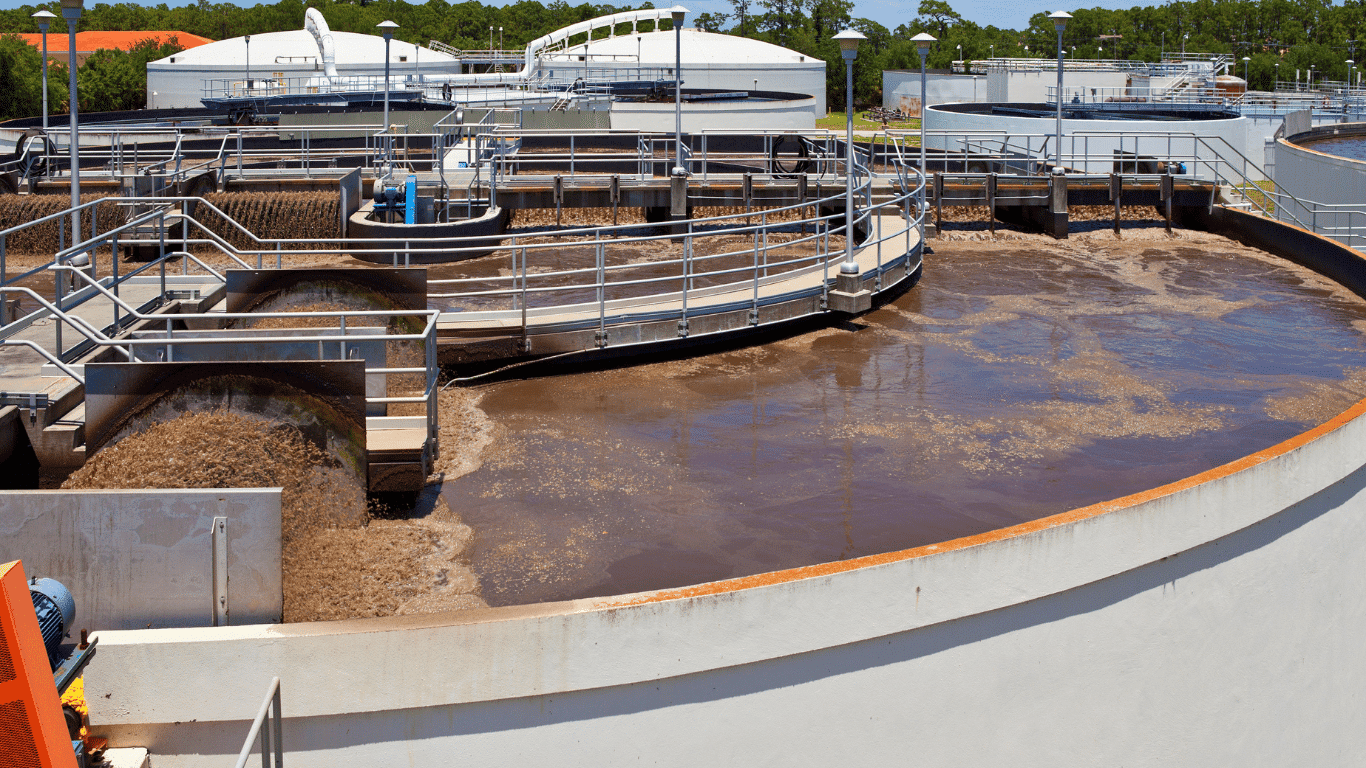
Biological treatment uses microorganisms to break down biodegradable organic matter and remove nitrogen compounds. Activated sludge systems provide oxygen to support aerobic microorganisms that consume organic pollutants. With appropriate operating conditions, biological processes can substantially reduce BOD and COD, although actual removal rates depend on the leachate composition and system design.
Ammonia often requires additional attention. Nitrification converts ammonia into nitrite and nitrate, while denitrification allows microorganisms to convert nitrate into nitrogen gas. Together, these processes can reduce nitrogen levels before discharge or further treatment. Biological treatment generally performs best when the leachate contains biodegradable compounds, so mature leachate may need additional physicochemical or membrane treatment.
Physicochemical Treatment
Physicochemical processes address suspended solids, colloids, dissolved contaminants, and compounds that biological treatment cannot remove adequately. Coagulation and flocculation use chemicals to bring fine particles together into larger aggregates that settle or separate more easily. Chemical precipitation can also help remove selected heavy metals, depending on their chemical form and the operating pH.
Adsorption offers another option for capturing certain persistent organic molecules and color-causing compounds. Activated carbon is one commonly used adsorbent, although performance depends on the target contaminants and the properties of the carbon. Advanced oxidation processes use reactive species, including hydroxyl radicals, to break down some non-biodegradable organic pollutants that remain after conventional treatment. These processes can improve effluent quality, but chemical consumption and operating conditions require careful control.
Membrane Filtration and Reverse Osmosis
Membrane technologies provide a physical separation barrier for contaminants that conventional treatment may leave behind. Ultrafiltration removes suspended solids, colloids, and larger molecules, making it useful as a pretreatment or polishing step. Nanofiltration and reverse osmosis can remove a much broader range of dissolved substances, including many dissolved salts and heavy metals. Actual rejection rates vary with membrane selection, water chemistry, pressure, and operating conditions.
Reverse osmosis can produce high-quality permeate, but it also generates a concentrated residual stream that still requires responsible management. Disc-tube reverse osmosis (DTRO) is one membrane configuration used for challenging leachate feeds. Its design can help manage some fouling-prone applications, although pretreatment, cleaning, and pressure management remain essential. For more information about membrane-based separation, explore ProChem’s membrane filtration water treatment solutions.
Evaporation and Concentrate Management
Evaporation systems reduce liquid waste volume by converting water into vapor and leaving contaminants in a concentrated residue. Mechanical evaporation can be useful when a facility needs to reduce the volume of leachate or membrane concentrate requiring further handling. The process does not make the remaining residue harmless, so operators still need an approved method for managing the concentrated waste.
Energy demand is a major consideration when evaluating evaporation. Reverse osmosis and evaporation have different energy, chemical, and residual-management requirements, so neither option automatically offers the lowest overall cost. A full-scale study of an integrated leachate treatment system found that evaporation contributed substantially to total energy use, highlighting the importance of evaluating the complete treatment train rather than a single piece of equipment.
Choosing a Cost-Effective Treatment System
The most cost-effective landfill leachate treatment system is not necessarily the one with the lowest purchase price. Operators should compare capital investment, energy consumption, chemicals, labor, maintenance, membrane replacement, residual disposal, and the cost of meeting discharge requirements. Research on full-scale reverse osmosis treatment also shows why project-specific estimates matter: the financial results depend on the plant’s scale, operating life, and assumptions about capital and operating expenses.
Before selecting equipment, assess the site’s leachate flow, contaminant concentrations, seasonal variations, available footprint, and discharge destination. A practical treatment train may combine screening and equalization, biological treatment, physicochemical treatment, and membrane polishing. Some facilities may also need evaporation or specialized treatment for persistent contaminants. Review wastewater treatment system design to understand why process selection and system integration matter.
Maintaining Treatment Performance
Even well-designed systems need consistent attention. Operators should monitor daily flow, pressure, pH, and key treatment indicators to identify changes before they affect effluent quality. Regular sampling for ammonia, BOD, COD, suspended solids, and other site-specific contaminants helps teams determine whether each treatment stage performs as intended.
Maintenance should follow equipment requirements and actual operating conditions. Clean filters on the recommended schedule, inspect pumps and dosing equipment, and monitor membrane pressure differentials for signs of fouling. Chemical cleaning may help restore membrane performance when operators apply the correct procedure. Keep records of chemical consumption, downtime, waste generation, and effluent results so the team can identify trends, improve operations, and manage long-term costs.
Building an Effective Leachate Management Strategy
Start with a clear picture of the site’s leachate characteristics and the limits the treated water must meet. Review the collection system, estimate normal and peak flows, and test representative samples. Use those findings to compare treatment options and determine which combination can consistently remove the contaminants that matter most.
Next, establish operating targets, maintenance schedules, sampling procedures, and contingency plans for heavy rainfall or equipment downtime. Check the applicable local permits and regulations, since requirements vary by jurisdiction and discharge route. ProChem’s landfill leachate treatment solutions provide a starting point for exploring treatment approaches suited to demanding leachate applications.
Need to improve your facility’s leachate control or evaluate its existing treatment process? Contact ProChem Inc. to discuss your site’s water quality challenges, treatment objectives, and operational requirements. A tailored assessment can help you identify practical improvements that support reliable performance and responsible waste management.
