
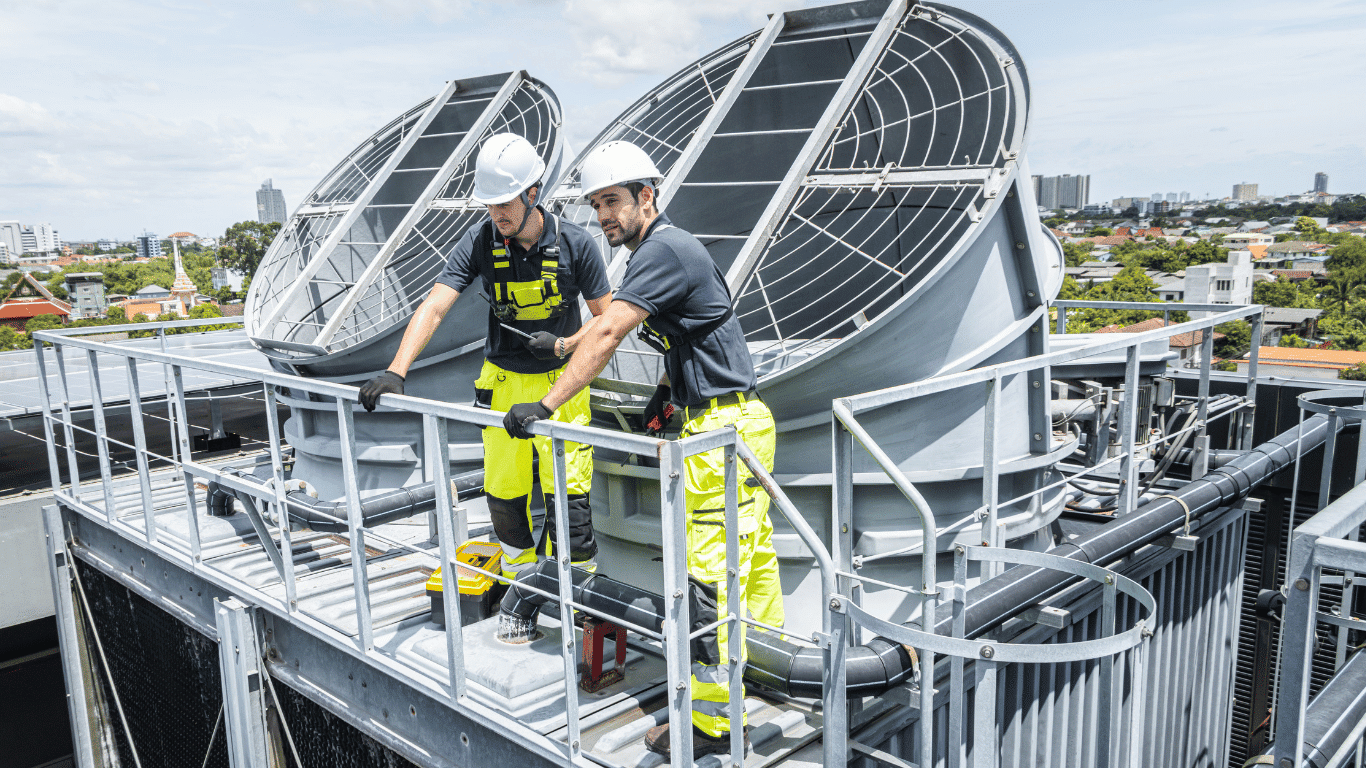
Cooling towers play a critical role in many industrial and commercial HVAC system operations. These towers remove heat from circulating water, helping facilities maintain stable temperatures for manufacturing processes, building cooling, and other operations. Over time, however, cooling towers naturally collect dirt, scale, and environmental debris that enter the system through airflow and makeup water.
This is where cooling tower cleaning becomes essential. Without consistent maintenance, contaminants begin to build up inside the tower, reducing performance, stressing equipment, and creating potential safety concerns for operating teams. Facility managers who keep towers clean often see more stable operation and fewer unexpected issues across their systems.
How Cooling Towers Become Dirty
Cooling towers operate as open water systems, which means they constantly interact with the surrounding environment. Air moves through the tower to support the cooling process, and that airflow carries dust, leaves, pollen, and other debris into the system. Over time, these particles settle inside the tower and mix with circulating water, forming layers of dirt and sediment that gradually accumulate.
Many operators first notice this buildup in the cooling tower basin or around internal components like the fill media. As particles collect and water continues to circulate, the material can form thick sludge deposits that coat surfaces throughout the tower. Teams should regularly inspect these areas because the early stages of contamination often appear in corners and low-flow sections where debris naturally settles.
Minerals in the water create another challenge. As evaporation occurs during operation, dissolved minerals concentrate and eventually form scale deposits along internal surfaces. At the same time, warm water conditions encourage biological growth such as algae, bacteria, and other organic contaminants. Without proper water treatment, these materials contribute to fouling, creating layers that restrict water flow and reduce system reliability.
Performance Problems Caused by Dirty Towers
When dirt and scale accumulate inside a cooling tower system, the first thing that suffers is heat exchange. Cooling towers depend on clean surfaces and open airflow paths to transfer heat effectively. As buildup develops on internal components, airflow becomes restricted and water cannot distribute evenly across the fill. The result is reduced performance and a system that struggles to maintain the temperatures your operation expects.
Lower heat transfer forces the entire system to work harder. Fans run longer, pumps push water through partially blocked passages, and equipment operates outside normal conditions. These changes reduce overall efficiency, and facilities often see the impact directly through higher energy costs. Operators sometimes assume the problem is mechanical, when in reality the tower simply needs proper cleaning and maintenance.
Over time, contamination also affects the physical condition of the tower. Scale and trapped moisture can create conditions that accelerate corrosion, especially on metal components that remain constantly exposed to untreated water. When that happens, equipment wears faster and reliability drops. Keeping towers clean helps systems maintain peak efficiency, protects critical components, and prevents small issues from turning into expensive repairs.
Health and Safety Risks in Cooling Towers
Beyond performance concerns, dirty cooling towers can create serious safety risks inside a facility. Warm circulating water and organic material create an environment where biological growth thrives. Over time, bacteria populations increase inside the system, and one of the most concerning organisms is legionella bacteria, which can spread through contaminated water droplets released from towers during operation.
Facility teams should take legionella prevention seriously. Regular disinfection, proper water treatment, and consistent system monitoring help limit bacterial growth before it becomes a problem. Operators who want a deeper understanding of how treatment programs manage this risk can review our guide on legionella treatment and how it helps control microbial contamination in industrial water systems.
Regulations in many regions also require facility managers to actively control microbial risks in cooling towers. Routine inspections, documented cleaning procedures, and targeted chemical programs help facilities maintain regulatory compliance while protecting worker health. Teams that stay proactive with cleaning and treatment keep towers operating safely and reduce the likelihood of contamination events.
What Happens During Cooling Tower Cleaning
A proper cooling tower cleaning process starts with preparation and system shutdown. Operators typically isolate the tower, secure the equipment, and drain the cooling tower basin so teams can safely access internal components. Once the basin is empty, technicians begin removing loose debris, sediment, and accumulated material from low-flow areas where contamination often collects.
The next stage focuses on physical tower cleaning. Crews work through the basin, internal piping areas, and distribution components to remove dirt, heavy sediment, and deposits that have formed during operation. This step often includes sludge removal along the basin walls, clearing corners and other areas where buildup settles. Technicians also clean the fill and surrounding fill media, since these components play a major role in heat transfer and airflow inside the tower.
After the visible material is cleared, the process shifts to disinfection. Technicians disinfect system surfaces to control microbial activity and reduce biological contamination. A thorough inspection follows to check structural components, verify water distribution, and confirm that all critical equipment remains in good condition. Teams also inspect the tower interior for early signs of wear or damage so small issues can be addressed before the system returns to operation.
Maintenance Frequency and Best Practices
One of the most common questions from facility managers involves how often towers need attention. In most facilities, regular cleaning and inspection should occur at least once or twice per year, though operating conditions often influence the exact frequency. Towers that run continuously, especially in manufacturing environments, may require more frequent service to maintain reliable operation and stable water conditions.
Seasonal conditions also play a role in effective cooling tower maintenance. Pollen, dust, and organic material tend to increase during warmer months, which can accelerate buildup inside the tower. Teams should schedule routine checks during these periods and evaluate system conditions more closely. A proactive approach to tower maintenance helps maintain stable performance and reduces the chance that contamination develops unnoticed.
Water chemistry monitoring is another important piece of the strategy. Operators often determine cleaning schedules by reviewing system data, visual inspections, and treatment results. When teams combine consistent monitoring with scheduled cleaning, towers remain more predictable and easier to manage throughout the year.
Cooling Tower Cleaning and Water Treatment
Physical cleaning removes visible buildup, but long-term protection comes from a strong water treatment program. Towers constantly circulate water that carries minerals, airborne particles, and organic material. Without proper chemical balance, these contaminants begin forming scale and biological deposits that reduce system efficiency. Chemical treatment helps control these conditions so the tower stays cleaner between scheduled service intervals.
Most programs use targeted chemistry, including biocides, to limit microbial activity and keep bacteria levels manageable. Operators also monitor water chemistry to prevent mineral scaling and other conditions that damage internal surfaces. Teams that want a deeper look at how chemistry affects system health can review our guide on water chemistry and how it influences industrial cooling systems. When cleaning and treatment work together, facilities protect equipment, reduce buildup, and maintain more stable tower operation.
Building a Reliable Cooling Tower Maintenance Strategy
Developing a consistent cooling tower cleaning routine is key to keeping systems running smoothly. Facilities should establish clear tower maintenance schedules that include routine inspections, debris removal, and checks of critical components. These steps help maintain efficiency, reduce unexpected downtime, and extend the equipment lifespan of the tower and associated HVAC system.
For larger or more complex facilities, working with experienced teams can make the process safer and more effective. Technicians not only handle cleaning but also identify early signs of wear, corrosion, or scale deposits that could increase cost over time. Unsure how to optimize your cooling tower program? Contact ProChem today to discuss a tailored cleaning and maintenance strategy that improves efficiency, protects equipment, and keeps your facility operating safely.
Frequently Asked Questions (FAQs)
How often should cooling towers receive cleaning and maintenance?
Facility managers typically schedule regular cleaning and tower maintenance at least once or twice per year, though high-use or manufacturing systems may require more frequent service. Seasonal changes and water quality affect buildup of dirt, sludge, debris, algae, and scale deposits, so inspections should be performed to adjust the cooling tower cleaning process for optimal performance.
What happens if cooling towers are not cleaned regularly?
Neglecting cooling tower cleaning allows fouling to accumulate on fill media, in the cooling tower basin, and throughout the cooling tower system. This dirt, sludge, and scale reduce heat exchange efficiency, increase energy costs, and can damage equipment. Poor maintenance shortens system lifespan and increases emergency repair costs.
Can cleaning help prevent Legionella and other bacteria?
Yes, proper cooling tower cleaning services combined with water treatment and chemical biocides are crucial to control legionella bacteria and other microbial growth. Regular disinfection reduces bacteria, sludge, and organic buildup while supporting safety and regulatory compliance. Teams should use personal protective equipment during cleaning and disinfect towers thoroughly to minimize risk.
Which parts of the tower require the most attention during cleaning?
Critical areas include the fill media, basin walls, corners, and any surfaces where debris or sludge accumulates. Inspecting rust or material wear is also essential. Cleaning these areas properly ensures the effectiveness of the cooling tower cleaning process, improves efficiency, and maintains peak performance throughout the HVAC system.
Is professional cleaning necessary for large HVAC facilities?
For larger cooling towers, professional cooling tower cleaning services are recommended. Technicians can safely remove dirt, scale deposits, and other contaminants efficiently. Their expertise ensures fill and other components are cleaned properly, controls microbial growth, and optimizes cooling performance, protecting equipment lifespan while minimizing cost and downtime.
