
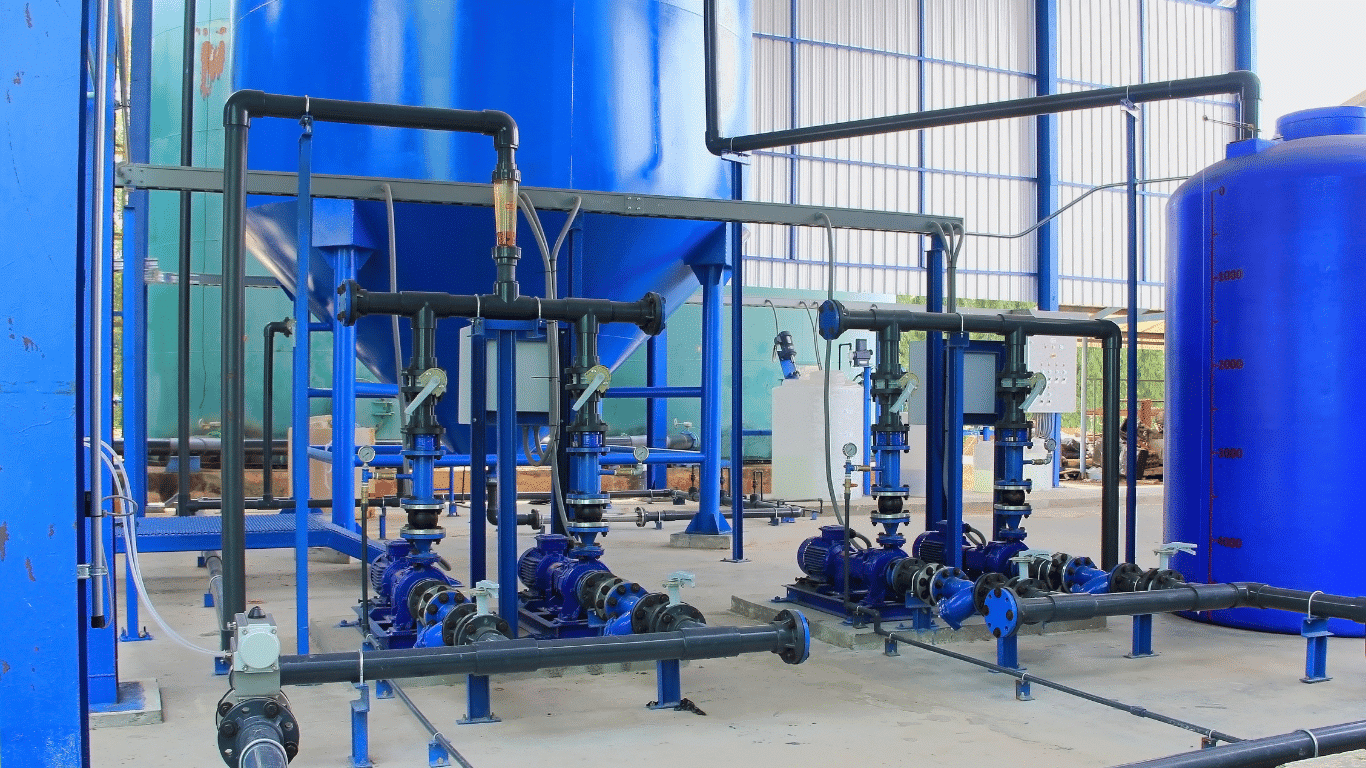
Hard water creates more problems in commercial and industrial facilities than most teams expect. Over time, excess minerals affect water quality, restrict system efficiency, and place additional strain on daily operations. Heating systems, production equipment, and process lines often experience faster wear when untreated water continues circulating through the system. This is where industrial water softening equipment becomes important. A properly designed industrial water softening setup helps reduce mineral buildup, protect equipment, and support more reliable performance across commercial and industrial systems. Facilities that address hardness issues early usually see fewer interruptions, more consistent operation, and better long-term system reliability.
What Industrial Water Softening Equipment Does
Industrial water softeners remove hard minerals from water before they circulate through critical systems and process equipment. In most facilities, the primary minerals causing trouble are calcium and magnesium. These minerals attach to pipes, heating surfaces, and internal components over time, eventually forming scale that restricts water flow and reduces efficiency. Water softening works through an ion exchange process where mineral-heavy water passes through a resin bed inside the tank. The resin captures hard minerals and replaces them with sodium ions, producing soft water that is easier on equipment and plumbing systems.
Most facilities rely on water softener systems because consistent water quality directly affects operational performance. Industrial water softeners help reduce scale accumulation, support stable flow rate conditions, and protect systems that depend on continuous operation. Operators also notice that softened water improves cleaning efficiency and lowers maintenance demands across commercial equipment. The regeneration process restores the resin once it becomes saturated with minerals, allowing the system to continue producing softened water reliably. If your team wants a better understanding of how hardness affects water systems, our guide on what hard water is explains the issue in more detail.
Common Problems Caused by Hard Water in Facilities
Most facility teams first notice hard water problems through declining efficiency and rising maintenance demands. Scale buildup forms slowly, but the impact becomes expensive once it starts restricting pipes, coating heating elements, or interfering with heat exchange systems. We often see this happen in boiler feeds, cooling towers, and other industrial equipment that depends on stable heat transfer and continuous circulation. Even a thin layer of scale can force systems to work harder, increasing energy consumption while reducing overall equipment performance.
Operators should also pay attention to smaller warning signs because they usually point to larger water quality issues developing in the background. Reduced water pressure, uneven heating, clogged lines, and shortened appliance life often trace back to untreated hardness minerals. Over time, these deposits increase wear on pumps, valves, and connected systems, especially in facilities running around the clock. Teams that stay proactive with water softening and routine maintenance usually avoid costly shutdowns and extend the operating life of critical equipment.
Types of Industrial Water Softening Systems
Industrial facilities use several types of water softening systems depending on operational demand, available space, and required flow rate. Smaller facilities sometimes operate with a one tank setup, especially when water demand remains predictable throughout the day. Larger commercial industrial operations usually require duplex or alternating systems that maintain continuous flow during regeneration cycles. This setup matters in facilities where downtime is not an option, including manufacturing plants, healthcare facilities, and other institutional applications. A properly engineered commercial water softener system helps facilities maintain steady operation without interrupting production or water supply.
System sizing also plays a major role in long-term reliability. Teams should evaluate incoming water hardness, peak demand periods, and overall flow rate requirements before selecting equipment. Facilities with high flow rates often need larger resin capacity and more advanced control systems to keep up with process demands. We recommend looking beyond the initial equipment size and focusing on how the system supports daily operations over time. Commercial water softener systems that are undersized often struggle to maintain efficiency under changing operating conditions. If you want a better understanding of sizing considerations, this guide on sizing a water softener offers a helpful starting point.
Where These Systems Are Commonly Used
Industrial water softening applications are common anywhere water comes into direct contact with equipment, heating surfaces, or production processes. Many industries rely on softened water to maintain stable operation and protect valuable assets from mineral accumulation. Facilities handling commercial water for manufacturing, food processing, healthcare, hospitality, and institutional operations often integrate softening into their larger water treatment systems. Car washes also depend heavily on soft water because mineral-free rinsing helps prevent spotting and residue on vehicle surfaces.
Cooling systems represent another major area where industrial water treatment plays an important role. Cooling towers, heat transfer loops, and other recirculating systems experience constant exposure to hardness minerals when untreated industrial water enters the process. Over time, deposits restrict efficiency and increase cleaning demands. Customers managing large commercial and industrial facilities usually see better reliability when softening supports the overall treatment strategy. If your facility operates cooling systems, our guide on cooling tower water treatment explains how proper water management helps protect long-term system performance.
Integrating Softening with Other Water Treatment Technologies
Most facilities achieve better long-term results when water softening works alongside other water treatment systems instead of operating alone. Commercial water softening is often used as a pre treatment step before reverse osmosis systems because hardness minerals can quickly damage membranes and reduce efficiency. Removing calcium and magnesium early helps protect downstream equipment while supporting more stable process conditions. Facilities that require high quality water for production, rinsing, or manufacturing usually combine softening with filtration and membrane treatment to improve overall system reliability.
System integration also helps facilities maintain consistent flow rate conditions and continuous flow across demanding operations. Industrial water softening equipment supports reverse osmosis performance by reducing scale formation inside membranes and connected systems. Teams managing larger treatment setups often see fewer interruptions, lower cleaning demands, and better operational consistency when softening becomes part of the overall water treatment strategy. We also recommend evaluating the full treatment process instead of focusing on one piece of equipment alone. If you want to explore how membrane systems fit into industrial operations, our guide on industrial reverse osmosis systems covers the topic in more detail.
Maintenance and Long-Term Performance
Reliable industrial water softening depends on consistent maintenance and routine inspection. Operators should regularly check resin condition, monitor salt levels, and confirm the regeneration process is completing properly. A neglected brine tank or clogged injector can reduce system efficiency faster than many teams realize. We also recommend tracking hardness readings because measured changes in water quality often reveal problems before equipment performance starts declining. Small adjustments made early usually prevent larger operational issues later.
Facilities that stay proactive with inspections typically extend the operating life of their systems and avoid unnecessary downtime. Resin beds gradually lose effectiveness over time, especially in demanding process environments with fluctuating water conditions. Teams should also inspect valves, controls, and connected equipment for signs of wear or restricted flow. Industrial water softening systems perform best when maintenance becomes part of the broader facility routine instead of a reactive task. In our experience, facilities that pay close attention to regeneration settings and operating conditions usually maintain more reliable softeners and more stable long-term performance overall.
Building a Reliable Water Softening Strategy
Every facility handles water conditions differently, which is why long-term success usually depends on choosing systems that match actual operating demands. Commercial and industrial facilities benefit most when water softening becomes part of a larger treatment strategy instead of a standalone fix. Factors like incoming water quality, daily usage patterns, process requirements, and equipment sensitivity all influence system performance. Facilities that invest in properly sized commercial water softener systems often see long-term benefits such as improved reliability, lower maintenance demands, and better cost savings across critical operations.
A strong water management plan also requires regular monitoring and adjustments as conditions change over time. Industrial water softening equipment performs best when operators stay proactive with inspections, regeneration settings, and overall system upkeep. Tailored solutions usually deliver better results than one-size-fits-all approaches, especially in demanding industrial environments.
Evaluating water softening options or improving an existing treatment setup? ProChem can help you assess system conditions and develop a practical strategy that supports long-term operational performance.
