
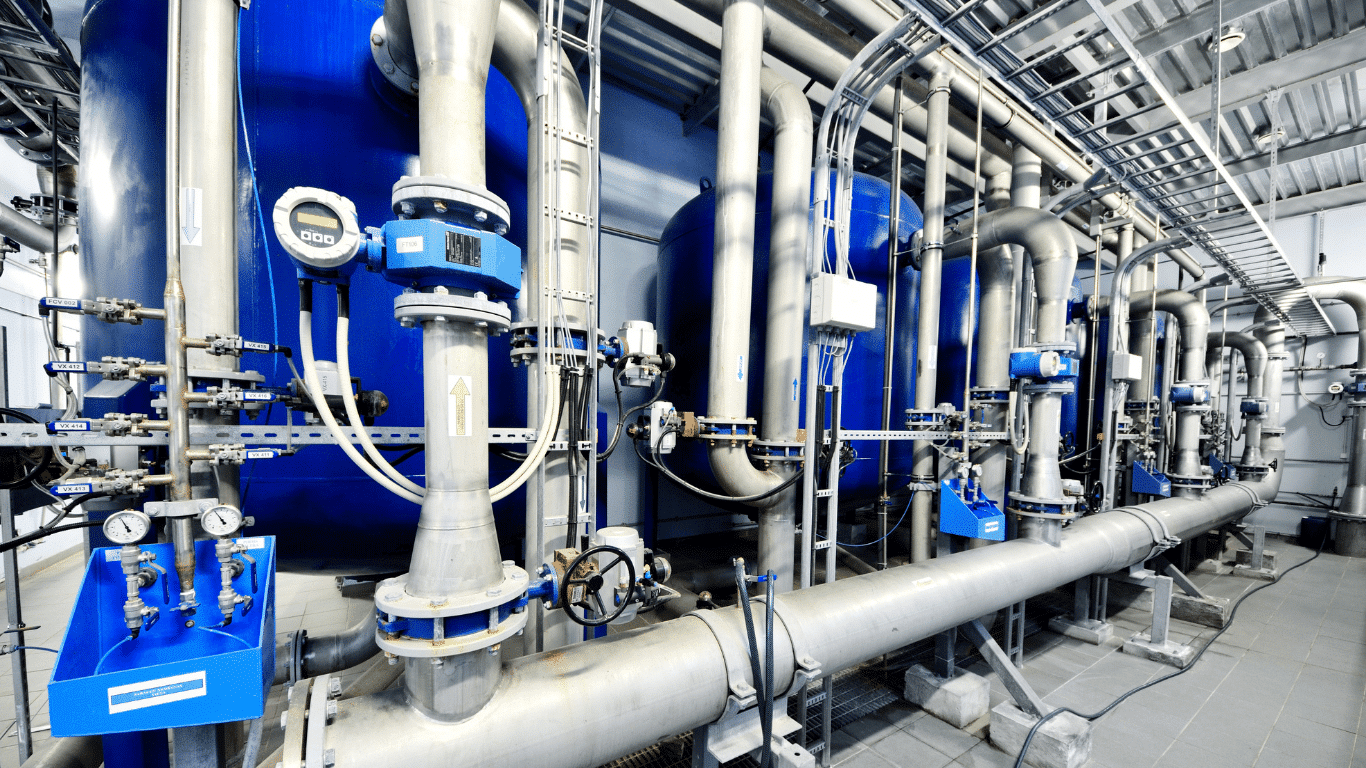
Ion exchange resin plays a vital role in many industrial water treatment systems, yet many people are unfamiliar with what it does or why it matters. If you’ve ever wondered what is ion exchange resin, the short answer is that it is a specialized material designed to remove or replace unwanted minerals and contaminants in water. Industries rely on ion exchange to improve water quality, protect equipment, and support consistent operations across a wide range of applications.
In this guide, we’ll explain what ion exchange resin is, how it works, the different types available, where it is used, and what facilities should consider to keep these systems performing reliably.
What Is Ion Exchange Resin?
If you’re asking what is ion exchange resin, think of it as a specialized filtration material that selectively swaps certain dissolved minerals and contaminants for other ions. Ion exchange resins are synthetic, insoluble materials manufactured as small resin beads. Each bead contains a durable polymer matrix, often made from polystyrene or acrylic materials, that provides strength while supporting a network of active functional groups. These functional groups create the exchange sites, where exchangeable ions attach and are exchanged as water flows through the system. Because the resin matrix remains intact during operation, the resin can perform countless exchange cycles before it eventually requires regeneration.
This ability to selectively target dissolved ions makes an exchange resin valuable across many industrial applications. Facilities use ion exchange resins to reduce water hardness, remove unwanted minerals, produce high-purity process water, and protect critical equipment from scale and corrosion. Unlike conventional filters that capture suspended particles, ion exchange resins work at the molecular level, making them highly effective for improving water quality. Their versatility, consistent performance, and ability to be regenerated are some of the reasons industries continue to rely on this technology as an essential part of modern water treatment systems.
How Does the Ion Exchange Process Work?
The ion exchange process begins when water passes through a resin bed filled with thousands of resin beads. As water moves through the system, dissolved ions come into contact with the active exchange sites on each bead. These ion exchange sites are already occupied by exchangeable ions, which are held loosely enough to be replaced when water contains ions with a stronger attraction to the resin. This selective interaction allows the resin to treat water continuously without physically trapping contaminants like a traditional filter.
Once the dissolved ions reach the resin surface, ion exchange reactions take place. The resin releases its exchangeable ions and captures the unwanted dissolved ions from the water in return. For example, positively charged ions can replace the ions already attached to a cation resin, while negatively charged ions interact with an anion resin. In simple terms, the resin does not destroy contaminants. Instead, it exchange ions between the water and the resin, replacing undesirable minerals with desirable ions that are better suited for the intended application.
This cycle continues as more water flows through the system, gradually filling the available exchange sites with existing ions from the incoming water. Once most of the active sites become occupied, the resin reaches its working capacity and its treatment efficiency begins to decline. The good news is that ion exchange is a reversible chemical reaction, so operators can restore the resin by replacing the captured ions with other ions during regeneration. This ability to regenerate the resin is one of the key reasons ion exchange remains a reliable and cost-effective solution for industrial water treatment.
Understanding Cation and Anion Exchange Resins
Ion exchange systems rely on two primary resin families, cation resins and anion resins, each designed to remove different types of contaminants from water. The difference comes down to the electrical charge of the ions they target. Cation exchange removes positively charged ions, while anion exchange removes negatively charged ions. Many industrial systems combine both technologies to produce higher-quality water for manufacturing, power generation, food processing, and other demanding applications.
Cation exchange resins replace dissolved minerals such as calcium ions and magnesium ions, which are the primary hardness ions responsible for scale buildup. During this process, the resin typically releases sodium ions for water softening applications or hydrogen ions in demineralization systems. Within this category, strong acid cation resins operate effectively across a broad pH range and handle a wide variety of water conditions. Weak acid cation resins, also called weak acid cation resins, offer greater selectivity for certain alkalinity and hardness removal applications, making them well suited for specific treatment objectives.
Anion exchange resins work differently because they capture negatively charged ions such as chloride ions, sulfates, and nitrates. These resins typically release hydroxide ions, which combine with hydrogen ions from the cation stage to form water during demineralization. Like cation resins, anion resins come in different forms. Strong base anion resins use quaternary ammonium groups as their active functional groups, allowing them to remove a broad range of dissolved anions, even in the hydroxide form. Weak base anion exchange resins perform well in applications that remove strong mineral acids and can improve overall regeneration efficiency when paired with the appropriate acid cation resin.
Where Are Ion Exchange Resins Used?
The versatility of ion exchange technology makes it a valuable part of many industrial water treatment processes. One of its most common applications is water softening, where the resin helps remove dissolved ions that cause scaling, particularly hardness ions such as calcium and magnesium. Ion exchange is also widely used for demineralization, helping remove dissolved salts to produce high-quality process water for boilers, cooling systems, and manufacturing equipment. If you’d like to learn more about how softening systems work in industrial settings, explore our guide to Industrial Water Softeners. Understanding when to use softening instead of demineralization can improve system performance and reduce maintenance costs.
Beyond softening, ion exchange supports industries that demand consistent water quality. Facilities use these systems for ultrapure water production in electronics and semiconductor manufacturing, as well as pharmaceutical manufacturing where even trace impurities can affect product quality. The technology also plays an important role in wastewater treatment, where specialized chelating resins help capture certain metals while other resin types target nitrates and selected organic contaminants. In the food processing industry, ion exchange helps maintain product consistency and can even help produce drinking water that meets strict quality requirements. Mining, chemical processing, and power generation facilities also rely on ion exchange to protect equipment, improve operational efficiency, and meet water quality goals.
What Affects Ion Exchange Resin Performance?
Not every ion exchange system performs the same, even when two facilities use similar equipment. Several operating conditions determine how efficiently a resin removes contaminants and how long it lasts before regeneration becomes necessary. One of the biggest factors is resin capacity, or the amount of ions the resin can hold before its performance begins to decline. Closely related is ion exchange capacity, which reflects how many active exchange sites are available to remove contaminants. Operators should also pay close attention to flow rate because water that moves too quickly may not stay in contact with the resin long enough for effective treatment.
Water quality also has a major impact on performance. The ions present in the water, along with pH, temperature, and overall ionic concentration, all influence how efficiently the exchange process occurs. High levels of calcium ions, magnesium ions, or elevated total dissolved solids increase the workload on the resin and can shorten operating cycles between regenerations. In many applications, pretreatment helps reduce these challenges and improves overall system reliability.
Over time, resin fouling can reduce performance by blocking active exchange sites with large organic molecules, suspended solids, or other ionic impurities. Regular monitoring and proper cleaning help preserve the resin’s chemical resistance and extend its service life. Resin design also plays a role. Smaller resin beads provide more surface area and generally exchange ions faster, although they may require careful flow control to prevent excessive pressure loss. Choosing the right resin and maintaining stable operating conditions gives facilities the best opportunity to achieve consistent, long-term water treatment performance.
How Are Ion Exchange Resins Regenerated?
Every ion exchange resin has a finite working capacity. As treatment continues, the active exchange sites gradually become filled with undesirable ions, reducing the resin’s ability to treat incoming water. At this point, resin regeneration restores the resin by replacing the captured ions with more desirable ions, allowing it to perform effectively again. The regeneration method depends on the type of resin and the application. Water softening systems commonly use sodium chloride to restore cation resins, while demineralization systems may use hydrochloric acid or sulfuric acid for cation resins and sodium hydroxide, a caustic solution, for anion resins. Depending on the system design, regeneration can take place directly in the vessel or through in-place regeneration, while some facilities choose off-site regeneration services for specialty resin applications.
Although regeneration significantly extends the life of the resin, it does not make it last forever. Each regeneration cycle causes a small amount of wear to the resin structure, and years of repeated use gradually reduce the number of active exchange sites available for treatment. Operators can maximize resin life by following recommended regeneration procedures, maintaining proper chemical concentrations, and monitoring overall water quality. With routine maintenance and timely regeneration, ion exchange resins can deliver reliable performance for many years while helping facilities control operating costs and maintain consistent water treatment results.
Choosing the Right Ion Exchange Solution for Your Facility
Selecting the right ion exchange system starts with understanding your water, not choosing a resin first. A thorough water analysis identifies the minerals, contaminants, and operating conditions that influence treatment performance. From there, you can determine which resin type best matches your application and treatment goals. In many facilities, ion exchange works even better when paired with complementary technologies. For example, an Industrial Reverse Osmosis System can reduce the dissolved solids entering the resin, helping extend service life and reduce regeneration frequency. Learn more about how these technologies work together in our guide to Industrial Reverse Osmosis Systems. Routine monitoring, proper maintenance, and the right chemical program also help keep the system operating efficiently over the long term.
Every facility faces different water quality challenges, so there is no one-size-fits-all solution. The right approach balances water chemistry, production demands, maintenance requirements, and operating costs to deliver reliable performance. If you’re exploring new equipment or looking to improve an existing system, take a look at ProChem’s Ion Exchange Systems to see how different configurations support industrial applications.
Need guidance on selecting the right treatment strategy? Contact us. Our team is ready to help you evaluate your water quality and recommend a solution that supports dependable, long-term system performance.
