
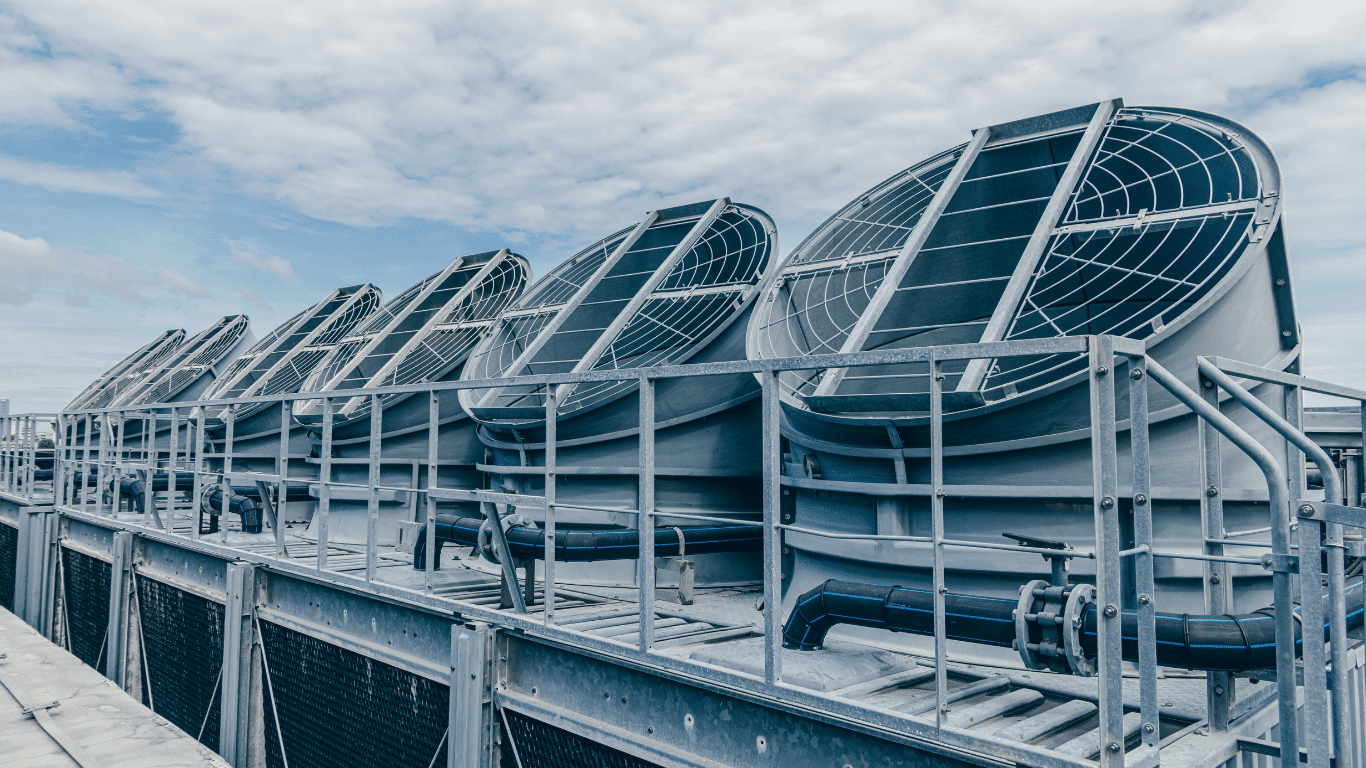
Cooling towers help industrial facilities manage heat, but they also consume water and generate wastewater as part of normal operation. As water evaporates, dissolved minerals and other contaminants become more concentrated in the remaining cooling water. Operators must remove some of this water to maintain acceptable chemistry and protect equipment. This is where cooling tower blowdown treatment becomes important. A well-planned approach helps facilities manage discharge, recover usable water, and maintain reliable cooling system performance without creating unnecessary operating expenses.
What Is Cooling Tower Blowdown and Why Does It Matter?
Cooling tower blowdown is the controlled removal of a portion of circulating cooling water to prevent dissolved minerals and other impurities from accumulating to excessive levels. As a cooling tower releases heat through evaporation, most dissolved solids remain in the system. Over time, their concentration increases, making blowdown necessary to maintain water chemistry and protect equipment.
Operators manage this process using cycles of concentration, which compare the concentration of dissolved substances in circulating cooling water with their concentration in makeup water. Higher cycles generally reduce the amount of fresh makeup water a system needs, but pushing them too far can increase scaling, corrosion, and fouling risks. The right operating range depends on makeup water quality, equipment limitations, and the facility’s chemical treatment program.
The challenge is that blowdown water contains concentrated minerals, treatment chemicals, and potentially other contaminants. Sending it directly to a drain may increase discharge costs or violate local requirements. Treating it for reuse, where practical, can reduce water consumption while helping facilities manage wastewater more responsibly.
Common Contaminants in Cooling Tower Blowdown
Cooling tower blowdown water can contain total dissolved solids (TDS), suspended solids, calcium, magnesium, silica, and other scaling minerals. Concentrations vary with makeup water quality, evaporation rates, cycles of concentration, and operating conditions. Blowdown may contain approximately 1,200 to 6,000 mg/L of TDS in some systems, although actual values can fall outside this range. Suspended solids may also accumulate from airborne debris, corrosion products, and biological material.
Treatment chemicals introduce another consideration. Corrosion inhibitors, scale-control additives, and biocides help protect cooling equipment, but some can affect downstream treatment or discharge quality. Nutrients and organic matter may also encourage biological growth under suitable conditions. Operators should therefore evaluate the complete water chemistry instead of focusing on TDS alone.
Start with representative sampling and laboratory analysis. Check pH, conductivity, TDS, hardness, alkalinity, silica, suspended solids, and relevant metals. Include treatment chemicals and any site-specific contaminants that could affect discharge or reuse. These results help determine which treatment technologies make sense and establish the performance targets the system must meet.
Cooling Tower Blowdown Treatment Methods
The most suitable treatment process depends on the contaminants present, the required effluent quality, and whether the facility intends to discharge or reuse the water. Many facilities combine several technologies because no single process removes every contaminant effectively.
Common treatment options include:
- Side-stream filtration: Removes suspended particles from circulating cooling water, helping control solids before they accumulate. Although it can reduce the solids load, it does not remove most dissolved salts.
- Chemical treatment and precipitation: Uses appropriate reagents to adjust water chemistry and convert selected dissolved contaminants, including certain metals, into removable solids. Clarification and filtration can then separate these solids from the water.
- Membrane filtration and reverse osmosis: Membrane systems address different contaminant sizes. Ultrafiltration can remove fine suspended solids and microorganisms, while reverse osmosis separates much of the dissolved ionic content from the water. Proper pretreatment helps limit membrane fouling and maintain recovery.
- Electrodialysis reversal: Uses electrical potential and ion-selective membranes to reduce dissolved ionic salts. It may suit certain high-salinity streams, depending on water chemistry and the desired recovery.
- Evaporation and crystallization: Concentrates dissolved constituents and can recover additional water when conventional membrane treatment cannot meet the facility’s objectives.
Reverse osmosis is particularly useful when the goal is to produce reusable water with lower dissolved-solids concentrations. Recovery may range from approximately 50% to 85%, depending on feedwater chemistry, operating pressure, pretreatment, and scaling limits. Facilities considering this option should also plan for membrane cleaning, concentrate management, and routine performance monitoring.
For more demanding applications, zero liquid discharge (ZLD) systems combine treatment, concentration, and sometimes crystallization to recover water while minimizing or eliminating routine liquid discharge. Overall recovery can reach approximately 95% to 99% in suitable applications, but performance depends on the wastewater composition and system design. Mechanical vapor compression can also support high recovery, although energy demand, equipment costs, and residual solids management require careful evaluation.
How Water Recovery Reduces Costs and Waste
Recovering blowdown water can reduce the amount of freshwater a facility purchases and the volume of wastewater it sends for disposal. Depending on water quality and treatment requirements, recovered water may serve as cooling tower makeup or support other suitable utility applications. This approach can improve water efficiency, especially in water-stressed regions where freshwater availability or discharge capacity limits industrial operations.
Consider a facility treating 60,000 gallons of blowdown daily. At a 65% recovery rate, the system could recover approximately 39,000 gallons per day, provided the feedwater and operating conditions support that performance. The remaining stream would contain concentrated contaminants and require appropriate management. Actual savings depend on the facility’s water and sewer rates, treatment costs, energy consumption, and the quality of the recovered water.
Economics matter just as much as recovery. Some recovery projects achieve payback within approximately 1.5 to 5 years, but that range is not guaranteed. Direct discharge fees can reach $5 to $15 per thousand gallons or more in some locations, while advanced ZLD systems may involve capital costs of several million dollars and substantial operating expenses. Use site-specific estimates to compare treatment, disposal, energy, maintenance, and freshwater costs before selecting a system.
Choosing the Right Treatment Approach
Start by defining the treatment objective. A facility that only needs to meet discharge limits may require a different process from one that wants to reuse water or eliminate routine liquid discharge. Review local environmental regulations, sewer acceptance criteria, and permit requirements before deciding which contaminants to remove and what effluent quality to achieve.
Next, match the treatment process to the actual water quality. High hardness and silica can limit membrane recovery, while suspended solids and organic matter can increase membrane fouling. Chemical precipitation may require pH adjustment and solids separation, and advanced oxidation may help address selected organic pollutants when testing confirms a need. Each additional treatment stage affects chemical consumption, energy use, equipment requirements, and maintenance.
Also evaluate the concentrate or residual waste each process creates. Reverse osmosis produces a reject stream containing concentrated salts and other contaminants. ZLD systems reduce liquid discharge but may leave solid residues that require appropriate handling and disposal. A practical design accounts for these residuals from the beginning rather than treating them as an afterthought.
Improving Blowdown Management Through System Optimization
Advanced treatment is not the only way to reduce blowdown. Facilities can often improve performance by optimizing cooling tower operation before investing in additional equipment. Review cycles of concentration, verify conductivity-controller settings, inspect blowdown valves, and confirm that the system responds correctly to changes in water chemistry.
Makeup water quality also influences how efficiently a cooling tower operates. Better pretreatment may allow the system to maintain suitable cycles of concentration with less scaling risk. At the same time, operators should avoid increasing cycles beyond the limits established by the water chemistry and treatment program. Excessive concentration can damage heat exchanger surfaces, reduce heat transfer efficiency, and increase maintenance requirements.
Consistent monitoring helps teams identify problems before they become expensive. Track conductivity, pH, makeup water consumption, blowdown volume, chemical feed rates, and relevant water quality parameters. Investigate sudden changes instead of relying solely on fixed schedules. This combination of operational control and appropriate treatment can reduce unnecessary water losses while supporting stable cooling performance.
Building a More Efficient Blowdown Treatment Strategy
A dependable strategy starts with understanding how the cooling system uses water and what happens to the blowdown after it leaves the tower. Assess water chemistry, quantify discharge volumes, establish reuse goals, and identify the regulations that apply to your facility. Then compare treatment options based on achievable recovery, operating costs, maintenance requirements, and residual waste management.
ProChem helps industrial facilities evaluate water treatment needs and identify practical solutions for their operating conditions. Explore our cooling tower water treatment solutions to learn more about protecting cooling system performance, or review our industrial reverse osmosis systems for applications that require dissolved-solids removal. For facilities assessing broader discharge and reuse requirements, our zero liquid discharge solutions provide another starting point.
Talk to our experts to discuss your cooling tower blowdown, review your treatment objectives, and determine which approach best fits your facility.
