
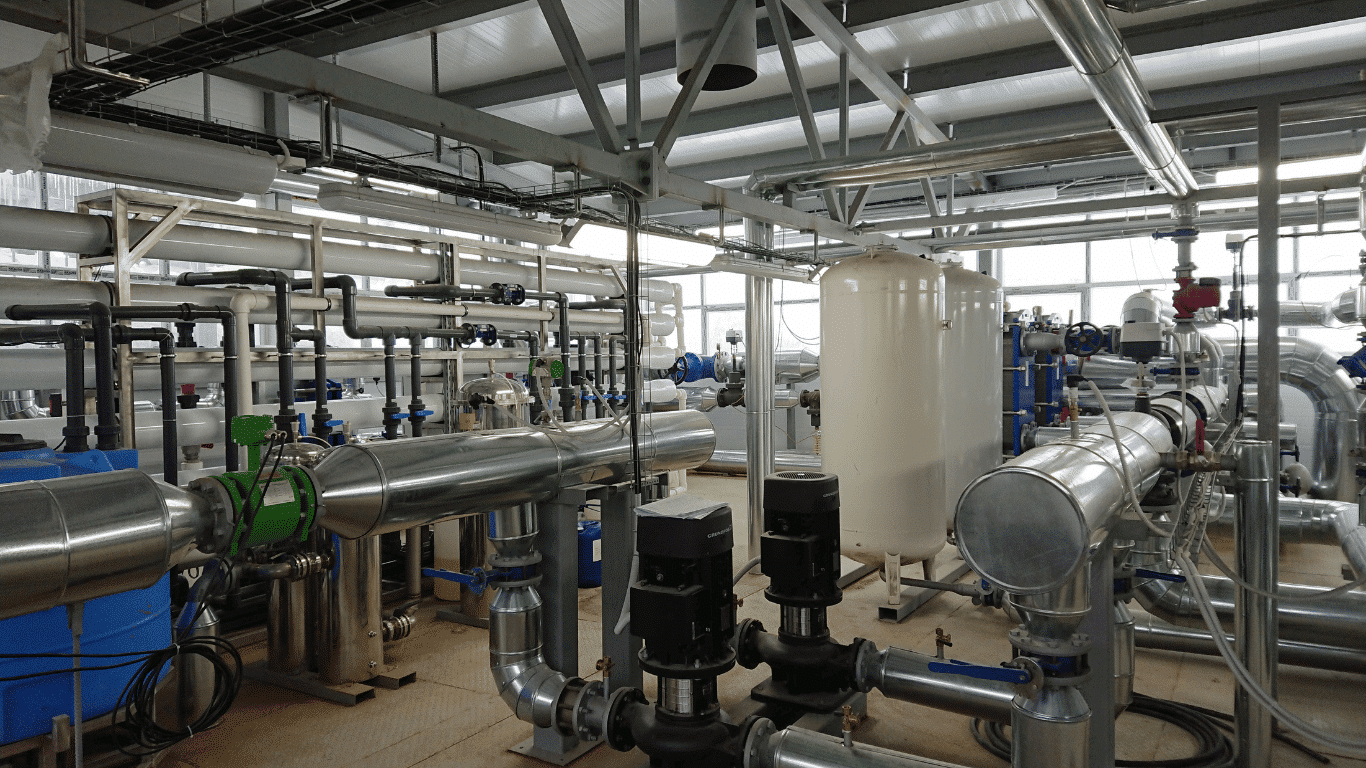
Water plays a much bigger role in the food and beverage industry than simply serving as an ingredient. Facilities use water for food production, cleaning, rinsing, heating, cooling, sanitation, and other production processes. Because of that, water quality can directly affect product quality, equipment performance, operating costs, and food safety.
For food and beverage manufacturers, the goal is not simply to make water look clean. The treatment approach needs to address the specific contaminants and quality requirements associated with each application. A well-designed food and beverage water treatment program can help facilities maintain consistent water quality while supporting efficient production and responsible water management.
Why Water Quality Matters in Food and Beverage Operations
Water quality can influence safety, taste, texture, and consistency throughout the manufacturing process. Depending on the source, incoming water may contain bacteria, suspended solids, dissolved salts, metals, organic compounds, or other contaminants. Even small changes in water chemistry can affect a recipe, interfere with cleaning, or create problems for food processing equipment.
Operators should also consider how contaminants behave once water enters the facility. Sediment and organic matter can clog equipment and filtration components, while hardness-causing minerals can contribute to scale. Chlorine may help control microorganisms in drinking water, but excessive chlorine can affect the taste and characteristics of certain beverages. For that reason, treatment needs to match the actual requirements of the application rather than follow a one-size-fits-all approach.
Water also represents a significant resource commitment. Depending on the product and manufacturing method, processing one kilogram of food can require roughly 1,000 to 3,000 liters of water when the broader water footprint is considered. Improving water efficiency can therefore help food and beverage companies reduce water consumption while also controlling operating expenses.
Key Treatment Technologies Used in Food and Beverage Facilities
A typical treatment train combines several technologies because no single process removes every contaminant. Initial filtration can remove suspended solids and other particulates before they reach downstream equipment. Microfiltration and ultrafiltration can provide additional particulate and microbial removal, while membrane filtration can protect more sensitive treatment stages.
Reverse osmosis is another important technology when a facility needs to reduce dissolved solids, dissolved salts, and certain heavy metals. During reverse osmosis, pressure pushes water through a semi permeable membrane while many dissolved contaminants remain in the concentrate stream. Facilities can incorporate reverse osmosis systems into process-water purification, ingredient-water treatment, or water reuse applications.
Other technologies can address specific water chemistry concerns. Ion exchange can soften water by removing calcium and magnesium, while activated carbon filtration can reduce chlorine and organic compounds that affect taste and odor. Ultraviolet treatment and ozone can provide additional microbial control without leaving the same type of chemical residual associated with some disinfectants.
Treating Water for Different Production Needs
Not every water stream in a food or beverage facility needs the same treatment. Water that becomes part of a finished product requires tighter quality control than water used for a non-contact utility application. Similarly, process water, cleaning water, boiler feedwater, cooling water, and wastewater can each require different treatment objectives.
This is where a facility-wide assessment becomes valuable. Teams should identify where water enters the operation, where it gets used, what contaminants it encounters, and where treated water can safely go next. Understanding the entire manufacturing process makes it easier to select treatment technologies that protect product quality without adding unnecessary equipment or operating costs.
Source water can also change over time. Seasonal conditions, municipal supply changes, well-water chemistry, and variations in production can all influence treatment requirements. Operators should monitor important parameters and adjust their water treatment programs when conditions change. Consistent monitoring helps maintain high quality water even when the incoming supply does not remain constant.
Managing Wastewater and Water Reuse
Food processing wastewater often contains high biological oxygen demand, suspended solids, fats, oils, and other organic materials. Beverage production can also generate wastewater with varying levels of organic loading, cleaning chemicals, and product residues. Treating these streams before discharge helps facilities meet applicable requirements and gives them opportunities to recover water for suitable applications.
Many facilities now look beyond discharge treatment and evaluate water reuse. Properly treated wastewater can support selected non-potable applications, reducing dependence on fresh water resources. Water recycling can also help food and beverage companies lower water-related operating costs while reducing the environmental footprint associated with production.
A practical reuse strategy starts with identifying where treated water can safely return to the operation. Filtration, membrane systems, disinfection, and other treatment stages can work together to produce water suitable for the intended reuse application. For a broader look at the technologies available for industrial treatment and reuse, review ProChem’s water treatment systems and technologies.
Protecting Equipment and Maintaining System Performance
Water treatment also protects the equipment that keeps a food and beverage facility running. Suspended solids can restrict flow and foul filtration equipment. Hardness can create scale, while dissolved contaminants can affect heat-transfer surfaces and other components. Over time, these problems can increase maintenance costs and reduce equipment lifespan.
Preventive maintenance gives operators an opportunity to catch these problems before they interfere with production. Teams should monitor pressure changes, flow rates, conductivity, turbidity, filter condition, membrane performance, and other indicators relevant to the treatment system. Regular inspections and cleaning also help maintain system efficiency and reduce unexpected repair and maintenance costs.
Membrane systems deserve particular attention because fouling can reduce production and increase energy consumption. Proper pretreatment helps protect RO membranes from suspended solids, chlorine, organics, and other contaminants. Facilities using membrane filtration can explore ProChem’s membrane filtration systems to better understand how different membrane technologies can fit industrial water treatment applications.
Building a More Reliable Water Treatment Program
A strong water treatment program starts with the water itself. Test the source water, identify contaminants, establish the quality required at each point of use, and then select treatment technologies around those requirements. From there, operators should establish routine monitoring, preventive maintenance, cleaning procedures, and documented response steps for changes in water quality.
Food safety should remain part of the overall treatment strategy. Facilities should incorporate water-related hazards into their food safety and HACCP practices, particularly when water can contact ingredients, food products, food-contact surfaces, or equipment. Treatment systems also need to support applicable regulatory requirements and the quality specifications established for the finished product.
For teams reviewing their system, we recommend taking a practical approach: start with source-water testing, map every major water use, separate potable and non-potable applications, evaluate opportunities for water reuse, and monitor the treatment train continuously. From there, review filtration, membrane treatment, disinfection, and maintenance requirements together rather than treating each component as a separate project. Need help evaluating those steps? Contact ProChem’s water treatment team to discuss a treatment approach built around your facility’s water quality, production, and efficiency goals.
