
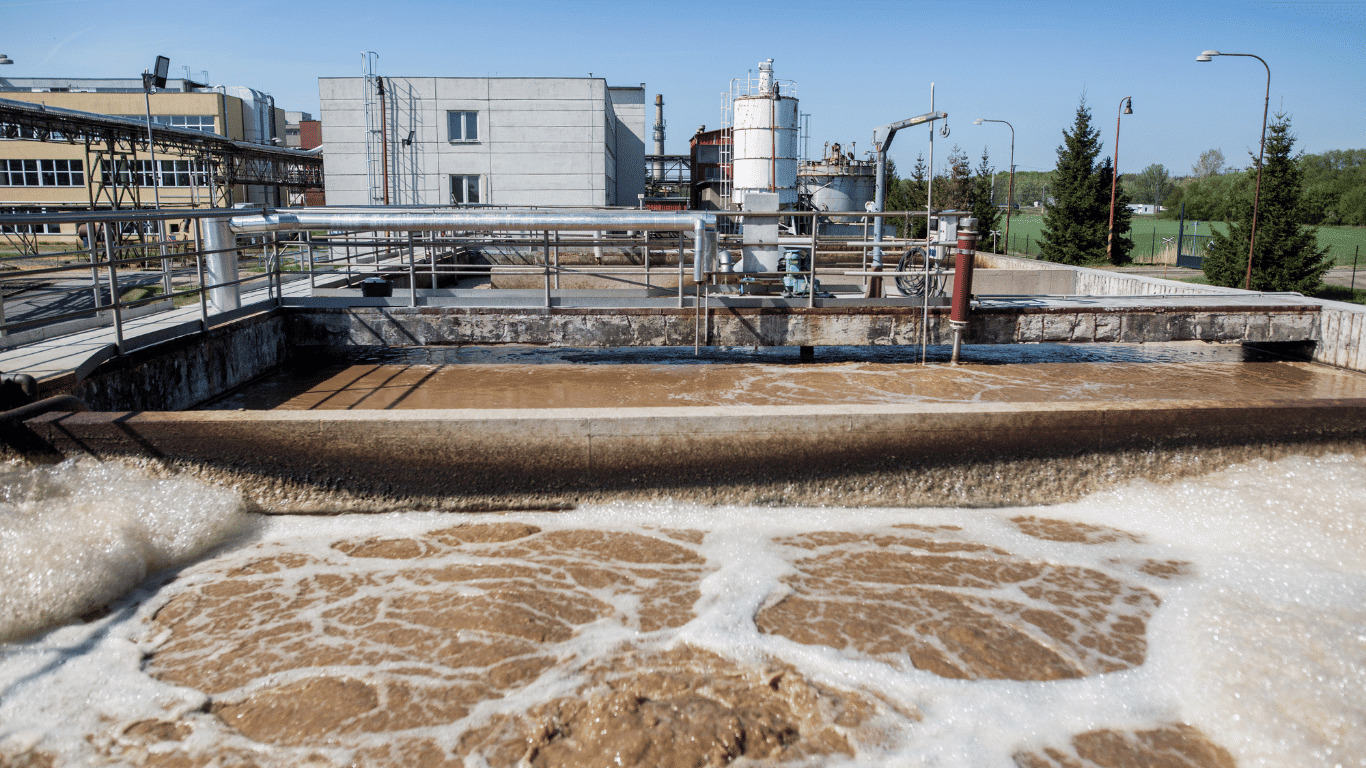
Ammonia in industrial wastewater can create treatment challenges, affect receiving water quality, and disrupt biological processes when concentrations become too high. For facilities handling ammonia-rich waste streams, ammonia stripping offers a practical way to reduce dissolved ammonia before discharge or further treatment. Understanding how the process works helps operators evaluate its suitability, manage operating costs, and maintain consistent treatment performance.
What Is Ammonia Stripping?
Ammonia stripping is a physical-chemical process that removes dissolved ammonia nitrogen from wastewater by transferring ammonia from the liquid into a gas stream. Facilities commonly use this method to treat landfill leachate, industrial waste water, and other high-strength streams with elevated ammonia concentrations. Unlike biological treatment, this process does not depend on microorganisms to convert ammonia into other nitrogen compounds.
In water, ammonia exists in an equilibrium between ionized ammonium ((\mathrm{NH_4^+})) and un-ionized ammonia ((\mathrm{NH_3})), which can escape into the air as ammonia gas. The water’s pH and temperature influence this balance. Raising the pH shifts more ammonium toward dissolved ammonia gas, making removal easier. This distinction matters because stripping primarily targets ammonia, not nitrate or organic nitrogen. If your facility needs broader nitrogen removal, you may need to combine stripping with other treatment methods.
How Does the Ammonia Stripping Process Work?
Most ammonia stripping systems use a packed tower to increase contact between wastewater and air. The wastewater flows over packing materials while air moves through the tower, allowing ammonia gas to transfer from the liquid into the air stream. This approach, known as air stripping, increases the gas-liquid contact area and supports efficient mass transfer. Some systems use steam instead of air, depending on the wastewater characteristics, treatment objectives, and available utilities.
Before stripping begins, operators typically adjust the wastewater pH with an alkaline chemical such as lime or caustic soda. This adjustment encourages the conversion of ammonium into volatile ammonia gas. The system then directs the wastewater through the stripping equipment while blowers supply air at the required flow rate. Afterward, the treated water moves to the next treatment stage, while the ammonia-rich gas requires capture and treatment to prevent air pollution and protect human health. Some facilities recover the captured ammonia by converting it into ammonium sulfate, which can serve as a fertilizer when the recovered product meets applicable quality and regulatory requirements.
What Factors Affect Ammonia Stripping Efficiency?
Several operating conditions determine how well ammonia stripping performs. Start with pH, temperature, and the air-to-water ratio. Higher pH generally increases the proportion of ammonia available for transfer into the gas phase, while higher temperatures can improve volatilization and mass transfer. However, heating wastewater increases energy demand, so operators should evaluate the benefits against operating costs. A pH near 11 and a temperature around 50°C may provide effective removal under particular conditions, but the best settings depend on the wastewater and system design.
Next, examine ammonia concentration, hydraulic flow, contact time, and tower performance. A high influent ammonia concentration may require additional chemical dosing or more treatment capacity. Meanwhile, insufficient airflow, uneven wastewater distribution, or fouled packing materials can reduce removal efficiency. Cold temperatures can also slow gas-liquid mass transfer. Operators should track influent and effluent ammonia levels, pH, temperature, and flow to identify changes early. Pilot testing or treatability studies can help establish realistic operating targets before a facility commits to full-scale equipment.
Benefits and Limitations of Ammonia Stripping
One major advantage of ammonia stripping is its ability to handle high-strength wastewater without generating biological sludge as a direct result of the stripping process. Under suitable conditions, ammonia removal can reach 90% to more than 95%, although actual performance varies with system design and operating conditions. The process also avoids dependence on biological activity, which can make it useful when toxic organic compounds or other contaminants interfere with microbial treatment. Reducing ammonia before discharge or biological treatment can also help protect receiving waters and support compliance with applicable wastewater regulations.
However, stripping has important limitations. Alkali consumption can be substantial because the process needs a sufficiently high pH to promote ammonia volatilization. Heating, blower operation, and off-gas treatment can add to energy and maintenance costs. Furthermore, stripping transfers ammonia from water into a gas stream rather than automatically eliminating it from the environment. Facilities must capture and manage that gas responsibly. The process also removes little nitrate or organic nitrogen, so operators should not treat it as a complete nitrogen-removal solution. A broader treatment train may need biological treatment, chemical treatment, or other technologies to meet the facility’s discharge targets.
Where Do Facilities Use Ammonia Stripping?
Landfill leachate treatment is a common application because leachate can contain high ammonia concentrations that vary with landfill age, waste composition, and operating conditions. Manufacturers and other industrial facilities may also use stripping when process wastewater contains elevated ammonia loads. In these applications, ammonia removal can reduce the burden on downstream treatment stages and help facilities manage fluctuations in wastewater quality. The appropriate design depends on the wastewater’s chemistry, flow rate, ammonia concentration, and final treatment requirements.
Ammonia stripping can also support facilities that use anaerobic digestion to treat organic waste or produce biogas. Although ammonia serves as a nutrient for microbial growth, excessive concentrations can inhibit anaerobic bacteria and reduce biogas production. Protein-rich feedstocks can increase ammonia levels as microorganisms break down nitrogen-containing compounds. Concentrations above approximately 1,000 mg/L may impair digestion under some conditions, while levels around 5,000 mg/L can cause severe inhibition or complete process failure in susceptible systems. These values are not universal toxicity thresholds, so operators should assess ammonia levels alongside pH, temperature, feedstock characteristics, and acclimation of the microbial community.
How Can Facilities Improve Ammonia Stripping Performance?
Start with a reliable understanding of your influent. Measure ammonia concentration, pH, temperature, and wastewater flow before adjusting chemical feed or increasing airflow. These measurements help operators distinguish between a change in wastewater loading and an equipment problem. For instance, a sudden increase in influent ammonia may require a different operating strategy than a decline in removal caused by fouled packing or inconsistent airflow. Regular inspections, calibrated instruments, and accurate operating records make it easier to identify the source of a performance issue.
Next, review chemical consumption, energy use, and off-gas handling together rather than treating them as separate concerns. Excessive alkali dosing can increase costs, while inadequate pH adjustment can limit ammonia removal. Likewise, insufficient airflow can reduce contact efficiency, but increasing blower output without reviewing the tower design may waste energy. Facilities should also evaluate how stripping fits into the complete treatment train. ProChem’s guide to chemical treatment of wastewater provides additional context for understanding how chemical adjustments support treatment objectives. A review of industrial wastewater treatment systems can also help teams assess how individual processes work together.
Building an Effective Ammonia Removal Strategy
A dependable ammonia removal strategy starts with wastewater characterization, clear performance targets, and a system designed around actual operating conditions. Assess the influent ammonia concentration, expected flow variations, chemical requirements, temperature range, and applicable discharge limits. Then determine whether air stripping, steam stripping, or a combination of treatment technologies best fits the facility’s needs. A detailed wastewater treatment system design approach can help teams evaluate process integration, equipment capacity, and long-term operating requirements before implementation.
Once the system is operating, establish routine checks for pH, temperature, airflow, chemical consumption, and effluent ammonia. Investigate unexplained changes instead of compensating with additional chemicals or energy without identifying the cause. Also, confirm that off-gas capture and treatment remain effective.
Evaluating ammonia stripping or struggling to maintain consistent ammonia removal? Connect with us to discuss your wastewater characteristics, treatment goals, and options for improving system performance.
