
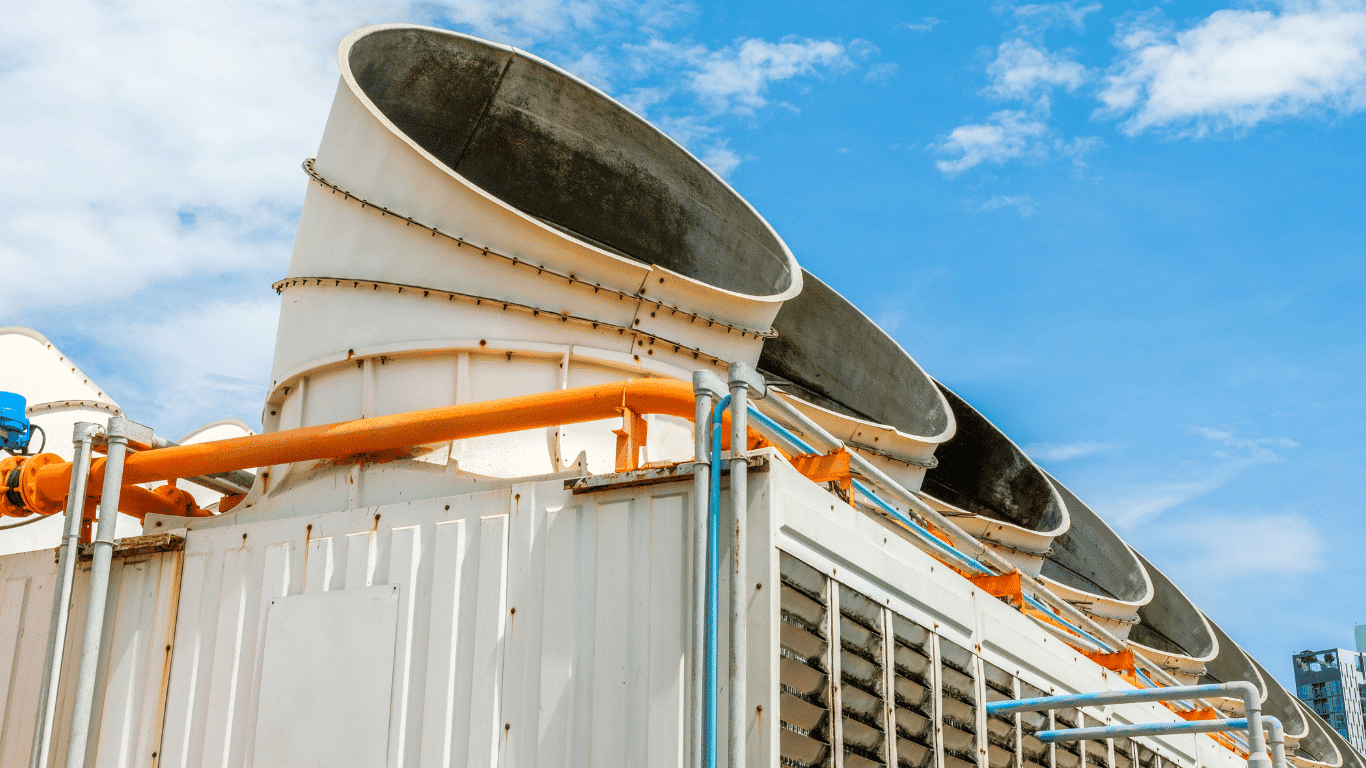
Cooling towers play an important role in maintaining stable temperatures across industrial facilities and commercial HVAC systems. They remove excess heat from circulating water, allowing equipment and industrial processes to operate within their required temperature ranges. However, continuous operation exposes these systems to changing water conditions, environmental contaminants, and mechanical wear.
When something goes wrong, even a relatively small issue can affect overall performance, increase energy consumption, and lead to unplanned downtime. Understanding common cooling tower problems helps operators recognize early warning signs, identify their underlying causes, and take the right corrective steps before equipment suffers more serious damage.
Understanding Common Cooling Tower Problems
A cooling tower depends on several systems working together. Water distribution, airflow, heat transfer surfaces, and mechanical components must remain in good condition to maintain reliable cooling. A problem in one area can quickly affect the others.
In our experience, many performance issues start with water quality and inadequate maintenance. Poorly controlled water chemistry encourages scale, corrosion, and biological growth, while accumulated debris restricts airflow and water movement. Mechanical wear can create additional problems, especially when operators overlook unusual noises, vibration, or changes in operating temperatures.
Recognizing these conditions early makes a significant difference. Here are some of the most common issues facility teams should watch for and the practical steps that help address them.
1. Scaling and Mineral Deposits
Scaling develops when dissolved minerals accumulate in circulating tower water and form solid deposits on internal surfaces. Calcium carbonate is a common contributor, particularly when hard makeup water enters the system and evaporation concentrates its mineral content. As water temperature and alkalinity change, minerals can exceed their solubility limits and begin depositing throughout the equipment.
The biggest concern is what these deposits do to heat transfer. Scale acts as an insulating layer across heat exchangers, fill media, and other heat transfer surfaces. This buildup can reduce heat transfer efficiency, increase energy consumption, and make it harder for the cooling tower to maintain its target temperatures. In severe cases, mineral deposits restrict water flow and contribute to reduced cooling efficiency.
To address scaling, operators should regularly monitor water chemistry, including pH, conductivity, hardness, and alkalinity. A properly selected scale inhibitor helps control mineral precipitation, while scheduled cleaning removes existing deposits. Facilities dealing with consistently hard makeup water may also benefit from pretreatment using water softeners or other suitable filtration technologies.
2. Corrosion and Equipment Deterioration
Corrosion occurs when water chemistry, dissolved oxygen, and other environmental conditions gradually deteriorate metal surfaces. Cooling towers contain components that remain exposed to circulating water, moisture, and changing temperatures. Without adequate protection, metal components can develop rust, pitting, and localized deterioration.
The effects extend beyond surface damage. Corrosion can weaken structural components, damage piping connections, and eventually create leaks in cooling tower basins and sidewalls. As metal loss progresses, operators may face equipment failure, unexpected shutdowns, and costly repairs. Corrosion can also release metal debris into the circulating water, creating additional fouling concerns.
A balanced water treatment program helps control these conditions. Corrosion inhibitors protect exposed surfaces, while regular water chemistry testing helps operators identify conditions that accelerate metal deterioration. Teams should also inspect vulnerable areas for coating damage and early signs of rust. When existing coatings fail, technicians may need to remove deteriorated material through surface preparation and apply suitable protective coatings, including an appropriate epoxy coating where specified.
3. Biological Growth and Contamination
Warm, circulating water creates favorable conditions for biological growth, especially when operators allow nutrients, sediment, and organic material to accumulate. Algae, bacteria, fungi, and other microbiological contaminants can develop across wet surfaces, cooling tower fill, and basin areas.
Biofilm accumulation is particularly troublesome because it creates a protective layer that makes microbial control more difficult. It can also restrict water distribution, reduce heat transfer, and contribute to under-deposit corrosion. More importantly, cooling towers can support Legionella growth under favorable conditions. The CDC identifies temperatures of approximately 77°F to 113°F as a range favorable for Legionella growth, although temperature alone does not determine the risk.
Operators should maintain a structured water-management program that combines regular inspections, cleaning, disinfection, and appropriate biocide treatment. Chlorine and other oxidizing or non-oxidizing biocides may form part of the treatment strategy, depending on system conditions and program requirements. Teams should also monitor disinfectant residuals and investigate abnormal microbial test results promptly. A positive Legionella result requires a response based on the facility’s water-management program, applicable requirements, and public health guidance.
4. Fouling and Restricted Water Distribution
Fouling occurs when airborne contaminants, suspended solids, and organic material accumulate inside cooling tower components. Dust, pollen, fine particles, and other debris enter through the air intake and settle on wet surfaces. Over time, these materials collect in the basin, clog nozzles, and obstruct passages throughout the system.
The tower fill deserves particular attention because it provides the surface area needed for effective heat transfer. When fill media becomes clogged with sediment, scale, or biological deposits, water cannot spread evenly across the available surfaces. Restricted airflow and uneven water distribution further reduce cooling efficiency. In heavily fouled systems, cleaning or even fill replacement may become necessary.
Regular inspections and appropriate filtration help prevent excessive buildup. Side-stream filtration can remove suspended solids from circulating tower water, while cleaning restores water distribution and open airflow passages. Operators should also inspect nozzles and distribution pipes to make sure water reaches the fill evenly. For additional guidance, see our resource on cooling tower cleaning.
5. Mechanical Failures and Airflow Problems
Mechanical components keep the cooling tower operating, but continuous exposure to moisture, vibration, and changing loads can gradually wear them down. Fans, motors, bearings, drive shafts, and belt drive units all require regular inspection. A loose belt, damaged bearing, misaligned shaft, or worn fan blade can affect the entire cooling process.
Fan failure deserves immediate attention because the system depends on consistent airflow to remove heat. Damaged fan blades, motor problems, and excessive vibration can reduce air movement and cause the tower to operate inefficiently. Operators may also notice excessive noise, unusual operating temperatures, or higher energy consumption as mechanical conditions deteriorate.
Start with routine inspections of fan blades, motor connections, belts, bearings, and mounting hardware. Check for unusual vibration, listen for changes in operating noise, and verify that the fan rotates at the correct speed. Teams should also inspect drift eliminators, which capture tiny water droplets carried into the exhaust air. Damaged or poorly maintained eliminators can increase water loss and allow unnecessary drift from the cooling tower.
6. Excessive Blowdown and Water Loss
Cooling towers naturally lose water through evaporation, drift, and blowdown. Blowdown removes a portion of concentrated tower water and replaces it with fresh makeup water. This process helps control dissolved solids and prevents minerals from accumulating beyond manageable levels.
However, excessive water blowdown can increase water consumption, chemical demand, and wastewater disposal costs. On the other hand, insufficient blowdown allows dissolved solids to build up, increasing the potential for scaling and other water quality problems. Both conditions can affect tower efficiency and long-term operating expenses.
Operators should monitor conductivity and maintain appropriate cycles of concentration based on makeup water quality, treatment chemistry, and equipment limitations. Many systems operate around two to six cycles, although the appropriate target varies by application. Automated conductivity controls can help regulate blowdown and maintain more consistent water conditions. For a closer look at this process, explore our guide to cooling tower water treatment.
7. Monitoring and Preventing Cooling Tower Problems
The most reliable way to manage cooling tower performance is to establish a consistent monitoring and maintenance routine. Waiting until equipment shows obvious signs of failure often means the underlying issue has already affected other system components. Regular inspections and water testing help facility managers catch developing problems while corrective action remains manageable.
We recommend paying close attention to these operating conditions:
- Water chemistry: Monitor pH, conductivity, alkalinity, hardness, and treatment chemical residuals to identify conditions that encourage scaling or corrosion.
- Water distribution: Check nozzles, piping, and fill surfaces for blockages, uneven flow, and accumulated deposits.
- Mechanical condition: Inspect motors, fan blades, bearings, belts, and other moving parts for wear, misalignment, and unusual vibration.
- Thermal performance: Track entering and leaving water temperatures, approach temperature, and wet bulb temperature to evaluate heat rejection performance.
- Biological control: Review treatment records, inspect for biofilm, and follow the facility’s water-management and testing procedures.
- Water consumption: Compare makeup water and blowdown volumes to identify leaks, excessive discharge, or changes in operating conditions.
Keep records of inspections, water samples, chemical adjustments, and maintenance activities. These records help operators identify recurring issues and determine whether changes in treatment or operating conditions are affecting system performance.
8. Maintaining Reliable Cooling Tower Performance
A dependable cooling tower requires more than occasional cleaning or chemical additions. It needs a coordinated approach that addresses water quality, equipment condition, and operating performance. When these elements work together, facilities can reduce unexpected downtime, maintain heat transfer efficiency, and extend equipment service life.
ProChem Inc. provides industrial water treatment solutions designed to address the challenges that affect cooling tower operation. Our team can help evaluate water conditions, identify treatment requirements, and develop chemical programs that support scale control, corrosion protection, and biological management. We also offer treatment systems and ongoing support to help facilities maintain consistent operating conditions.
If your cooling tower continues to experience scaling, fouling, or inconsistent water chemistry, it may be time to take a closer look at the treatment strategy. Contact ProChem to discuss your cooling tower requirements and develop a practical water treatment approach that protects equipment, improves system performance, and supports dependable facility operations.
