
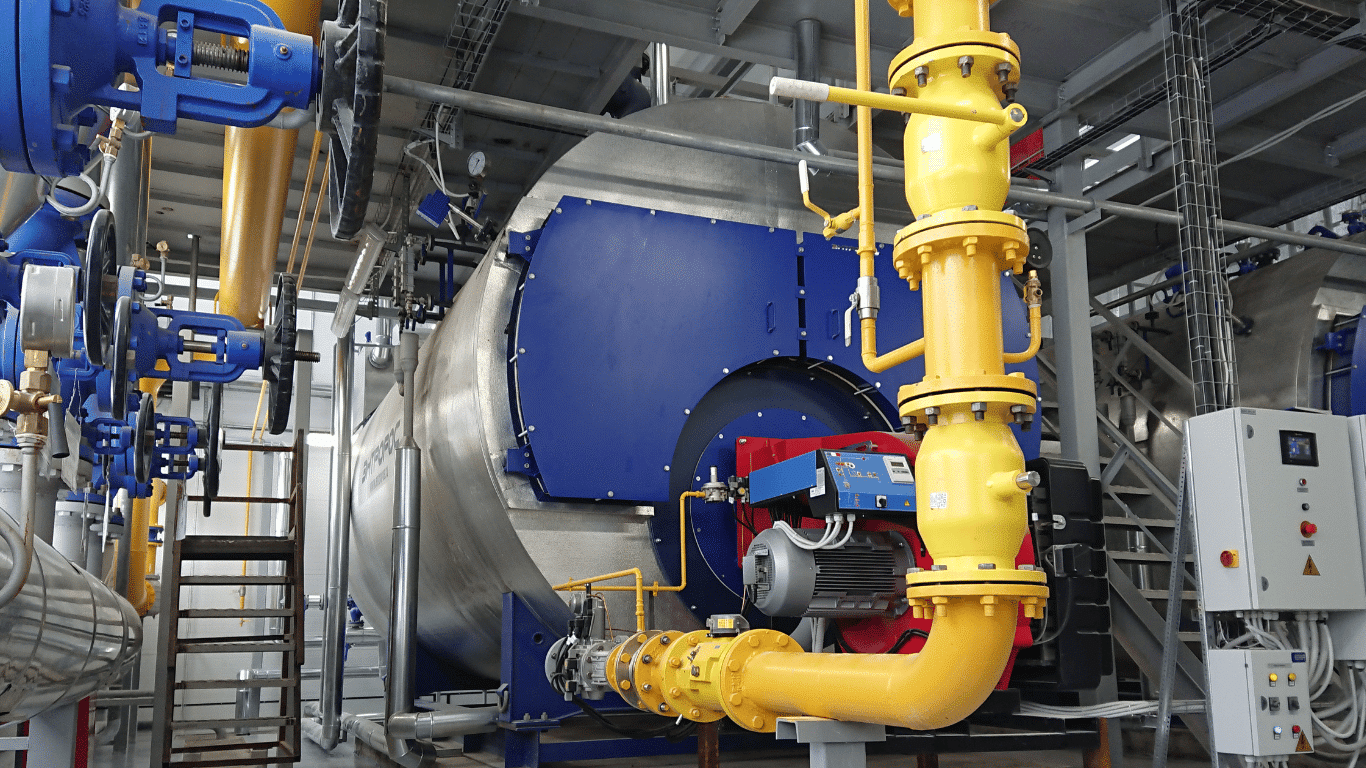
In a boiler or steam cycle, water quality has a direct effect on how reliably the system runs. Even after steam condenses back into water, the resulting boiler condensate can pick up trace contaminants from equipment, piping, corrosion, or process conditions. A condensate polisher provides an additional layer of water treatment that helps maintain the high purity needed throughout the cycle.
For operators, condensate polishing is less about treating water once and more about protecting the entire steam-water system from contamination that can accumulate over time. Keeping steam condensate clean helps support reliable operation and protects valuable equipment. A well-designed treatment approach also works alongside broader water treatment systems, giving facilities greater control over water quality as operating conditions change.
What Is a Condensate Polisher?
A condensate polisher is a treatment vessel that cleans returning condensate before it moves back into the boiler or steam-water cycle. The goal is not simply to produce clean-looking water. Even high-purity condensate can carry dissolved contaminants and trace contaminants that are difficult to detect but can cause problems as they circulate through the system. A polisher gives operators another line of defense against those impurities before they reach sensitive equipment.
Most condensate polishers rely on mixed-bed ion exchange resin, which combines cation and anion exchange media in the same treatment vessel. As condensate passes through the resin beads, ion exchange captures unwanted dissolved ions and replaces them with hydrogen or hydroxide ions that ultimately form water. This process helps remove dissolved contaminants that conventional filtration cannot capture, including sodium, chloride, silica, and other ionic impurities.
The value of this treatment comes down to purity and control. A properly operated system can achieve effective removal of contaminants down to parts-per-billion (ppb) levels, helping maintain the water quality that demanding steam cycles require. However, the polisher does not replace good water chemistry practices. Instead, it provides an important safeguard when small amounts of contamination enter the condensate system.
How Condensate Polishers Remove Contaminants
Mixed-bed ion exchange provides the core purification process inside many condensate polishing systems. The resin contains both cation and anion exchange media, allowing it to capture positively and negatively charged ions as steam condensate passes through the vessel. Cation resin targets ions such as sodium, while anion resin captures species such as chloride and other negatively charged contaminants. Together, they help remove impurities that could otherwise circulate through the steam-water cycle.
The resin gradually exchanges its active ions as it captures contaminants, which allows the system to maintain high purity water quality during operation. This approach makes ion exchange particularly useful when a facility needs consistent removal of dissolved ionic contaminants rather than simple particulate filtration. If you want to see how this treatment technology fits into broader industrial water treatment, ProChem’s ion exchange systems provide a useful reference.
Water quality monitoring remains just as important as the treatment process itself. Operators commonly track cation conductivity because even small increases can indicate contamination entering the cycle or declining resin performance. For demanding steam systems, teams may target steam cation conductivity below 0.15 µS/cm, while purified water typically has conductivity below 0.1 µS/cm. Tracking these values helps operators confirm that condensate polishing continues to remove contaminants and maintain optimal performance rather than assuming the equipment works simply because water continues to flow through it.
Deep-Bed and Precoat Condensate Polishers
Deep-bed polishers use a substantial bed of mixed-bed resin, typically around 3 to 4 feet deep, inside a dedicated vessel. As condensate flows through the bed, the resin captures dissolved ionic impurities while the depth provides enough capacity for continuous operation. These deep bed polishers suit demanding applications that require consistent water quality, and operators commonly find them in large power generation facilities, including nuclear power plants. The design also gives teams a practical way to manage polisher resin when contaminant loading increases.
Precoat polishers take a different approach. Instead of filling the vessel with a deep bed of resin beads, the system applies powdered resin to filter elements. The coated filters then provide the treatment surface as condensate passes through the unit. This configuration can offer operational flexibility, particularly when facilities need a polishing system that can adapt to changing treatment requirements or temporary operating conditions. However, teams need to manage the precoat material and filters as part of routine operation.
The biggest difference comes down to how each system handles resin and regeneration. Deep-bed systems typically send exhausted resin for external regeneration, rather than regenerating it inside the operating vessel. Precoat systems instead replace the spent powdered resin coating on the filter elements. In either case, operators need to watch flow, pressure, water quality, and particulate loading. Suspended particles and other particulates can interfere with treatment performance, so good upstream filtration and regular monitoring help keep the polisher operating as intended.
Where Condensate Polishers Fit in Power Plants
In power plants, condensate polishing sits within the steam-water cycle, typically treating returning condensate before it goes back to the boilers or steam generators. That makes the polisher an important checkpoint between the condensate system and the equipment that depends on clean cycle water. In combined cycle plants, operators can use polishing to help control contamination before it reaches boilers, turbines, and other components that require tightly controlled water chemistry.
The need becomes especially clear during start up and commissioning. New equipment, construction debris, corrosion products, cleaning residues, and other sources can introduce contamination into the cycle before the plant reaches stable operation. Rental polishing systems can provide temporary treatment capacity during this period, allowing teams to clean up cycle water without committing to permanent equipment for a short-term need. Faster startup times can follow when operators bring water quality under control sooner.
Condensate polishers also provide a useful buffer when water chemistry changes unexpectedly. For example, air cooled condensers and other equipment can introduce conditions that increase the risk of contamination entering the cycle. Instead of relying on a single treatment point, operators can use polishing as another layer of protection for the steam and water systems. That added control helps teams respond to chemistry upsets while keeping system conditions within the limits needed for reliable operation.
Protecting Boilers, Turbines, and the Steam-Water Cycle
Clean boiler condensate plays an important role in preventing corrosion throughout the steam-water cycle. Chlorides and other aggressive contaminants can accelerate corrosion when they remain in circulation, while corrosion products can move through the system and create additional problems. Maintaining high purity water gives operators better control over these risks and helps protect the metal surfaces that support reliable steam generation.
Scale creates another concern. When impurities accumulate on boiler heat-transfer surfaces, deposits can reduce heat transfer and create localized hot spots. Those deposits can also travel with steam and contribute to buildup on turbine internals. Keeping contaminants under control helps limit scale formation and protects downstream equipment from avoidable damage. For a broader look at this approach, see ProChem’s guide to boiler corrosion prevention.
Good condensate quality also supports a more controlled water chemistry program. Facilities using advanced approaches such as oxygenated treatment still need to manage unwanted ionic contaminants that can upset carefully maintained chemistry conditions. A polisher provides an additional buffer when small chemistry changes or contamination events occur. That extra protection can help teams maintain reliable steam production while reducing the likelihood that corrosion, deposits, or scale will compromise equipment performance.
Resin Management, Regeneration, and Maintenance
Resin does not have unlimited capacity. As the resin captures contaminants, its exchange sites gradually become saturated, so operators need to monitor water quality and operating conditions to determine when regeneration or replacement makes sense. For deep-bed systems, external regeneration commonly restores the resin for reuse. The regeneration process uses carefully controlled chemicals, including sodium hydroxide for anion resin, followed by rinsing and preparation before the resin returns to service. Proper handling matters because repeated treatment cycles can affect resin life.
Operators should also watch for contamination that can foul the resin and reduce its capacity. Oil presents a particular concern because it can coat the resin and interfere with its ability to effectively remove contaminants. A sudden change in conductivity, pressure drop, or treatment performance can provide an early warning that the resin needs attention. Regular monitoring helps teams catch these changes before they affect broader system performance. In the long run, managing resin condition carefully can extend service intervals, avoid unnecessary replacement, and keep maintenance costs under control.
Improving Efficiency Through Condensate Recovery
Recovering clean condensate gives power plants an opportunity to reuse water that has already passed through the steam cycle. Condensate polishers can help make that recovery more reliable by removing contaminants before the water returns to service. With effective cycle management, facilities can recover approximately 95–98% of cycle water, reducing the amount of fresh makeup water the system needs. That supports water efficiency while preserving the value of treated water already within the process.
Cleaner boiler condensate can also reduce the contaminant load that operators need to control through blowdown. Lower blowdown requirements can reduce water and energy consumption because the facility sends less conditioned water out of the cycle and needs less replacement water in return. The result can support unit efficiency as well as more consistent operation. Still, condensate polishing works best as part of a broader water treatment strategy, where water quality monitoring, chemistry control, and recovery practices work together to improve long-term efficiency.
Building a Reliable Condensate Polishing Strategy
A reliable condensate polishing strategy starts with understanding where contamination can enter the cycle and how much treatment the facility actually needs. From there, teams can select the right polisher configuration, establish conductivity and water-quality monitoring points, and set clear criteria for resin regeneration or replacement. During commissioning or start up, it also helps to plan ahead for temporary or rental polishing capacity rather than treating contamination as an unexpected problem.
Most importantly, condensate polishing should work as part of the facility’s broader water treatment program. Operators should review condensate quality regularly, track changes in system conditions, and make sure resin maintenance keeps pace with the contaminant load. If you are evaluating your current approach or planning a new system, ProChem Inc. can help you develop a condensate treatment strategy built around your facility’s water quality, operating demands, and equipment requirements.
