
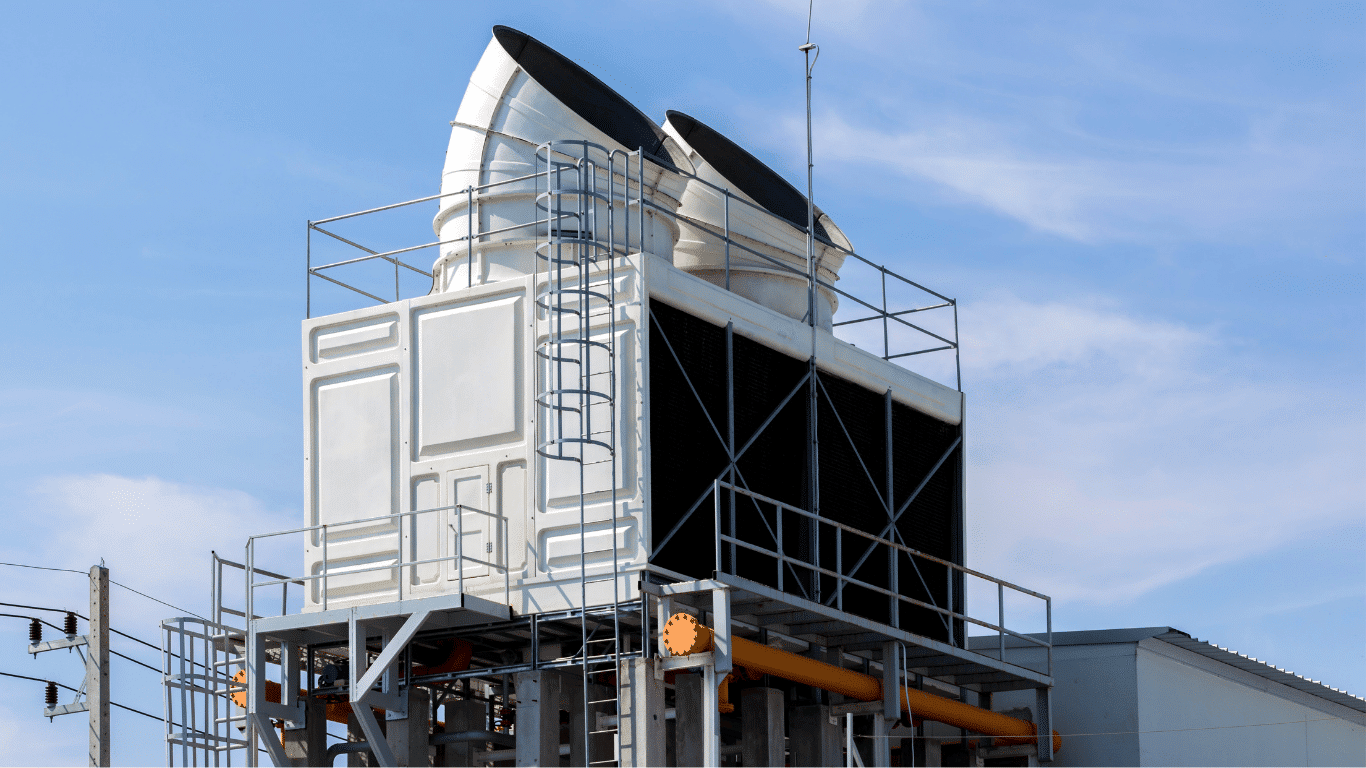
Cooling towers rely on more than moving water to keep equipment operating efficiently. As water circulates through a cooling tower system, evaporation naturally leaves minerals behind, gradually increasing their concentration in the remaining water. This process is measured through cooling tower cycles of concentration, an important indicator that helps operators understand how effectively the system uses water while maintaining good water quality.
Finding the right balance is essential. Too few cycles of concentration can waste water through unnecessary blowdown, while too many can increase the risk of scale, corrosion, and reduced performance. Understanding how this process works gives facility teams the knowledge to make informed operating decisions, improve efficiency, and keep cooling towers running reliably over the long term.
What Are Cooling Tower Cycles of Concentration?
Cycles of concentration describe how much the dissolved solids in cooling tower water have increased compared to the makeup water entering the system. Every cooling tower starts with fresh water, but once the system water begins circulating, only pure water leaves during evaporation. The minerals remain behind, causing the concentration of dissolved materials to rise over time. This makes understanding cycles a key concept for anyone responsible for maintaining reliable cooling performance and protecting equipment.
You can think of the concentration ratio as a comparison between the mineral content of the make up water and the recirculating water inside the tower. For example, if the recirculating water contains four times the level of dissolved minerals found in the incoming water, the system is operating at four cycles. This simple comparison helps operators evaluate how efficiently the system uses water while keeping mineral buildup under control. Although the calculation is straightforward, the results provide valuable insight into overall system health.
As evaporation continues, the concentration of minerals keeps increasing because they do not evaporate with the water. Without proper control, higher cycles can eventually push dissolved minerals beyond acceptable levels, increasing the likelihood of operational problems. That is why facility teams regularly monitor dissolved solids and overall water conditions. A clear understanding of this process makes it easier to balance water use, maintain stable operation, and decide when adjustments are needed to keep the cooling tower performing as intended.
How Cycles of Concentration Affect Cooling Tower Performance
Every cooling tower depends on evaporation to remove heat, but that same process also causes a steady concentration increase of minerals in the circulating water. As water evaporates, the dissolved minerals stay behind, raising the level of dissolved solids with every cycle. This gradual increase is normal, but it needs careful control. Left unchecked, the higher mineral content begins affecting water quality, making it more difficult for the system to operate efficiently under changing cooling tower loads. The goal is not to eliminate concentration, but to keep it within a range that supports reliable system performance.
One of the biggest concerns is scale formation. As mineral levels continue to rise, compounds such as calcium carbonate can exceed their natural solubility and begin forming hard scale deposits on heat transfer surfaces. Even a thin layer of scale acts as an insulator, making it harder for heat to move through the equipment. As a result, heat transfer efficiency declines, thermal efficiency suffers, and the cooling system has to work harder to achieve the same level of performance. Over time, this means higher energy use, more wear on process equipment, and overall reducing efficiency across the entire operation.
High mineral concentrations can also increase corrosion rates, especially when water chemistry falls outside the recommended operating range. At the same time, suspended solids and biological growth can accumulate if water quality is not properly managed, creating deposits that restrict flow and interfere with heat exchange. These conditions often work together, making maintenance more challenging and placing additional stress on the cooling tower. Regular monitoring and proactive water treatment help keep mineral levels, corrosion, and biological activity under control so the system continues operating safely and efficiently.
Finding the Right Target Cycles
Many operators ask what the ideal number of cycles should be, but there is no universal answer. The right target cycles depend on the quality of your incoming water, your equipment, and your operating conditions. One facility may safely run at higher cycles, while another may need a more conservative approach because of its makeup water quality. As a general guideline, many cooling towers operate between 2 and 4 cycles, but that range should serve as a starting point rather than a fixed rule. The best target cycles are always the ones that balance efficiency with long-term equipment protection.
The quality of your makeup water has a major influence on how far you can increase solids concentration. Water with low mineral content usually provides more flexibility because it contains fewer dissolved minerals from the start. On the other hand, water with higher total dissolved solids reaches its solubility limits much sooner. Once minerals exceed those limits, they begin coming out of solution and can form scale on critical equipment. Pushing the system beyond its practical limit creates excessive concentration, increasing the likelihood of scaling, corrosion, and unexpected maintenance.
Instead of chasing the highest possible number of cycles, focus on operating at the level your system can support consistently. Higher cycles often improve water efficiency because they reduce the amount of water discharged through blowdown, but they should never come at the expense of reliable operation. Routine water testing, trend monitoring, and adjustments based on changing conditions help determine whether your current target cycles remain appropriate. This practical approach also helps control operating costs, protect equipment, and maintain stable performance throughout the year.
How Operators Control Cycles of Concentration
The most common way to manage cycles of concentration is by monitoring conductivity, which closely reflects the amount of dissolved minerals in the water. As minerals become more concentrated, conductivity rises as well. Most facilities rely on conductivity controllers to track these changes and support consistent tower operation. When the water reaches a predetermined conductivity set point, the system initiates cooling tower blowdown to remove a portion of the concentrated water. If you’d like to learn more about this process, our guide to cooling tower blowdown explains how proper blowdown protects equipment and improves overall system reliability.
During tower blowdown, a controlled amount of blowdown water leaves the system and fresh makeup water added replaces those losses. This controlled bleed helps lower the concentration of dissolved solids before they reach problematic levels. Operators adjust the blowdown rate based on water quality, system demand, and seasonal conditions. They also account for normal evaporative losses and drift loss, since both influence how much replacement water the system requires. Rather than relying on occasional testing alone, combining automated controls with simple monitoring gives operators a clearer picture of changing system conditions.
Automation makes the process more consistent, but it should complement, not replace, routine inspections. Teams should continue verifying sensor readings, checking controller performance, and reviewing water test results to confirm the system is operating as expected. Regular testing also helps identify changes that automated controls may not detect on their own. For more guidance on maintaining reliable system conditions, explore our resources on water quality monitoring and cooling tower water treatment. Together, these practices help maintain stable cycles of concentration while protecting equipment and improving long-term performance.
Water Treatment Makes Higher Cycles Possible
Running at higher cycles is not simply a matter of adjusting the blowdown controller. The water must also remain chemically stable as mineral levels increase. Well-designed water treatment programs help maintain balanced system chemistry, allowing facilities to operate more efficiently without increasing the risk of scale or corrosion. A combination of chemical water treatment, routine testing, and operational adjustments gives operators greater confidence when increasing cycles. Without this support, many untreated systems reach their operating limits much sooner because dissolved minerals accumulate faster than the system can safely handle.
The right treatment chemicals work together to address different water quality challenges. Scale inhibitors help keep minerals in solution before they form deposits, while corrosion inhibitors protect metal surfaces from chemical attack. Filtration removes suspended particles that can interfere with heat transfer or create deposits, and reverse osmosis can improve makeup water quality by reducing dissolved minerals before they even enter the cooling tower. Starting with cleaner makeup water often makes it easier to operate at higher cycles while maintaining stable water conditions.
A balanced treatment strategy delivers benefits beyond equipment protection. When facilities safely operate at higher cycles, they can improve water efficiency by reducing unnecessary blowdown and lowering overall water consumption. Less blowdown also means more water savings, reduced wastewater discharge, and, in many cases, lower operating expenses over time. Every cooling tower has its own practical operating limit, so the goal is not to maximize cycles at all costs. Instead, use a treatment program that matches your water quality, operating conditions, and performance goals to achieve reliable, long-term results.
Building a Reliable Water Management Strategy
A reliable water management strategy starts with consistency. Monitor system conditions regularly, test water quality, and adjust operating practices as conditions change throughout the year. Seasonal temperatures, changing makeup water quality, and varying cooling demands can all affect the ideal operating range. Instead of chasing the highest possible cycles, aim for balanced operation that protects equipment while using water efficiently. That approach helps maintain dependable performance, extends equipment life, and reduces the likelihood of unexpected maintenance caused by scale, corrosion, or unstable water chemistry.
If you’re ready to get more from your cooling tower without increasing operational risk, ProChem is here to help. Our team works with facilities to evaluate water quality, optimize treatment strategies, and recommend practical solutions tailored to each system. Contact us today to discuss the right approach for your facility and keep your cooling tower operating at its best.
