
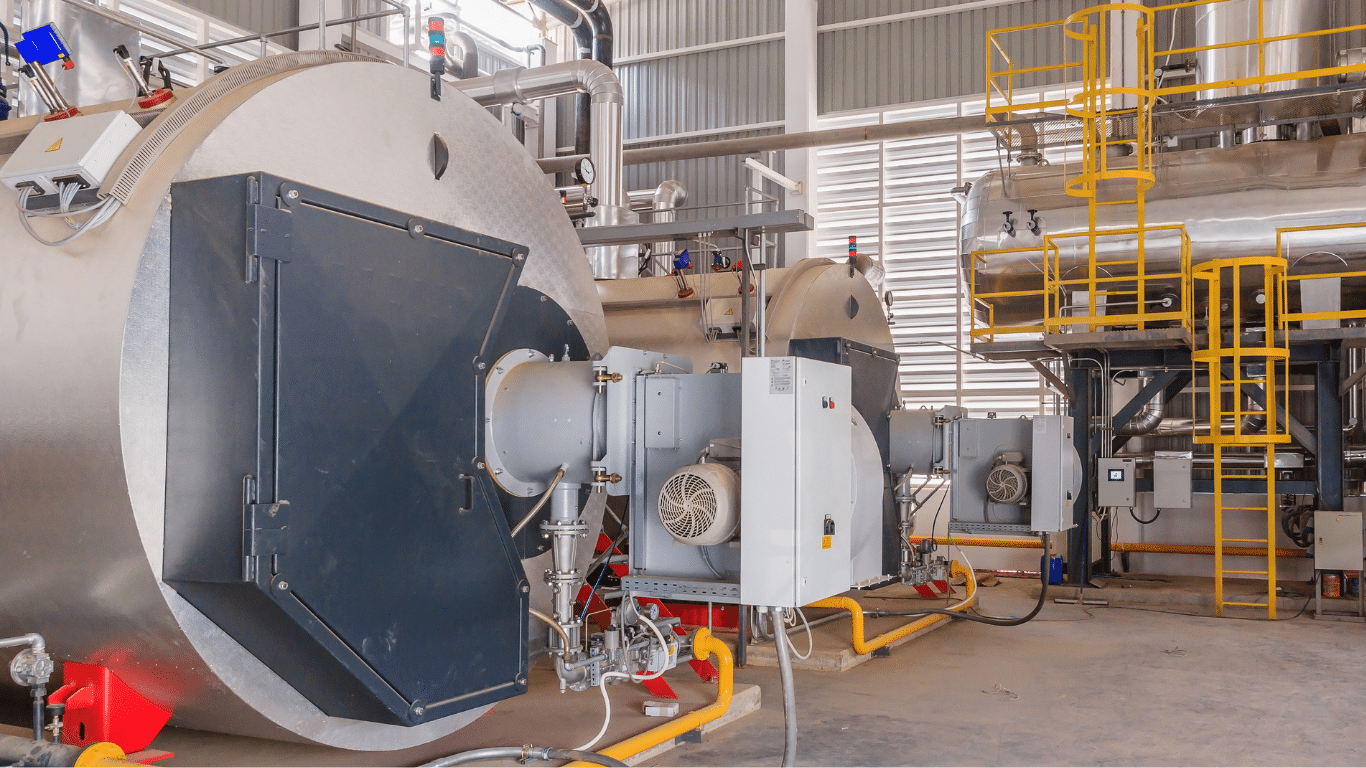
Steam powers countless industrial operations, from manufacturing and food processing to healthcare and energy production. Still, not every steam boiler is built for the same job. Understanding the different types of steam boilers helps you choose an industrial boiler that matches your facility’s steam demand, operating conditions, and long-term efficiency goals. The right choice supports reliable steam generation, improves overall performance, and helps reduce operating costs over time. Before comparing available options, it helps to understand the role a steam boiler plays in an industrial system.
How Does a Steam Boiler Work?
A steam boiler converts water into steam by applying heat inside a sealed pressure vessel. The boiler system transfers thermal energy from a fuel source or electrical power to boiler water, causing it to heat water until it reaches the required temperature and pressure. As the water absorbs more energy, it begins to generate steam, which is then delivered throughout the facility for heating, manufacturing, sanitation, or other industrial applications.
As steam forms, the boiler carefully controls steam pressure to deliver a consistent and reliable supply where it is needed. Depending on the process, the system may produce steam at lower or higher pressures to meet specific operating requirements. Although the basic principle remains the same across every design, the way a boiler transfers heat and handles steam production can vary significantly. That is why understanding the different boiler configurations is the next step when selecting the right system for your facility.
Understanding the Main Types of Steam Boilers
Several types of steam boilers are available today, each designed to meet different operating demands, steam capacities, and efficiency goals. Although all steam boiler types perform the same basic function, their steam boiler designs differ in how they transfer heat, manage pressure, and support industrial applications. The most common types of steam boilers include:
- Fire tube boilers
- Water tube boilers
- Electric steam boilers
- Biomass boilers
- Condensing boilers
In the following sections, we’ll look at how each design works, where it performs best, and what factors you should consider before choosing one for your facility.
Fire Tube Boilers
A fire tube boiler is one of the most widely used industrial steam boilers, especially in facilities with steady steam demands. In this design, fuel burns inside a combustion chamber, creating hot gases that travel through a network of boiler tubes surrounded by water. As these combustion gases move through the tubes, they transfer heat to the water until it reaches the required temperature to generate steam. After giving up most of their heat, the remaining flue gases exit through the exhaust system. Many traditional fire tube boiler designs follow this simple operating principle, making them dependable and easy to understand.
One reason many facilities continue to use a fire tube boiler is its straightforward construction and operation. The design is generally easier to install, operate, and maintain than more complex systems. It also offers good thermal efficiency for low to medium steam demand and can respond reliably to consistent operating conditions. Some models can also be configured to supply hot water for heating applications alongside steam production, making them a practical choice for facilities with multiple heating needs.
That said, a fire tube boiler is not the best fit for every application. Because the water surrounds the tubes rather than flowing through them, these systems are generally better suited for lower operating pressures and moderate steam output. Facilities with rapidly changing loads or demanding production schedules may require a different design. Even so, fire tube boilers remain a trusted solution across many industries, particularly food processing, where dependable steam production and straightforward maintenance are often top priorities.
Water Tube Boilers
Unlike a fire tube design, water tube boilers circulate water through water filled tubes while heat surrounds the outside of those tubes. As the water absorbs heat, it flows to a steam drum, where steam separates from the remaining water before moving into the distribution system. This design relies on efficient heat transfer mechanisms, allowing the boiler to produce high pressure steam safely and consistently. Because water moves through smaller tubes instead of a large shell, a water tube boiler can also respond more quickly to changing operating conditions.
The biggest advantage of a water tube design is its ability to support higher capacities and rapid steam generation. These systems deliver greater steam output and can handle elevated pressure steam requirements, making them a preferred choice for facilities that run continuously or experience fluctuating steam demand. Many high pressure steam boilers used in power generation, chemical processing, and other demanding industrial processes rely on this configuration because it combines performance with reliable operation under challenging conditions.
The tradeoff is that water tube boilers are generally more complex than fire tube models. Their larger number of components and operating controls often require experienced operators and a more disciplined maintenance program. Water quality also becomes increasingly important, since deposits inside the tubes can reduce efficiency and affect long-term reliability. Even with these considerations, a water tube boiler remains one of the best choices for facilities that need high-capacity steam production and dependable performance under demanding operating conditions.
lectric Steam Boilers
Unlike fuel-fired systems, electric steam boilers use electrical heating elements as their heat source to create steam. When electricity passes through the elements, they transfer heat directly to the water, supporting efficient steam generation without burning fuel. Because there is no combustion process, these electric boilers do not produce on-site emissions from fuel use and can deliver precise temperature control. Their compact design also makes them a practical option for facilities with limited space or applications where smaller steam systems are sufficient.
The biggest advantage of electric boilers is their clean operation and high energy efficiency, since nearly all of the electrical energy converts directly into heat. They also have fewer moving parts, which can simplify routine maintenance compared with combustion-based equipment. However, they are not always the most economical solution for every facility. Electricity costs, available power capacity, and required steam demand all influence whether an electric system is the right fit. For operations with modest steam requirements or strict environmental goals, electric steam boilers can provide reliable performance. Larger facilities with continuous, high-volume steam demand often find that other boiler technologies offer a more practical long-term solution.
Biomass Boilers
Biomass boilers generate steam by using renewable materials such as wood chips, wood pellets, agricultural waste, or other organic byproducts instead of traditional fossil fuels. During fuel combustion, these materials release thermal energy that heats water and produces steam for industrial operations. Facilities looking to reduce their dependence on natural gas or other conventional fuels often consider biomass as part of a broader sustainability strategy. When the fuel supply is locally available and properly managed, biomass can also help improve long-term energy resilience.
Many industries, including wood products, agriculture, paper manufacturing, and some food processing facilities, use biomass boilers to recover waste heat and make better use of available resources. While these systems can help lower carbon emissions compared with some conventional fuel sources, their overall environmental performance depends on fuel quality, sourcing practices, and proper operation. Facilities also need adequate storage space and fuel handling equipment, and maintenance requirements may be higher because of ash production. Even with these considerations, biomass boilers remain a practical option for organizations aiming to reduce fuel consumption from traditional energy sources while supporting more sustainable steam generation.
Condensing Boilers
A condensing boiler improves performance by capturing waste heat that would otherwise leave the system through the exhaust gases. Instead of allowing that energy to escape, the boiler uses a secondary heat exchanger to recover additional heat from the flue gases before they are discharged. This recovered heat warms the incoming water, allowing the system to use less energy to reach the required operating temperature. If you’re interested in the science behind this process, our guide to the Fundamentals of Heat Transfer explains how heat moves through industrial systems and why efficient heat transfer matters.
Recovering energy that would normally be lost helps improve boiler efficiency and overall energy efficiency, especially in facilities that operate for long hours or maintain steady heating loads. Over time, this can contribute to reducing fuel costs and lowering overall fuel costs, making condensing systems an attractive option where operating conditions allow them to perform efficiently. While they are not the right solution for every application, a condensing boiler can deliver meaningful energy savings when paired with the right operating temperatures, proper maintenance, and a well-designed steam or hot water system.
Choosing the Right Boiler for Your Facility
Choosing the right industrial boiler starts with understanding how your facility operates each day. Consider your required steam demand, operating pressure, available installation space, and long-term maintenance expectations before making a decision. Fuel availability also plays an important role. Some facilities have easy access to natural gas, while others rely on fuel oil or alternative energy sources. If your operation experiences changing production schedules, installing multiple boilers instead of one large unit may provide greater flexibility and improve overall system reliability. No matter which option you choose, the right boiler system should support your production goals while maintaining strong boiler efficiency.
Modern steam boiler systems also benefit from advanced control systems that continuously monitor operating conditions and adjust performance as demand changes. These control systems help improve efficiency, support safer operation, and reduce unnecessary energy use over time. Investing in the right equipment is only part of the equation. Designing the entire system correctly has an equally significant impact on long-term performance. If you’d like to learn more about selecting and optimizing industrial boiler equipment, explore our guide to Industrial Boiler Systems for additional insights.
Water Quality Plays a Bigger Role Than Most People Think
Even the best boiler cannot perform efficiently if boiler water is poorly managed. Minerals, dissolved solids, and oxygen can form scale or cause corrosion inside the system over time. Scale acts as an insulator, making it harder to heat water and reducing the effectiveness of the heat exchanger. Corrosion can weaken metal components, affect steam quality, and shorten equipment life. Left unchecked, these issues may also interfere with proper steam pressure control and place unnecessary strain on important safety devices, including pressure relief valves.
Good water treatment is one of the simplest ways to protect boiler performance and improve long-term reliability. Consistent testing, proper chemical treatment, and routine monitoring help keep deposits under control while supporting efficient operation across a wide range of industrial processes. These practices also reduce unplanned downtime and help facilities get more value from their equipment over its service life. If you’d like to explore this topic further, our guide to Steam Boiler Water Treatment explains how the right treatment program helps maintain efficiency, protect equipment, and deliver consistent steam quality.
Keeping Your Steam Boiler Performing at Its Best
Keeping a boiler system operating efficiently requires more than routine maintenance. Regular inspections help identify worn components before they become costly failures, while water treatment minimizes scale and corrosion that reduce performance. Operators should also monitor key operating conditions, test safety devices such as pressure relief valves, and verify that control systems respond accurately as steam demand changes. Facilities that invest in advanced control systems gain better visibility into system performance, making it easier to optimize operation and maintain strong boiler efficiency over time.
A reliable steam system is built through consistent attention, not reactive repairs. Reviewing operating data, scheduling preventive maintenance, and adjusting treatment programs as conditions change all contribute to safer, more efficient performance. Every facility has unique production goals and operating challenges, so the best long-term strategy is one tailored to your specific needs.
Looking to improve steam system reliability or optimize boiler performance? ProChem can help evaluate your operation and recommend practical water treatment and system solutions that support efficient, dependable performance for years to come.
