
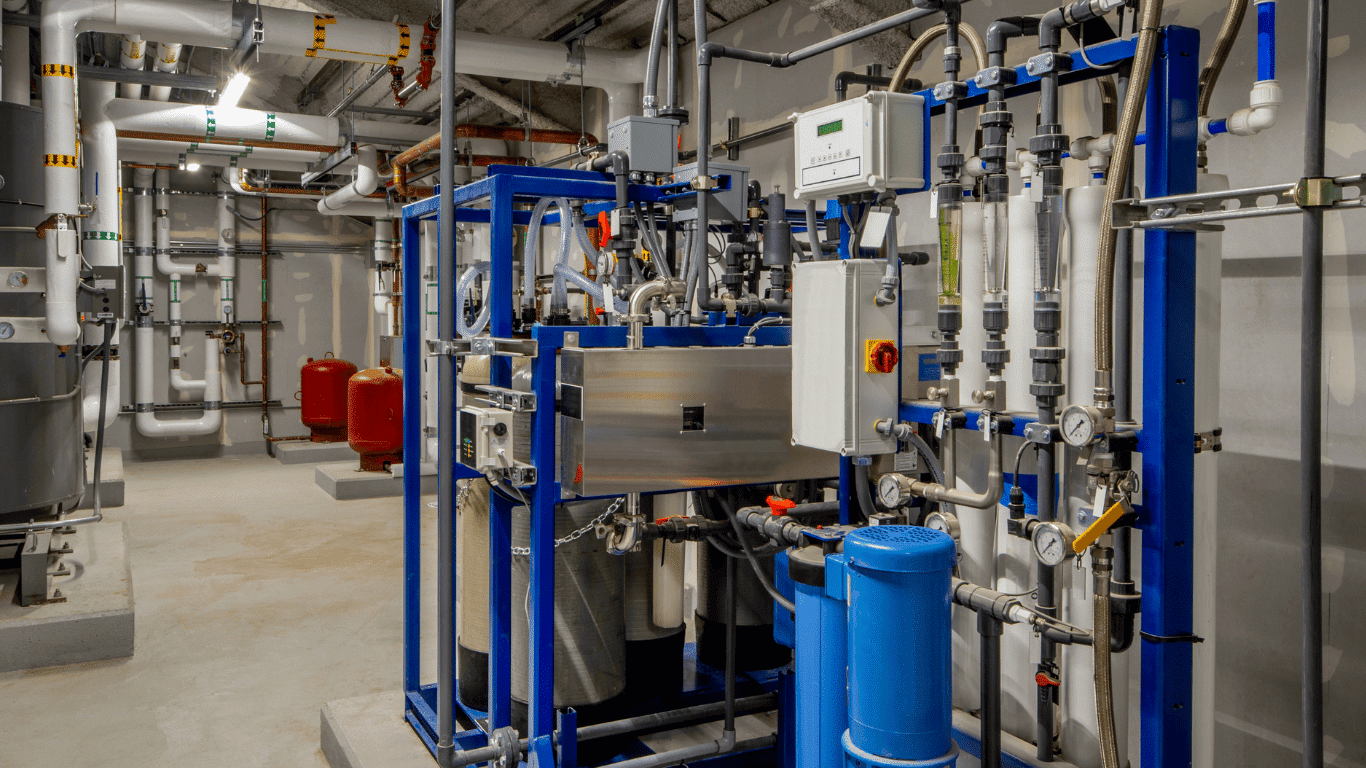
Many industrial operations depend on water that meets extremely strict purity standards. Even small amounts of dissolved minerals can affect equipment performance, product quality, and process reliability. That is why many facilities use EDI water treatment, also known as electrodeionization EDI, as part of their water treatment strategy. This advanced water purification technology helps produce high purity water without relying on frequent chemical regeneration.
In this guide, we’ll walk through how EDI works, why it is commonly paired with reverse osmosis, and where it delivers the most value across different industries. We’ll also share practical advice on maintaining consistent pure water quality, improving system performance, and deciding when an EDI solution makes sense for your operation.
What Is EDI Water Treatment?
EDI water treatment is an advanced water treatment technology that removes dissolved ions from water to achieve high purity levels. The term electrodeionization EDI describes a process that combines electricity with ion exchange to continuously polish water after reverse osmosis. Instead of relying on periodic chemical regeneration, EDI systems use an electric current to remove remaining ionic contaminants, making them a reliable choice for facilities that need consistent water quality every day.
Electrodeionization is a combination of ion exchange resin and specialized membranes that work together to separate and remove dissolved ions. This continuous process allows the system to produce high purity water with minimal interruption. As a result, industries that require dependable deionized water, such as pharmaceutical manufacturing, electronics production, and power generation, often choose EDI because it delivers stable performance while reducing manual maintenance.
One of the biggest differences between EDI and standard deionization is how the resin is regenerated. Traditional deionization systems eventually exhaust their ion exchange resin and require chemical regeneration before they can continue operating. In contrast, EDI systems continuously regenerate the resin during normal operation using electricity. This approach helps maintain high purity water, reduces downtime, and supports facilities looking for a more efficient and consistent solution for producing deionized water.
How Does the EDI Process Work?
Understanding the working principle behind EDI makes it easier to see why it consistently delivers high-quality results. The EDI process begins after feed water has already passed through a reverse osmosis system, which removes most dissolved contaminants before the final polishing stage. This pretreatment protects the EDI equipment and allows it to focus on removing the small amount of ions that remain. The treated water then enters an EDI module, where ion exchange resins, ion exchange membranes, and an electric field work together to further purify the water.
As water flows through the EDI module, the ion exchange resins temporarily capture dissolved positive ions and negative ions. At the same time, an electrical potential creates an electrical current that drives these ions across ion selective membranes toward their respective electrodes. This continuous ion separation process removes dissolved minerals from the product water while directing them into a separate stream. Because the system continuously removes captured ions, the resins remain effective without the frequent shutdowns required by conventional regeneration methods.
Another important part of the working principle is water splitting. Under the influence of electricity, small amounts of water molecules separate into hydrogen ions and hydroxide ions, often referred to as H and OH ions. These newly formed ions continuously regenerate the resin inside the module, allowing the system to keep removing dissolved ions throughout operation. This self-regenerating process is one of the defining advantages of EDI, helping facilities maintain reliable water quality while operating continuously with minimal operator intervention.
Why Reverse Osmosis Comes Before EDI
An EDI unit performs best when paired with reverse osmosis. In most installations, a RO system serves as the first polishing step, removing the majority of dissolved salts, organic compounds, and other contaminants from the feed water before it reaches the EDI unit. This significantly reduces the workload on the downstream equipment and helps deliver more consistent purified water. If you’d like a closer look at how this pretreatment stage works, explore our guide to Industrial Reverse Osmosis Systems.
Starting with reverse osmosis also protects EDI systems from excessive scaling and fouling, two common issues that can reduce performance and shorten equipment life. Cleaner feed water allows the EDI unit to operate more efficiently, maintain stable water quality, and produce high quality water with fewer interruptions. When these technologies work together as part of a complete water treatment system, facilities benefit from greater reliability, lower maintenance requirements, and a longer service life for critical treatment equipment.
Benefits of EDI Water Treatment
One of the biggest advantages of EDI water treatment is its ability to support a continuous process. Unlike conventional deionization systems that must stop for resin regeneration, EDI units remain in continuous operation while maintaining consistent water quality. This means facilities can operate continuously without frequent interruptions, making EDI an excellent choice for applications where reliable production is essential. The result is a steady supply of ultrapure water that supports efficient operations and consistent manufacturing performance.
Another key benefit is that EDI uses a chemical free process to regenerate its resin. Instead of relying on acids and caustics, the system uses electricity to continuously restore the ion exchange media during normal operation. This significantly reduces chemical use, eliminates the need to handle regeneration chemicals, and simplifies routine maintenance. Although EDI requires electrical power, its energy consumption is generally modest when paired with properly treated feed water. Many facilities also see lower operating costs over time because they spend less on chemicals, labor, and maintenance. These long-term savings contribute to the overall cost effectiveness of the system.
Beyond operational savings, EDI offers important environmental and production advantages. Reducing chemical handling makes the process more environmentally friendly while helping facilities meet sustainability goals. At the same time, the technology can produce ultrapure water with a consistently high level of quality, supporting reliable high purity water production across demanding applications. Stable water quality also protects product quality, especially in industries where even trace contaminants can affect manufacturing results. When designed and maintained correctly, EDI provides a cost effective solution that balances performance, reliability, and long-term value.
Common Industrial Applications of EDI Water Treatment
Many industries rely on EDI because even small amounts of dissolved ions can affect production quality and equipment performance. The pharmaceutical industry uses EDI to produce consistent high purity water for manufacturing, cleaning, and laboratory applications where strict quality standards must be met. Electronics manufacturers also depend on ultrapure water to prevent contaminants from damaging sensitive components during production. In food and beverage facilities, EDI helps supply reliable pure water for ingredients, processing, and equipment cleaning, supporting both product quality and regulatory compliance.
EDI also plays an important role in power generation, where high purity feedwater helps protect boilers, turbines, and steam systems from scale and corrosion. Research laboratories, universities, and testing facilities depend on the same level of water quality to ensure accurate analytical results and repeatable experiments. Across these and many other industrial processes, EDI provides a dependable way to produce high purity water with consistent performance. Facilities that require reliable water quality day after day often choose EDI because it supports efficient operations while minimizing interruptions to production.
EDI vs. Traditional Ion Exchange
Both EDI and traditional ion exchange are designed to remove dissolved ions, but they achieve that goal in different ways. Most traditional ion exchange systems and other traditional deionization methods rely on mixed bed resins that eventually become exhausted and require resin regeneration. This process typically involves chemical regeneration using acids and caustics before the system can return to service. In contrast, EDI continuously regenerates its resin during operation, reducing interruptions and providing a more consistent supply of high purity water. If you’re interested in how these technologies fit into broader treatment strategies, explore our guide to Water Treatment Technologies.
Here is a simple comparison between the two approaches:
- EDI: Continuous resin regeneration during operation, minimal downtime.
- Traditional ion exchange: Requires periodic regeneration, resulting in planned shutdowns.
- EDI: No routine handling of regeneration chemicals.
- Traditional ion exchange: Requires acids, caustics, and safe storing chemicals for regeneration.
- EDI: Lower maintenance demands once properly installed.
- Traditional ion exchange: More operator involvement throughout the regeneration cycle.
Safety and long-term operating expenses are also important considerations. Facilities using conventional systems must carefully manage hazardous chemicals and other harmful chemicals associated with regeneration, which adds handling, storage, and disposal requirements. While ion exchange systems remain a proven solution for many applications, EDI often reduces these operational challenges by eliminating routine chemical regeneration. Over time, many facilities find that fewer shutdowns, simplified maintenance, and reduced chemical handling contribute to a safer workplace and more predictable operating costs.
Getting the Best Performance From an EDI System
An EDI water treatment system delivers its best results when the entire treatment train is designed and maintained as one complete process. Start with effective pretreatment to reduce the contaminants reaching the EDI unit. Reverse osmosis, filtration, and other upstream equipment help remove ionizable species before they enter the EDI modules, allowing the system to perform more efficiently. Good pretreatment also supports consistent water purification, improves product water quality, and helps EDI work as intended over the long term.
Once the system is operating, regular monitoring goes a long way. We recommend tracking conductivity, resistivity, flow rates, and pressure trends to spot changes before they become bigger issues. Operators should also inspect EDI devices, verify that concentrate streams are flowing properly, and check for signs of membrane fouling or scaling. These routine inspections help maintain reliable pure water production while preventing unnecessary downtime. More importantly, they can reduce operating costs by identifying small performance changes before they affect the entire system.
Remember that no two facilities have the same water quality goals or operating conditions. A well-maintained EDI system should be reviewed regularly to ensure it continues meeting production requirements as your process evolves. Planning a new installation or looking to improve an existing system? Our team can help evaluate your operation and recommend practical solutions that support dependable performance for years to come.
Frequently Asked Questions (FAQ)
Can EDI remove heavy metals from water?
Yes, EDI can remove dissolved heavy metals that exist as charged, ionizable species, provided the feed water has already been properly pretreated. In most applications, reverse osmosis removes the majority of contaminants first, while EDI polishes the remaining dissolved ions.
This combination provides highly effective water purification for industries that require consistent high purity water. However, EDI is not intended to remove suspended solids, oils, or organic contaminants on its own.
Does an EDI system require chemical regeneration?
No. Unlike conventional deionization systems, EDI does not rely on routine chemical regeneration. Instead, the system continuously regenerates its resin using electricity during normal operation.
This eliminates the need for handling and storing regeneration chemicals and significantly reduces maintenance associated with manual resin regeneration.
Can EDI replace wastewater treatment?
No. EDI and wastewater treatment serve different purposes within a facility. EDI is designed to polish pretreated water and remove dissolved ions for high-purity applications, while wastewater treatment removes contaminants from used process water before discharge or reuse.
Many industrial facilities use both technologies as part of a complete water treatment strategy because each supports a different stage of the overall process.
How long does an EDI module last?
The lifespan of an EDI module depends on feed water quality, operating conditions, and maintenance practices. When supported by proper pretreatment and operated under stable conditions, many modules provide years of reliable continuous operation.
Routine monitoring and preventive maintenance also help extend equipment life while keeping operating costs under control.
Is EDI suitable for every water treatment system?
Not always. EDI performs best in water treatment systems that include proper pretreatment, especially reverse osmosis, to remove the majority of dissolved contaminants before water enters the EDI unit. Poor-quality feed water can reduce system performance and shorten equipment life.
While EDI is an excellent choice for many high-purity applications, some conventional systems may require different treatment technologies depending on water quality goals, source water conditions, and process requirements.
