
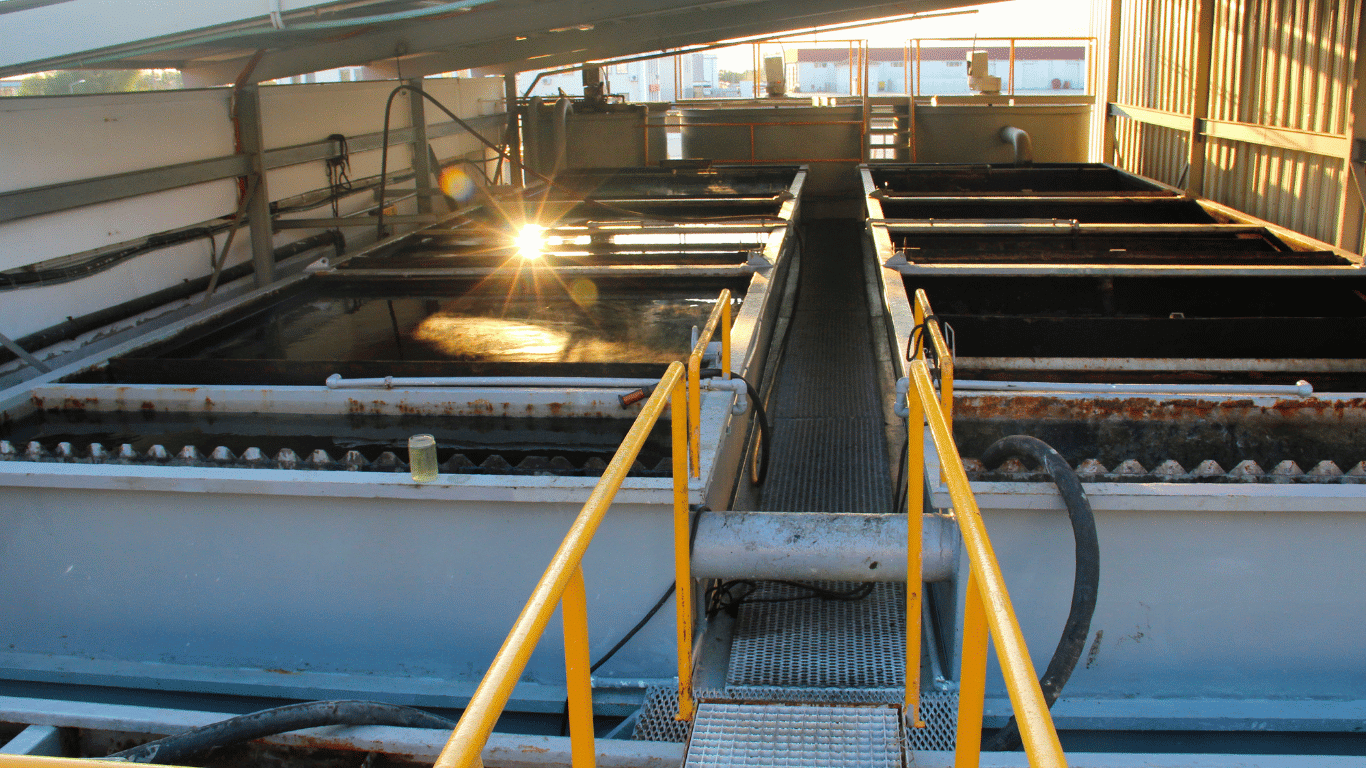
Metal finishing operations use a range of chemicals and process steps to clean, plate, coat, etch, and prepare metal surfaces. As a result, these facilities can generate wastewater with varying concentrations of metals, chemicals, solids, and other contaminants. The challenge is not simply removing pollutants from one consistent stream. Different production activities can change wastewater characteristics and flow throughout the day.
A practical metal finishing wastewater treatment strategy needs to account for those changes while supporting reliable production and responsible discharge. For facility teams, understanding what enters the wastewater system is the starting point for choosing treatment approaches that protect equipment, meet environmental requirements, and support long-term operating goals.
What Metal Finishing Wastewater Contains
Metal finishing wastewater can come from several stages of production, including cleaning, rinsing, plating, surface preparation, chemical etching, coating, and polishing. Each activity can contribute a different wastewater stream. For example, rinse water may contain diluted process chemicals and metals, while tank dumps can carry much higher contaminant concentrations. Cleaning and surface preparation can also introduce oils, grease, and suspended material. Because facilities often run multiple production lines or processes, wastewater volume and flow rates can change throughout the day. Keeping these streams separated, when practical, gives operators better control over what enters the treatment system.
The contaminants in these streams depend on the metals and chemicals used during production. Heavy metals such as chromium, nickel, copper, zinc, and cadmium commonly appear in metal finishing wastewater, sometimes as dissolved metals and sometimes attached to suspended solids. Other concerns can include cyanide, acids, oils, grease, and other regulated substances. Certain facilities may also need to address total toxic organics based on their specific processes and discharge requirements. Identifying these contaminants early helps teams understand the treatment demands of each wastewater stream and avoid treating every stream as if it has the same chemistry.
Section 3: Why Treatment Requires More Than One Step
No single treatment technology can address every contaminant found across metal finishing operations. Different chemicals and metals respond to different treatment conditions, so it helps to start with source reduction and wastewater segregation wherever practical. Separating concentrated streams from lower-strength rinse water, for example, can prevent incompatible chemicals from mixing and reduce the overall treatment burden. It also gives operators more control over chemical dosing and solids production, which can simplify system operation and help manage operating costs. In many facilities, these steps can make the downstream wastewater treatment process more predictable.
From there, an effective solution typically combines several treatment stages, with each one handling a specific part of the wastewater. Chemical pretreatment can condition difficult contaminants, while precipitation and solids separation remove targeted metals and suspended material. Filtration can provide additional polishing, while ion exchange or membrane technologies can address dissolved contaminants or prepare water for reuse. The right combination depends on the facility’s wastewater characteristics, flow, and discharge requirements. ProChem’s industrial wastewater treatment systems can combine these approaches to support metals removal, pH adjustment, solids removal, discharge compliance, and water reuse.
Core Treatment Processes for Metal Finishing Wastewater
pH Adjustment and Chemical Precipitation
pH adjustment plays a central role in metal removal because dissolved metals respond differently as wastewater chemistry changes. Operators adjust the pH to create conditions that convert dissolved metals into insoluble compounds, which can then form particles and separate from the water. Chemical precipitation provides a practical way to target metals before downstream polishing. Once precipitation occurs, the resulting particles need enough time and the right conditions for settling solids, clarification, or another separation step to remove them effectively.
Chromium and Cyanide Treatment
Some contaminants require more specific chemical treatment. For example, facilities that handle hexavalent chromium typically use a reduction step to convert it into trivalent chromium, which can then undergo precipitation and removal. Sodium metabisulfite can serve as the reducing agent in this process when the wastewater chemistry and treatment design call for it. Cyanide also requires dedicated treatment because of its toxicity. Alkaline chlorination commonly oxidizes cyanide into less harmful compounds before the wastewater moves into subsequent treatment stages. Operators should carefully control chemical dosing and reaction conditions to keep these steps reliable.
Coagulation, Flocculation, and Solid Separation
Coagulation and flocculation help turn small suspended particles into larger, more easily removable solids. A coagulant destabilizes fine particles, while a polymer can help bind them into larger flocs that settle more readily. Effective clarification then separates these solids from the treated water and produces sludge for further handling. Good solids separation protects downstream equipment from excessive loading and helps improve final effluent quality. Facilities also need a practical sludge management plan to ensure safe disposal and maintain consistent treatment performance.
Filtration and Ion Exchange
After bulk contaminants and solids receive treatment, filtration can provide another level of polishing. Membrane filtration can remove finer contaminants and help produce high-quality water for reuse or final discharge polishing. Ion exchange offers another targeted option, particularly when a facility needs to remove specific dissolved metals or other ions that remain after precipitation. ProChem’s specialty ion-exchange systems can support applications such as metals removal, TDS reduction, and selective contaminant removal. Together, these technologies can help a treatment system meet tighter water quality targets without relying on a single process to do all the work.
Reducing Wastewater Volume Through Reuse
Treating wastewater is only part of the equation. Facilities can also reduce the amount they generate in the first place. Counter-current rinsing is a practical example because it uses rinse water more efficiently and reduces drag-out from one process stage to the next. With less chemical and metal carryover, the facility can lower contaminant loading while reducing fresh water consumption. Where water quality allows, reuse strategies can take this further. Reverse osmosis systems, for example, can recover high-quality water for suitable rinse stages and other process applications, helping facilities reduce wastewater volume without compromising production requirements.
Evaporation provides another option when a facility needs to concentrate wastewater and reduce its volume before disposal or further treatment. ENCON evaporators can reduce wastewater volume by up to 98%, depending on the application and wastewater characteristics. For facilities with demanding discharge goals, Zero Liquid Discharge (ZLD) systems can take volume reduction further by recovering water and concentrating remaining waste rather than sending liquid discharge off-site. However, ZLD involves additional equipment, energy, and operating considerations, so teams should evaluate the overall process before deciding if it makes sense for their facility.
Compliance Starts With Knowing the Discharge Requirements
A reliable treatment strategy starts with knowing exactly what your facility can discharge. Environmental regulators establish discharge limits and pretreatment standards for applicable industrial facilities, while local publicly owned treatment works (POTWs) may impose requirements that are more restrictive than federal standards. Before changing a treatment system, teams should review their permit, sewer requirements, sampling obligations, and applicable pollutants. This gives operators a clear target for treatment performance and helps them achieve compliance without designing around requirements that do not apply to their specific facility.
Reporting requirements also deserve attention from the start. Depending on the facility’s classification and applicable requirements, industrial users may need to submit a baseline monitoring report, a 90-day compliance report after discharge begins, and periodic compliance reports. Categorical industrial users commonly submit periodic reports semiannually, although a Control Authority can require more frequent reporting. Keeping accurate sampling records and documenting treatment performance makes each report easier to prepare and helps teams identify potential compliance issues before they affect a discharge.
Designing a Treatment Strategy That Holds Up
Before selecting equipment, take the time to characterize each wastewater stream. Track pH, metal concentrations, suspended solids, chemical concentrations, flow rates, and wastewater volume under different production conditions. An average sample may not tell you enough if one production line runs intermittently or a tank dump suddenly changes the wastewater chemistry. In those cases, treatability testing or a pilot study can give your team a clearer picture of how the wastewater will respond to treatment and help avoid costly design changes later.
It also helps to keep wastewater streams separated where practical, optimize chemical dosing, monitor key treatment parameters, and manage sludge consistently. Source reduction can lower the contaminant load before wastewater even reaches the treatment system, which can reduce chemical demand and overall treatment costs. The best treatment systems balance removal performance with reliability, regulatory compliance, water reuse opportunities, and cost. As production changes, review those factors together so the system continues to support the facility rather than becoming a bottleneck.
Building a Treatment Approach Around Your Facility
Every facility has its own production schedule, wastewater chemistry, flow patterns, and discharge requirements, so the treatment approach should fit those conditions rather than follow a one-size-fits-all design. Start with the wastewater data, then build the right combination of treatment, chemical programs, filtration, ion exchange, reuse, and operational support around what the facility actually needs. ProChem works with industrial facilities to develop treatment systems for high-volume and variable wastestreams, including approaches for metals removal, pH adjustment, solids removal, and pretreatment.
If your current process needs a closer look, talk with ProChem about where the treatment strategy can be strengthened and how the system can better support your operation.
