
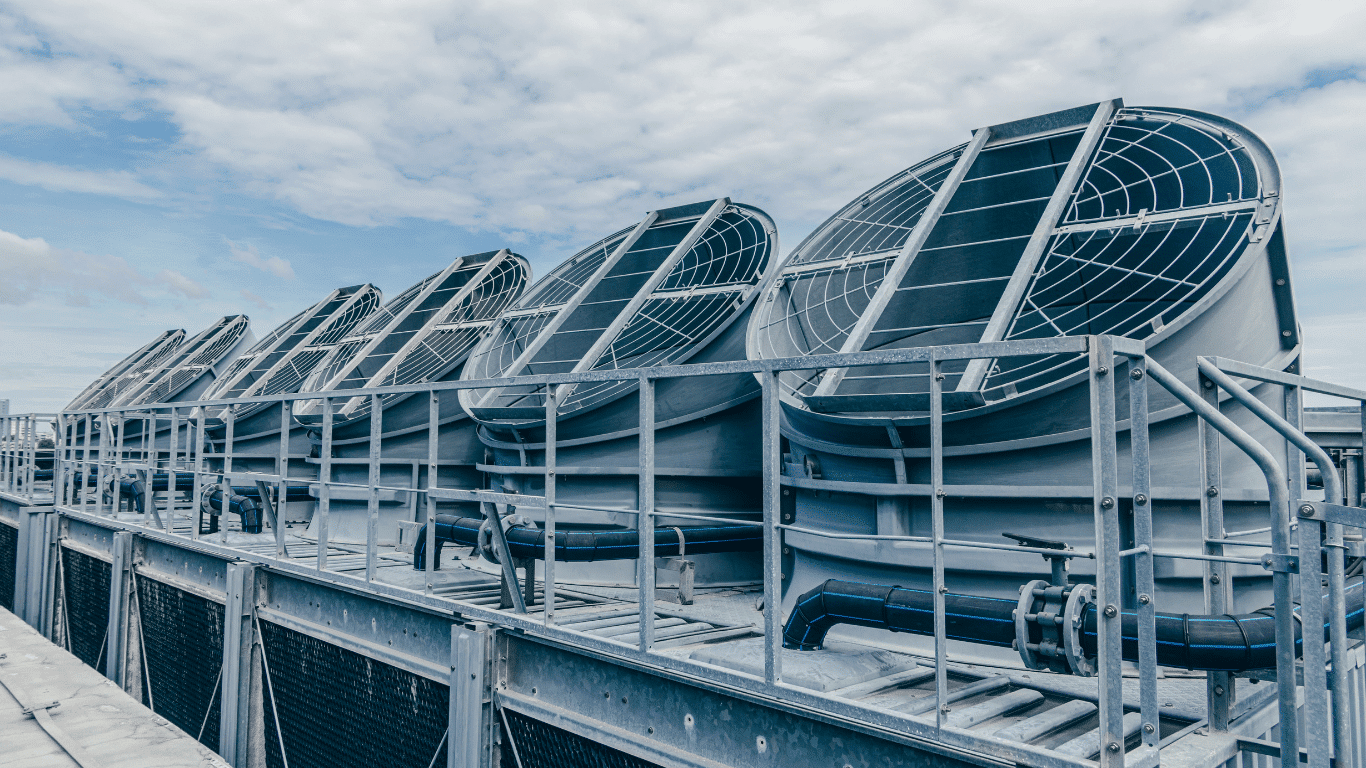
A hybrid cooling system gives facilities a flexible way to manage changing cooling demands by combining different cooling methods within one overall approach. Instead of relying on a single cooling technology at all times, operators can consider the conditions affecting heat removal, energy use, water availability, and overall efficiency. This flexibility becomes increasingly important as facilities manage higher cooling loads and tighter resource requirements.
Modern facilities also face cooling demands that can change throughout the day and across seasons. Temperature, humidity, equipment loads, and available water can all influence how a cooling system should operate. For industrial facilities, commercial buildings, data centers, and power plants, understanding these conditions helps teams make more informed decisions about cooling equipment and system performance.
What Is a Hybrid Cooling System?
A hybrid cooling system combines two or more cooling methods so a facility can adjust its approach based on operating conditions. A common configuration combines evaporative cooling with mechanical or dry cooling. Evaporative cooling can provide efficient heat rejection when outdoor conditions support it, while mechanical cooling can provide more controlled performance when temperatures or humidity levels make evaporative operation less practical.
This approach gives operators more control over how a cooling system uses energy and water. During suitable conditions, the system can take advantage of lower-energy cooling methods. When conditions become less favorable, controls can shift operation toward another cooling method. The result is a cooling strategy that can respond to changing loads instead of forcing the entire facility to operate under one fixed mode.
Facilities can apply this concept in different ways. Some systems use wet and dry operating modes, while others integrate mechanical refrigeration with cooling towers, air-side cooling, or other heat rejection equipment. The right arrangement depends on the facility’s cooling load, climate, available water, equipment configuration, and operating priorities.
How Hybrid Cooling Systems Operate
The basic idea is straightforward: use the cooling method that makes the most sense for current conditions. During cooler or drier periods, a system may rely more heavily on outside air or dry cooling to reduce the need for mechanical refrigeration and water-intensive processes. As outdoor temperatures rise, the system can introduce evaporative cooling or mechanical refrigeration to maintain the required temperature.
Humidity plays an important role in this process. Evaporative cooling depends on the ability of water to absorb heat and evaporate effectively. High humidity can reduce that advantage, so a well-designed system needs controls that recognize when another cooling method can operate more efficiently. Advanced controls can monitor temperature, humidity, cooling load, and other operating conditions, then adjust equipment accordingly.
This flexibility can also help protect equipment. Running every component at maximum capacity does not always produce the best result. A properly controlled system can distribute cooling demand across available equipment, reduce unnecessary cycling, and limit operating stress. Facilities that already use industrial water cooling systems can evaluate how hybrid strategies could work alongside their existing infrastructure rather than assuming a completely new system is necessary.
Managing Energy and Water More Effectively
Energy and water often represent two of the largest operating considerations for industrial cooling. A system that uses less energy but consumes excessive water may not meet a facility’s broader efficiency goals. The same applies to a system that conserves water but requires significant mechanical refrigeration throughout the year. Hybrid cooling creates an opportunity to manage both resources as part of the same operating strategy.
Water use can decrease when conditions allow a facility to rely more on dry or mechanical cooling. During periods when evaporative cooling provides a clear efficiency advantage, the system can use that method instead. This helps avoid treating water conservation and cooling efficiency as completely separate objectives. Instead, operators can look at how each cooling mode affects total resource consumption over the operating year.
The same principle applies to energy consumption. Mechanical refrigeration can require substantial power, particularly when equipment must handle high cooling loads continuously. Using outside-air cooling or other lower-energy methods when conditions allow can reduce the amount of mechanical cooling required. Facilities should evaluate actual operating conditions rather than assuming one cooling mode will always provide the lowest overall cost.
Water quality also deserves attention. Evaporative equipment can concentrate dissolved minerals as water cycles through the system, increasing the risk of scale, corrosion, and biological growth. Effective cooling tower water treatment helps control these issues so water-saving strategies do not come at the expense of equipment reliability. Operators should consider water chemistry, cycles of concentration, blowdown, makeup water, and treatment requirements together when evaluating system performance.
Where Hybrid Cooling Makes Sense
Hybrid cooling can make sense for facilities with variable cooling loads or operating conditions. Data centers, manufacturing plants, power generation facilities, commercial buildings, and other large operations may benefit when outdoor conditions change significantly throughout the year. Facilities in urban areas can also consider hybrid configurations when space, water availability, or energy efficiency requirements affect cooling-system design.
The approach can be particularly useful when a facility needs reliable temperature control across different climates or operating seasons. During mild conditions, the system may use available ambient cooling opportunities. During periods of extreme heat or high humidity, mechanical refrigeration or another cooling method can provide additional capacity. This gives operators a way to maintain stable conditions without designing every operating hour around the most demanding weather scenario.
Maintaining Performance Over Time
Installing hybrid equipment does not automatically guarantee efficient operation. Operators need to monitor how each cooling mode performs and look for changes that indicate maintenance or control problems. Rising energy consumption, increased water use, unstable temperatures, excessive cycling, or declining heat-transfer performance can all indicate that the system needs attention.
Regular maintenance should cover the full cooling process rather than focusing on one piece of equipment. Teams should inspect heat-transfer surfaces, pumps, fans, valves, controls, water treatment equipment, and other components according to the system design. Water-side equipment also needs appropriate treatment and monitoring because scale and corrosion can reduce heat-transfer efficiency and increase the load on cooling equipment.
Controls deserve particular attention. A hybrid system depends on accurate information to decide when to change operating modes. Faulty sensors, poorly configured control sequences, or outdated setpoints can cause the system to switch modes at the wrong time. Reviewing operating data regularly helps teams identify these issues before they develop into larger efficiency or reliability problems.
Designing a More Reliable Cooling Strategy
A successful hybrid cooling strategy starts with the facility rather than the equipment catalog. Teams should first understand the cooling load, operating schedule, climate, water availability, existing infrastructure, and performance requirements. This information provides a clearer basis for deciding which cooling methods should work together and how the system should transition between them.
Facilities should also consider how a new hybrid approach will interact with existing equipment. An industrial cooling water system may already provide the foundation for part of the cooling process, so the best solution may involve improving controls, treatment, heat rejection, or equipment coordination instead of replacing everything. A system-level review can reveal opportunities that are easy to miss when each component is evaluated separately.
The same principle applies to long-term planning. Cooling demand can change as facilities expand, production schedules shift, or equipment loads increase. Designing for flexibility gives operators more room to respond without completely rebuilding the cooling infrastructure. It also creates a clearer path for integrating monitoring, automation, and water-management improvements over time.
Steps for Putting Hybrid Cooling Into Practice
Start with a review of current cooling performance. Look at energy consumption, water use, cooling loads, temperature stability, equipment runtime, and maintenance history. Operators should also identify when the facility experiences its highest cooling demand and how outdoor temperature and humidity affect system performance. These details can show where another cooling method could reduce resource use or provide additional capacity.
Next, evaluate the existing equipment and determine how different cooling methods could work together. Review controls, heat-transfer equipment, cooling towers, mechanical refrigeration, pumps, fans, water treatment, and available space as one system. Set measurable performance targets and monitor the results after implementation.
If you are looking for a more practical way to improve cooling efficiency, manage water use, or strengthen equipment reliability, ProChem can help evaluate the cooling system around your facility’s actual operating conditions and treatment requirements.
