
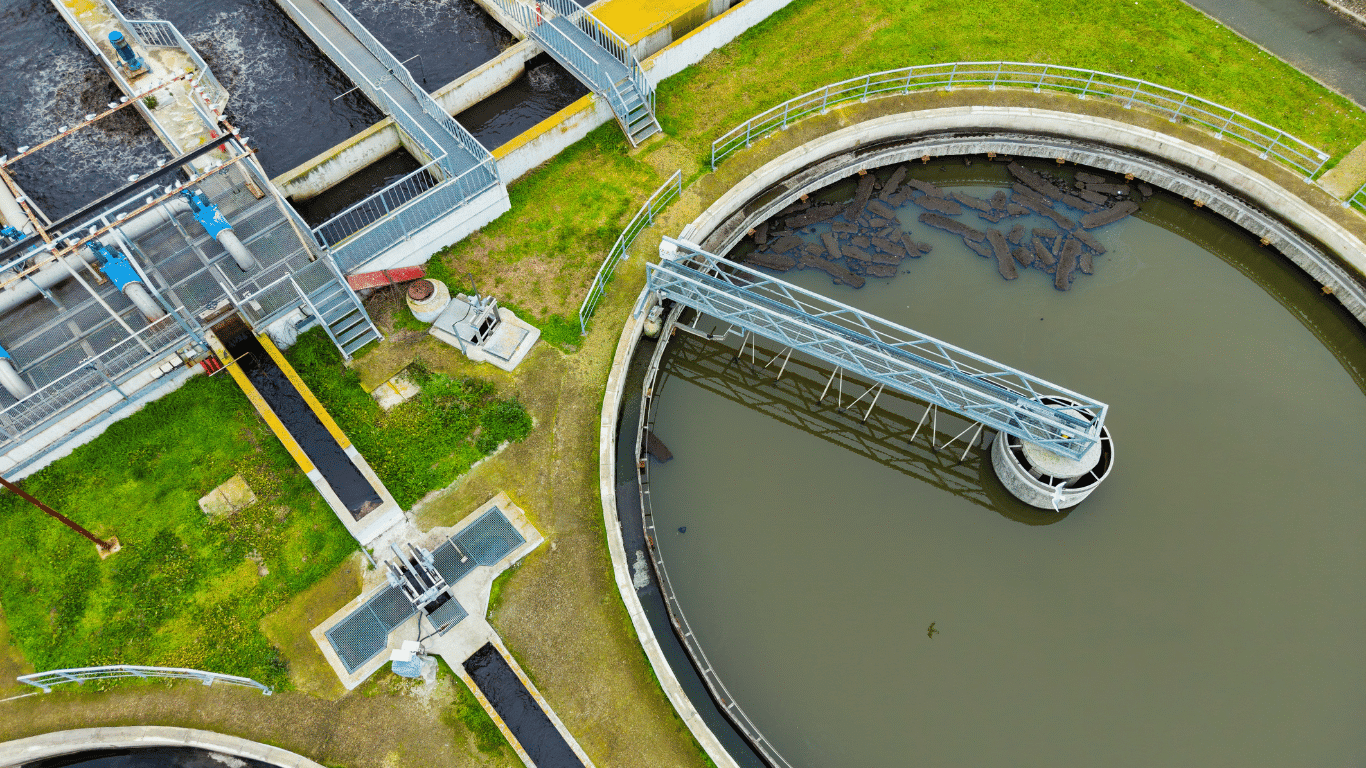
When your wastewater treatment system has already removed most of the solids and common pollutants, you may still have specific contaminants that need additional attention. This is where activated carbon can become a valuable part of the treatment strategy. Activated carbon wastewater treatment uses adsorption to capture certain compounds that conventional treatment may leave behind, helping facilities improve water quality before discharge or reuse.
For operators, the key is knowing when carbon makes sense for the wastewater you are treating. Organic pollutants, chemicals, odors, and other contaminants can respond well to carbon treatment, but performance depends on the wastewater characteristics and how the system operates. A properly selected approach can provide an effective polishing step without adding unnecessary complexity to the overall wastewater treatment process.
What Is Activated Carbon?
Activated carbon is a highly porous carbon material processed to create an extensive internal network of pores. This structure gives it a remarkably large surface area, often far greater than its physical size suggests. The pore structure creates many locations where contaminants can attach to the activated carbon surface. You may also hear activated carbon called activated charcoal, although the term can refer to carbon products used for different applications.
The treatment mechanism is called adsorption, not absorption. Absorption pulls a substance into the bulk of another material, while adsorption causes molecules to collect on a carbon surface. As wastewater passes through the media, certain organic compounds and other contaminants are attracted to the carbon and become adsorbed contaminants. The carbon’s adsorption capacity depends on factors such as pore structure, contaminant characteristics, and operating conditions. Keep in mind that activated carbon does not destroy the contaminants it captures. It transfers them from the water to the carbon, which means operators eventually need to monitor the media and determine when replacement or regeneration makes sense.
How Activated Carbon Works in Wastewater Treatment
The basic principle behind activated carbon wastewater treatment is adsorption, a physical process that draws certain contaminants toward the carbon and holds them on its surface. The effectiveness comes from the interaction between the carbon and the compounds in the water. Factors such as molecular size, polarity, pore structure, and other chemical interactions influence how strongly different organic molecules attach to the media. As the carbon captures organic contaminants and other organic pollutants, its available capacity gradually decreases.
Activated carbon treatment typically works as a polishing step after earlier processes have removed larger solids, oils, and much of the organic matter. This makes it particularly useful in tertiary or advanced treatment, where the goal is to improve the quality of treated wastewater before discharge or reuse. Pretreatment matters because excessive solids can occupy the carbon’s available surface and interfere with contact between the water and media. Think of carbon as one component within a complete water treatment strategy, not a replacement for every treatment stage. If you want to see how different stages fit together, our guide to water treatment processes provides a useful overview.
Types of Activated Carbon Used in Treatment
Not every activated carbon system uses the same media. The right choice depends on the contaminant you need to remove, how the wastewater moves through the system, and how you plan to operate and maintain the treatment process. Understanding the main carbon types helps you avoid selecting media based only on its name or form.
Granular Activated Carbon
Granular activated carbon (GAC) consists of larger activated carbon particles that work well in fixed-bed systems. Facilities commonly use GAC in an activated carbon filter for continuous treatment, including chlorine removal and the reduction of many organic contaminants. Its larger particle size also makes it practical for systems where operators need to monitor pressure drop and replace or regenerate the media.
Powdered Activated Carbon
Powdered activated carbon (PAC) uses much smaller particles that facilities can add directly to a treatment process. Operators often use activated carbon PAC for batch treatment or applications that require targeted removal of specific contaminants. After contact, the carbon particles typically require separation from the treated water.
Impregnated Activated Carbon
Impregnated carbon receives additional treatment to improve its ability to target particular compounds. This approach can help address contaminants that standard carbon may not capture effectively, including certain heavy metals such as mercury.
Extruded and Bead Activated Carbon
Extruded activated carbon often serves gas-phase applications because its physical form provides useful mechanical strength and flow characteristics. Bead activated carbon, with its small spherical shape, can work well in fluidized-bed applications where the media needs to move with the water. For wastewater applications, selection should always follow the contaminant, contact arrangement, and operating conditions rather than assuming one carbon type fits every system.
What Contaminants Can Activated Carbon Remove?
Activated carbon works best when you match the media to the contaminants in the water. It has a strong affinity for many organic pollutants, including volatile organic compounds, pharmaceuticals, and halogenated organic compounds. It can also reduce odor- and taste-causing compounds, making it useful when facilities need to improve water quality beyond what conventional treatment can achieve. Some carbon products can target heavy metals and other toxic substances, but standard carbon should not be treated as a universal solution for metals.
The technology also has applications in treating groundwater, municipal wastewater, and industrial wastewater treatment streams. Facilities may use it to capture certain organic chemicals, organic impurities, and other contaminants before discharge or reuse. Polyfluoroalkyl substances (PFAS) can also respond to properly designed granular carbon systems. However, performance depends heavily on the contaminant’s chemical properties, concentration, competing compounds, and contact conditions. For complex industrial applications, carbon may work alongside biological treatment, membranes, precipitation, or other processes rather than replace them. The goal is to select the treatment combination that addresses the specific contaminants and produces the required water quality.
Operating Factors That Affect Carbon Performance
A carbon system can look perfectly healthy and still underperform if the incoming wastewater changes. Start with the water, not just the media. pH, contaminant concentration, organic matter, and competing compounds all affect how readily contaminants attach to the carbon. Suspended solids can also plug the media or occupy available adsorption sites, reducing effective contact with the activated carbon particles. Keeping pretreatment under control gives the carbon a better chance to perform as intended.
Operators should also pay close attention to flow rates and contact time. Moving water through an activated carbon filter too quickly can reduce the time available for adsorption, even when the carbon has plenty of surface area remaining. For chlorine removal, systems commonly use a range of about 2 to 3 GPM/ft³ as an application-specific reference, but actual design conditions should come from the water chemistry and treatment objectives. Track contaminant levels and carbon loading over time so you can see when adsorption capacity starts to decline. This data provides a much better indication of performance than simply assuming the media will deliver high adsorption throughout its service life.
Carbon Replacement, Regeneration, and Operating Costs
Activated carbon does not last indefinitely. As contaminants fill the available adsorption sites, the media gradually approaches saturation. Operators should monitor the quality of water leaving the activated carbon filter rather than rely on a fixed replacement schedule. A facility may need to replace saturated carbon sooner when contaminant loading or flow increases, while another system may operate longer under lighter conditions. Tracking performance data helps teams identify when spent carbon no longer provides the required treatment.
For larger GAC systems, thermal regeneration can restore adsorption capacity and allow the media to return to service. This thermal reactivation process can make reuse practical, although repeated regeneration still involves energy, transportation, and handling costs. Purchasing new carbon, regenerating existing media, and managing disposal all contribute to operational costs, while installation costs add another consideration when planning a new system. If spent carbon contains hazardous pollutants, facilities may also need specialized handling and disposal to maintain regulatory compliance. The most practical approach is to evaluate replacement or regeneration based on actual system performance, contaminant loading, and long-term operating costs rather than following a universal timeline.
Designing Activated Carbon Into a Wastewater Treatment System
Good activated carbon wastewater treatment starts with the treatment train, not the carbon vessel itself. Pretreatment should remove excess suspended solids and other materials that could interfere with adsorption. From there, a fixed-bed GAC system can provide continuous treatment, while PAC can suit batch applications where operators need more flexibility. Proper flow distribution and sufficient contact time also matter because uneven flow can cause parts of the media to reach capacity faster than others.
Operators should also consider how carbon fits with other technologies. Membranes, biological treatment, and other water filtration processes can work alongside carbon to address different contaminants. This approach applies to wastewater treatment plants serving municipal applications as well as facilities managing complex industrial processes. For facilities with variable wastewater streams, carbon may complement a broader industrial wastewater treatment strategy. ProChem’s industrial wastewater treatment systems guide provides more insight into matching treatment systems to wastewater characteristics and process requirements. With the right combination, carbon treatment can help produce cleaner treated water for discharge, water purification, or water reuse.
Making Activated Carbon Treatment Part of a Reliable Program
A reliable activated carbon treatment program starts with understanding the wastewater. Characterize the incoming stream, identify the specific contaminants you need to remove, and select the carbon type that fits the application. Then establish suitable flow and contact time, protect the media from excess suspended solids, and monitor both influent and treated water. These steps give operators a clearer picture of system performance and water quality.
From there, track contaminant loading and carbon performance so you know when regeneration or replacement makes sense. Before committing to a full-scale system, it also helps to understand how the wastewater may change over time. ProChem’s water treatability resources can help teams evaluate treatment requirements and identify practical options.
Once the treatment approach is defined, review operating conditions, monitoring requirements, carbon replacement, and applicable discharge or reuse standards. A well-planned program supports regulatory compliance and stronger environmental management while helping you get the most from the activated carbon used in your system. Evaluating carbon treatment for a new or existing facility? Talk to our experts. ProChem can help you work through the treatment requirements and develop an approach suited to your wastewater, operating goals, and reuse or discharge needs.
