
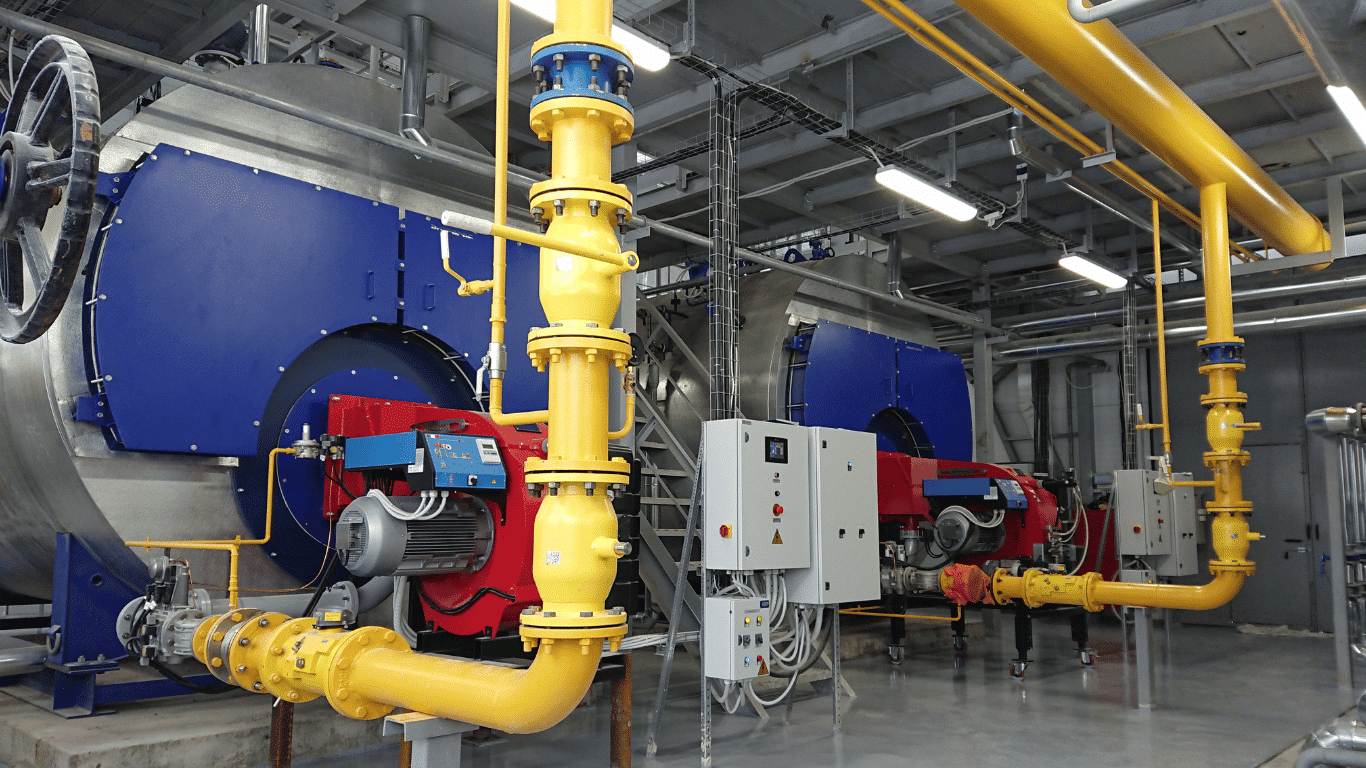
When a boiler starts losing efficiency, the problem is not always the burner or mechanical components. The condition of the water inside the system can play a major role. Water treatment of boiler systems helps facility teams manage the water quality that supports reliable steam production, heat transfer, and overall boiler system performance.
For operators, paying attention to boiler water is part of keeping equipment in good working condition. Even small changes in water quality can affect how efficiently a boiler operates over time. A consistent boiler water treatment approach gives your team better control over operating conditions and supports efficient operation.
What Happens When Boiler Water Quality Falls Out of Balance
Boiler water carries dissolved and suspended materials that can create problems when the chemistry falls outside the appropriate operating range. Hardness minerals can contribute to scale formation, while suspended solids can settle on internal surfaces. At the same time, dissolved gases can contribute to corrosion. Together, these conditions can create corrosion and scale buildup that interferes with normal boiler operation.
Scale deserves particular attention because it acts as an insulating layer between the water and the metal surfaces that transfer heat. Even 1/32 inch of scale can increase energy use by approximately 2–5%, making the boiler work harder to produce the same amount of steam. As deposits accumulate on heat exchange surfaces, they can reduce heat transfer and create localized hot spots.
Corrosion creates a different set of concerns. It can damage internal components, contribute to pitting, and eventually result in tube failures or leaks. Operators may also encounter foaming when impurities become concentrated in the water, which can affect steam quality and carry contaminants into downstream equipment. If teams overlook these warning signs, poor water quality can contribute to higher maintenance costs, reduced efficiency, and an unexpected boiler failure. A properly designed boiler water treatment approach helps address these risks before they become larger operational problems.
Preparing Feedwater Before It Enters the Boiler
The first step in good water management happens before water reaches the boiler. External treatment prepares the feed water by reducing substances that could interfere with boiler operation. Depending on the source water, this may include removing suspended materials, controlling water hardness, and reducing dissolved gases. The goal is to provide consistent boiler feed water that matches the needs of the equipment.
Hardness deserves close attention because calcium and magnesium can react under boiler conditions and contribute to deposits. Water softeners can reduce hardness before the water enters the system, while other treatment technologies can address additional contaminants. In some facilities, reverse osmosis provides another level of pretreatment by reducing dissolved minerals and other impurities from the incoming water. ProChem’s industrial reverse osmosis system resource provides more detail on how this technology can support industrial water treatment applications.
Your treatment approach should also account for the difference between low pressure boilers and high pressure boilers. Higher-pressure steam systems generally require tighter control of boiler feedwater quality because small changes in water chemistry can have more serious consequences. Makeup water, condensate return, and the quality of the incoming supply all influence the final feedwater condition, so your team should evaluate the complete feedwater cycle rather than looking at one source in isolation.
Internal Treatment and Chemical Conditioning
External treatment removes many impurities before water enters the boiler, but it does not eliminate the need to manage the chemistry inside the system. Internal treatment adds conditioning agents directly to boiler water to control specific conditions as the water circulates and concentrates. This part of a water treatment program helps operators manage contaminants that remain after pretreatment and supports stable boiler chemistry.
Common boiler water treatment chemicals include oxygen scavengers, phosphates, scale inhibitors, corrosion inhibitors, and pH adjusters. For example, sodium sulfite can help with removing dissolved oxygen, while phosphate treatment can help prevent certain hardness minerals from precipitating on boiler surfaces. Chelants such as EDTA can bind certain metal ions and, under appropriate operating conditions, help reduce deposits and blowdown requirements. The right combination depends on the boiler design, pressure, water chemistry, materials, and operating requirements.
Chemical treatment works best when your team treats it as a controlled process rather than simply adding a fixed amount of product. Regular testing helps determine whether the chemical dosing rate needs adjustment. A well-managed program can help inhibit corrosion, control deposits, and prevent corrosion without creating unnecessary chemical concentrations. For a closer look at treatment options, see ProChem’s boiler treatment chemicals.
Blowdown, Monitoring, and Controlling Boiler Water
Even with good pretreatment and chemical conditioning, impurities continue to concentrate as a boiler produces steam. Boiler blowdown removes a portion of concentrated water so the system can control dissolved solids and suspended material. Bottom blowdown also helps remove accumulated sludge from lower areas of the boiler. The amount and frequency should follow the boiler manufacturer’s requirements and the facility’s established water treatment program.
Conductivity provides a useful indicator of the concentration of dissolved ions in boiler water, making it an important parameter for controlling total dissolved solids. Teams should also monitor pH because an inappropriate pH can increase corrosion risk or interfere with the treatment program. Continuous monitoring, supported by regular sampling, gives operators better visibility into changes and helps them adjust chemical dosing or blowdown before conditions move too far outside the desired range.
For steam boilers, a pH range of approximately 10.5–11.0 may serve as a typical target under certain treatment programs, while feedwater dissolved oxygen levels may need to remain below 7 ppb in applications with those specifications. These values should not serve as universal limits. Your team should follow the boiler manufacturer’s requirements, applicable standards, operating pressure, materials, and treatment chemistry when establishing control ranges. Good monitoring and control solutions make it easier to track these conditions and respond to changes in water quality.
Building a Practical Boiler Water Treatment Program
A strong treatment program starts with understanding the water entering your facility. Establish the incoming water quality, identify the feedwater requirements, and determine which contaminants require control. From there, your team can select appropriate pretreatment, maintain internal chemical treatment, and establish operating targets for pH, conductivity, dissolved oxygen, and other relevant parameters.
Next, use actual test results to guide your operating decisions. Adjust chemical dosing when water chemistry changes, maintain appropriate blowdown, and document trends over time. Continuous monitoring can make this process easier, particularly for facilities where boiler conditions change throughout the day. When your team sees an unexpected increase in conductivity, a shift in pH, or another unusual trend, investigate the cause rather than simply increasing treatment levels.
The goal of water treatment of boiler systems is not to chase individual numbers after a problem develops. It is to maintain conditions that support reliable operation every day. A consistent treatment program can help minimize corrosion, control scale buildup, protect equipment life, and maintain efficient operation. With the right combination of pretreatment, chemical control, monitoring, and blowdown, your team can address water-related problems before they contribute to costly downtime.
Keeping Boiler Water Management on Track
Good boiler treatment does not end when chemicals enter the system. Your team needs to keep testing, monitoring, and adjusting the program as operating conditions change. Incoming water, condensate return, steam demand, makeup water, and equipment condition can all influence boiler water chemistry. Consistent attention helps protect the boiler system, support reliable steam systems, and extend equipment life.
If your team is reviewing its current water treatment of boiler strategy or dealing with recurring water quality issues, reach out to us. ProChem can help you evaluate the system and develop an approach around your facility’s operating conditions.
