
Hospitals depend on water for far more than drinking and washing. Water supports patient care, cleaning, laboratories, sterile processing, medical equipment, heating and cooling, and many other daily operations. That makes consistent water quality an important part of keeping a healthcare facility running safely and reliably.
The challenge is that one hospital can have many different water needs under the same roof. General-use water may require one level of treatment, while water used for specialized medical applications needs much tighter control. Understanding those differences is where a practical hospital water treatment strategy begins.
Why Water Quality Matters in Hospitals
Healthcare facilities have a different relationship with water than most commercial buildings. A hospital may use the same incoming supply for general washing and cleaning while also producing highly purified water for dialysis, laboratory work, or sterile processing. Each application brings its own water-quality requirements, and the treatment approach needs to reflect that.
This matters because water can affect patient care, equipment reliability, and infection-control practices at the same time. Patients can be more vulnerable to waterborne microorganisms, while sensitive equipment can react to minerals, suspended solids, or other contaminants. Good healthcare water treatment therefore starts with understanding where water is used, who or what comes into contact with it, and what level of quality each application requires.
It also helps to stop thinking of hospital water as one uniform resource. A facility may have potable water, utility water, purified water, and high-purity water operating within different parts of the same system. The right treatment strategy protects patients and equipment while giving operators better control over this critical part of the facility.
Where Hospitals Use Water
Water usage can add up quickly across a hospital. Patient rooms require water for drinking, hygiene, and cleaning, while operating rooms, laboratories, sterile processing areas, kitchens, laundries, and other departments create additional demand. Some published estimates place hospital water requirements around 40 to 60 liters per inpatient per day, although actual consumption varies considerably with facility size, services, climate, and operating practices.
Operating rooms also have specialized demands. Water may support medical procedures, cleaning, instrument preparation, and environmental sanitation. Ice machines need attention as well because they connect directly to the facility’s water supply and can create an exposure point if the equipment or surrounding plumbing does not receive appropriate cleaning and maintenance.
Then there is the water supporting the building itself. HVAC equipment, cooling towers, boilers, and other mechanical systems can account for a substantial portion of facility water usage. Teams should look beyond clinical areas when evaluating water consumption because reliable utility systems help keep patient areas, equipment, and essential services operating without interruption.
Treatment Starts With the Incoming Water Supply
Many hospitals receive water from municipal supplies that already meet applicable drinking-water requirements. That does not mean the same water works for every hospital application. Filtration and additional treatment may still be necessary when a process requires lower levels of suspended solids, dissolved minerals, microorganisms, or other contaminants.
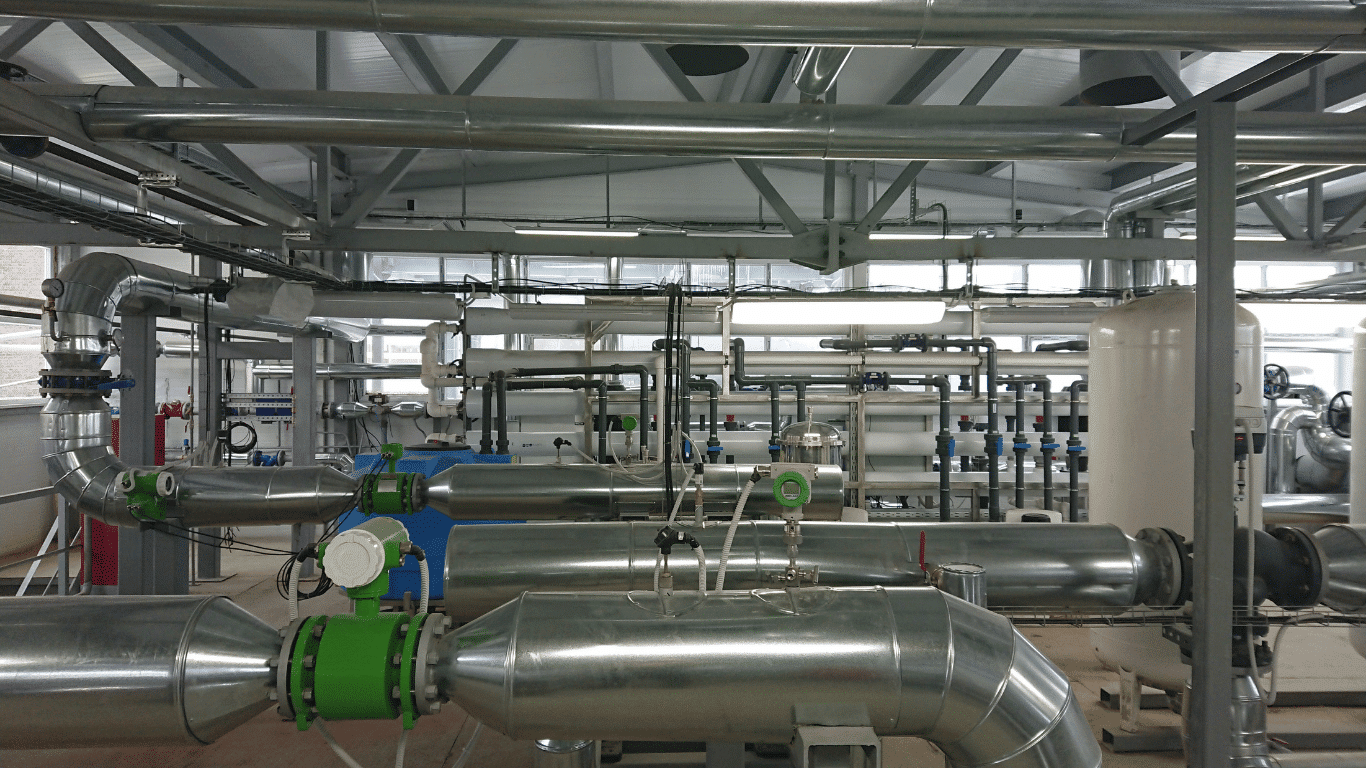
A practical treatment train often starts with water filtration. Filters can capture suspended particles and help reduce substances such as chlorine before the water reaches more sensitive treatment equipment. From there, facilities can use additional treatment stages based on the desired water quality. The goal is not simply to remove everything from the water. It is to remove the contaminants that matter for the intended use while protecting downstream equipment.
Start with the water source and its chemistry before selecting treatment equipment. Testing can reveal hardness, dissolved solids, chlorine, metals, and other characteristics that influence treatment performance. That information helps operators choose and size water treatment systems around actual facility conditions instead of relying on a generic setup.
Advanced Purification for High-Purity Applications
Standard tap water does not meet the requirements of every medical application. Dialysis, laboratory work, sterile processing, and other specialized services can require water with carefully controlled chemical and microbiological characteristics. In these applications, purified or high purity water becomes part of the process rather than simply a utility.
Reverse osmosis systems are commonly used when a facility needs to reduce dissolved solids and other contaminants. A reverse osmosis membrane can reject a very high percentage of dissolved material, while downstream deionization can further remove charged mineral ions. UV sterilization can provide another layer of microbial control without adding a chemical disinfectant to the treated water.
The treatment train should match the application. Dialysis water, for example, has specific chemical and microbiological requirements, and CDC guidance emphasizes appropriate purification, distribution, monitoring, and disinfection practices for dialysis systems. For facilities evaluating RO technology, our guide to an industrial reverse osmosis system provides additional context on how these systems work. High-purity applications can also combine membrane filtration, RO, deionization, UV, and monitoring to produce the required water quality.
Infection Control and Microbial Management
Bacteria can become a concern when water systems provide favorable conditions for growth. Warm plumbing, stagnant sections, storage tanks, fixtures, and biofilms can all create opportunities for microorganisms such as Legionella to persist. CDC guidance specifically identifies warm water systems, biofilms, cooling towers, sinks, shower heads, and other components as potential environments for waterborne microorganisms.
Temperature management, disinfection, circulation, monitoring, and good plumbing design should work together rather than operate as separate tasks. Current CDC guidance recommends maintaining hot water above 60°C in storage and controlling circulating temperatures within applicable requirements, while also monitoring factors such as temperature, disinfectant residuals, and pH as part of a broader water management program.
Chemical oxidation and other disinfection methods can help control microbial growth, but the treatment strategy needs to account for water chemistry, contact time, system design, and the organisms being targeted. Operators should also understand that a single treatment step does not replace a complete risk-management program. For a closer look at this specific concern, see our guide to Legionella treatment.
Hospital Wastewater Requires a Different Treatment Strategy
The water leaving a hospital presents a different treatment challenge. Hospital wastewater can contain pharmaceuticals, disinfectants, cleaning chemicals, microorganisms, and other substances associated with clinical activities. Research has also reported antibiotic-resistant bacteria and pharmaceutical compounds in hospital effluent, which makes wastewater treatment an important environmental and operational consideration.
Hospital wastewater can also show higher organic loads than typical domestic wastewater. Published studies have reported elevated biochemical oxygen demand and chemical oxygen demand in hospital discharges, although concentrations vary between facilities and regions. During the COVID-19 pandemic, researchers also detected SARS-CoV-2 RNA in hospital wastewater and used wastewater surveillance as one way to monitor community and facility-level trends. Detecting viral RNA, however, does not by itself demonstrate that infectious virus remains present.
Treatment can involve biological processes such as activated sludge, membrane bioreactors, filtration, and disinfection, depending on the wastewater characteristics and discharge requirements. The right approach starts with representative wastewater samples and a clear understanding of the contaminants that need to be reduced. That gives medical facilities a stronger basis for selecting wastewater treatment technologies and monitoring their performance.
Keeping a Hospital Water Treatment Program Under Control
Good water management does not stop once the treatment equipment is installed. Teams should routinely watch water temperature, microbial results, disinfectant residuals, filter performance, membrane condition, water chemistry, and equipment operation. Keeping those measurements consistent gives operators a better opportunity to catch changes before they become larger system problems.
Routine maintenance also needs to include the plumbing network itself. Mapping the system can help identify stagnant areas, dead legs, low-flow sections, storage points, and locations where waterborne pathogens could become a concern. Documentation matters too. A clear record of testing, maintenance, corrective actions, and equipment performance supports ensuring compliance and helps teams maintain optimal performance across interconnected treatment systems.
Building a More Reliable Hospital Water Treatment Strategy
A practical approach can be as simple as Assess → Test → Treat → Monitor → Maintain. Start with the facility’s water sources and applications, test the water and wastewater, select treatment systems around the actual requirements, monitor performance, and maintain the equipment and distribution network. That process gives operators a clearer picture of where risk exists and where treatment can make the biggest difference.
The goal is not to install the most complicated system possible. It is to build a treatment strategy that fits the facility, its clinical applications, equipment, discharge requirements, and risk profile. Need help evaluating those requirements? Talk to our experts. We can help you develop a practical approach for improving water quality, protecting equipment, and supporting reliable facility operations.
