
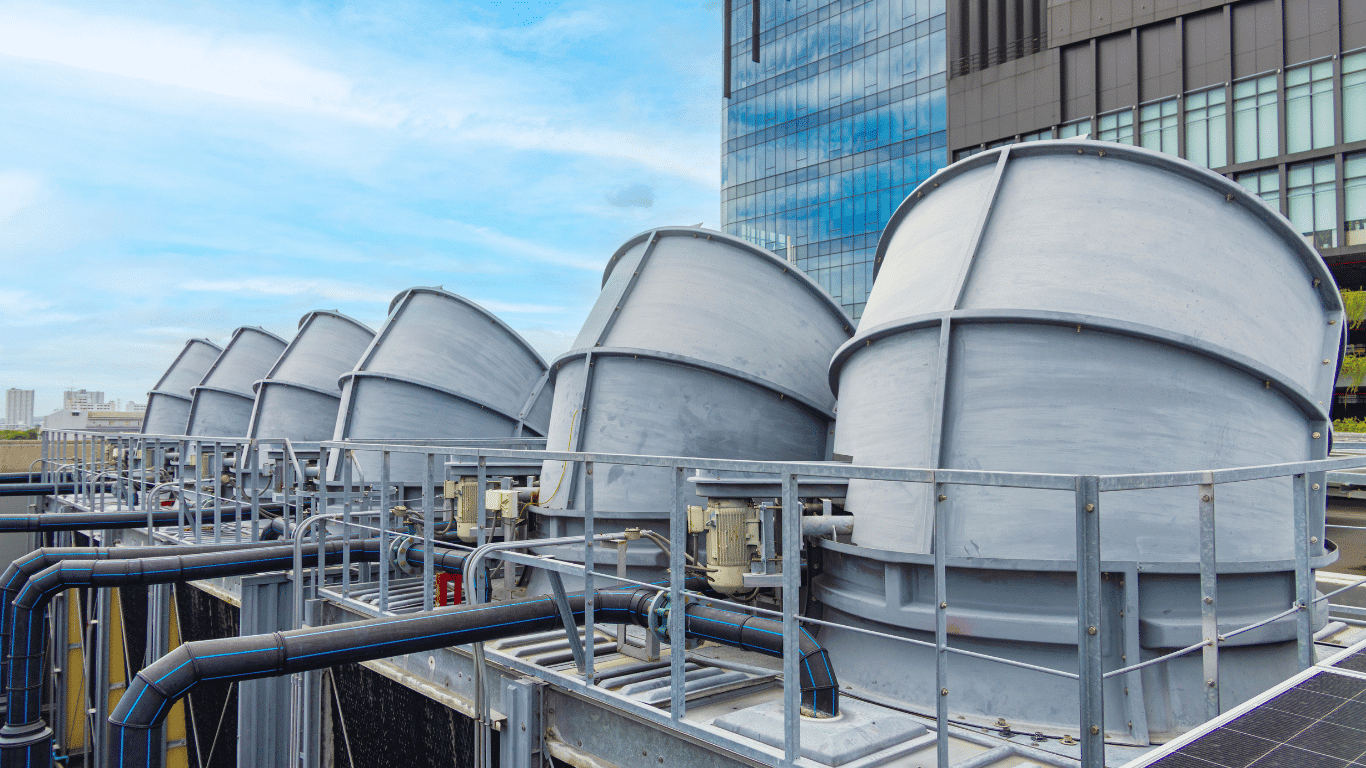
A cooling tower can run smoothly and still fall behind on important requirements. Cooling tower compliance involves much more than keeping equipment operating. Inspections, water quality monitoring, treatment, maintenance, testing, and documentation all contribute to a properly managed system.
For facility teams, the goal is to keep cooling towers operating safely while meeting the requirements that apply to their location. Good management also supports cooling tower systems by reducing conditions that can affect equipment and occupants. Most importantly, a consistent approach helps facilities manage water-related risks and public health responsibilities.
What Cooling Tower Compliance Covers
Cooling tower compliance covers the procedures and records a facility needs to meet applicable requirements for its system. Depending on the location, that can include registration, inspections, water treatment, maintenance, microbiological testing, recordkeeping, annual certifications, and documented corrective actions. The exact regulatory requirements vary, so facility teams should always start with the local regulations that apply to their property.
For building owners and cooling tower operators, compliance works best as an ongoing program rather than a once-a-year task. A documented approach gives everyone a clear understanding of tower compliance, assigned responsibilities, inspection schedules, treatment procedures, and tower requirements. New York City provides a useful example because its rules establish specific requirements for cooling tower registration, inspections, maintenance, water quality monitoring, testing, and certification. Those requirements apply to qualifying systems in NYC and should not automatically be treated as requirements in other jurisdictions.
Inspection and Monitoring Requirements
One of the easiest ways to fall behind is to treat every inspection and test as the same activity. They serve different purposes. In New York City, a Qualified Person must perform compliance inspections at least every 90 days. These routine inspections help evaluate whether the system, maintenance practices, records, and required procedures remain in order.
Water quality also needs ongoing attention between inspections. Current NYC guidance requires routine monitoring at least three times each week, along with bacteriological indicator testing at least weekly while the system operates. That means frequent testing should become part of normal operating practice rather than something teams schedule only before an inspection.
Legionella monitoring follows its own schedule. NYC currently requires Legionella testing at startup and at least every 31 days while the cooling tower operates, with additional testing requirements in certain corrective-action situations. Teams may also need more frequent testing when system conditions or regulatory requirements call for it. Keeping legionella sampling separate from general water-quality checks helps operators understand exactly what each test tells them and where tower maintenance may need attention.
Maintenance Programs and Water Treatment
A strong maintenance program and plan gives a facility a practical roadmap for managing its cooling tower throughout the year. NYC requires a system-specific Maintenance Program and Plan that addresses procedures such as monitoring, cleaning, disinfection, responsibilities, and other measures used to control system risks. A good maintenance program should tell operators what needs to happen, how often it needs to happen, and who needs to document it.
Water treatment sits at the center of effective cooling tower maintenance. The goal is not simply to add chemicals, but to maintain conditions that control microorganisms, biofilm, scale, and corrosion. NYC guidance requires daily treatment with oxidizing biocides and chemical treatment at frequencies sufficient to control Legionella growth. Facilities should build their water treatment program around actual system conditions, water chemistry, equipment design, and operating demands.
Pay close attention to the condition of tower water as operating conditions change. Makeup water quality, concentration cycles, temperature, contamination, and chemical demand can all affect treatment performance. If your team needs to evaluate treatment equipment and approaches, our water treatment systems provide a useful starting point. Consistent water treatment and monitoring help maintain cooling tower water quality and create conditions that help prevent Legionella growth.
Legionella Prevention and Water Safety
Legionella bacteria can multiply when building water systems provide favorable conditions, particularly when water remains warm, stagnant, or poorly controlled. Cooling towers deserve close attention because their operating environment can support legionella growth when treatment and maintenance fall short. Stagnant water, sediment, scale, and biofilm can all contribute to conditions that support bacterial growth. OSHA identifies warm temperatures, stagnation, sediment, scale, and biofilm among the factors that can promote Legionella growth.
Good legionella prevention starts with understanding the system’s actual risk factors. Teams should identify areas where water can stagnate, review treatment performance, maintain equipment, and establish procedures for responding to abnormal results. A documented risk assessment can help facilities organize these activities. ASHRAE Standard 188 provides a framework for managing the risk of legionellosis in applicable building water systems and supports the use of building-specific water management programs.
The objective is practical legionella control, not simply checking a box on a testing schedule. Proper treatment, monitoring, cleaning, and disinfection work together to manage risks within cooling tower water systems. If your team needs a closer look at microbiological monitoring, our guide to Legionella testing explains how testing fits into a broader water safety strategy. These measures help protect building occupants and others who may encounter aerosols from the system.
Cleaning, Disinfection, and Corrective Actions
Cleaning removes accumulated scale, sediment, biofilm, and other contaminants, while disinfection targets microorganisms that may remain in the system. NYC requires covered cooling towers to undergo cleaning and disinfection at least twice each year, including before startup, with additional cleaning when inspection findings or system conditions require it. Seasonal towers also need appropriate procedures before returning to normal operation.
Teams should document the work instead of relying on memory. Keep disinfection records, treatment information, inspection findings, and Legionella test results together so operators can identify patterns and respond quickly. If results or inspections identify a problem, follow the applicable maintenance program and regulatory requirements for corrective actions. These preventive measures, combined with consistent water treatment, help keep the system properly maintained rather than waiting for a serious issue to develop.
Recordkeeping, Certification, and Enforcement
Good records give facility teams something concrete to use when they need to demonstrate compliance. NYC requires annual certification of covered cooling towers, with the certification due by November 1 each year. Facilities also need to maintain required documentation, including information associated with inspections, maintenance, water treatment, testing, and the Maintenance Program and Plan.
Recordkeeping should cover the work that actually happens at the tower. Depending on the applicable requirements, this can include treatment records, inspection reports, training records, cleaning and disinfection records, and laboratory documentation. When microbiological testing applies, using a qualified or certified laboratory and retaining the resulting documentation helps create a clear compliance history. NYC requirements call for records to remain available for inspection and establish specific retention requirements.
Certification also carries real enforcement consequences. NYC states that failure to register a cooling tower, submit required annual certification, or report a tower’s discontinued use can result in a violation with a maximum fine of $10,000. Penalties can change as regulations are amended, so facility teams should verify current amounts rather than relying on old penalty schedules. The property manager, owner, and responsible operators should keep the compliance program organized throughout the year rather than trying to reconstruct records before a deadline.
Protecting Workers During Cooling Tower Maintenance
Cooling tower maintenance can expose cooling tower operators and tower operators to contaminated water, aerosols, treatment chemicals, and other workplace hazards. OSHA recommends appropriate controls and protective measures when workers perform maintenance, cleaning, or disinfection on systems where Legionella may present an exposure concern. A qualified person should understand the work procedures, hazards, and controls before maintenance begins.
Worker protection should cover more than personal protective equipment. Teams should address training, chemical handling, exposure controls, safe cleaning procedures, and appropriate respiratory protection when the task requires it. These practices reduce the health risk to workers while supporting water safety and public health. Facilities should also consider how maintenance activities could affect the surrounding environment, particularly when handling treatment chemicals or contaminated system water.
Building a Practical Cooling Tower Compliance Program
A practical cooling tower compliance program starts with knowing exactly which requirements apply to your facility. From there, assign responsibility to qualified personnel, establish a system-specific maintenance program, and create a calendar for inspections, testing, cleaning, and certification. Your team should also identify the required elements of its program and compare them against applicable regulations and relevant industry standards.
Keep the process manageable. Schedule routine monitoring, complete regular inspections, track water chemistry and microbiological results, and document treatment, cleaning, disinfection, and corrective actions as they occur. A good program also leaves room for adjustments when operating conditions change. If your team wants a closer look at system monitoring, our guide to water quality monitoring explains how consistent measurements can support better decisions across tower water systems. The goal is a working program that operators can follow every day, not a binder that only comes out during an inspection.
Keeping Compliance on Track Year-Round
Keeping cooling tower compliance on track comes down to consistent habits: inspect the system on schedule, monitor water quality, maintain effective water treatment, clean and disinfect as required, document the work, and respond promptly when results indicate a problem. Teams that build these steps into everyday tower maintenance can address issues earlier and create better conditions to prevent Legionella while helping protect public health. If you want to strengthen your facility’s approach, contact us. Our experts can help you evaluate your cooling tower water treatment and develop a practical strategy around your system’s operating needs.
