
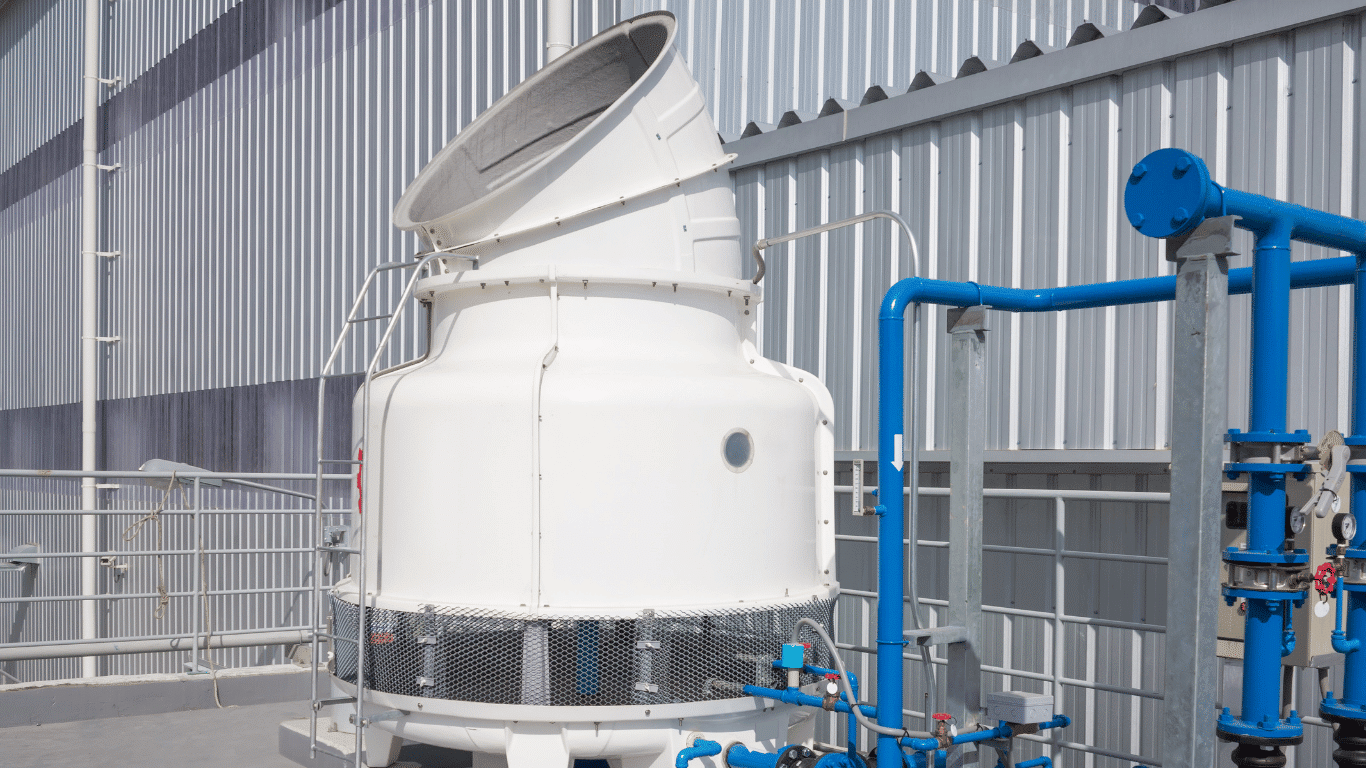
Cooling tower water treatment depends on more than simply adding chemicals to circulating water. As water evaporates, minerals and impurities become more concentrated, while heat, oxygen, and changing operating conditions create opportunities for scale, corrosion, and microbial growth. For facility teams, the real goal is to keep water chemistry stable enough to protect equipment and maintain reliable heat transfer.
Why Cooling Tower Water Treatment Chemicals Matter
The chemicals used in cooling tower water treatment each serve a specific purpose, but they work best as part of one coordinated program. Operators typically manage three major risks: mineral deposits, metal corrosion, and biological activity. If any one of these gets ahead of the treatment program, heat transfer efficiency can fall and maintenance demands can rise.
A well-managed cooling tower water treatment program also helps teams control concentration as water evaporates. Many systems operate around four to six cycles of concentration, although the appropriate target depends on makeup water quality, equipment design, treatment chemistry, discharge requirements, and operating conditions. Keeping cycles at a practical level can reduce water usage without pushing dissolved solids high enough to create new problems.
Biocides for Microbial Control
Biocides control bacteria, algae, and other microorganisms that can grow in warm cooling tower water. This matters because biological growth can create biofilm on cooling tower components, restrict water flow, increase fouling, and interfere with other treatment chemicals. Operators should monitor microbiological conditions and adjust the program when temperature, load, water quality, or operating patterns change.
Teams often use oxidizing or non-oxidizing biocides according to the system’s needs. The right selection depends on water chemistry, treatment objectives, compatibility, and regulatory requirements. Consistent monitoring also matters because chemical treatment alone does not replace cleaning, inspection, and good tower operation. ASHRAE Standard 188 provides a framework for managing Legionella risk in applicable building water systems.
Corrosion Inhibitors Protect Metal Surfaces
Corrosion inhibitors help protect metal surfaces by forming or maintaining a protective film that slows corrosive reactions. Without adequate corrosion control, cooling tower components, piping, heat exchangers, and other equipment can deteriorate over time. That damage can reduce equipment life and eventually contribute to leaks, equipment failure, and higher maintenance costs.
The treatment program should account for the metals in the system, water chemistry, pH, temperature, cycles of concentration, and the inhibitor chemistry in use. Chromate compounds once served as powerful corrosion inhibitors, but chromium-based cooling tower chemicals have faced major regulatory restrictions, and facilities should never assume an older chemistry remains acceptable. Current programs should use appropriate alternatives and verify applicable discharge and environmental requirements.
Scale Inhibitors Prevent Mineral Deposits
Scale inhibitors help prevent deposits from minerals such as calcium and magnesium. As cooling tower water evaporates, dissolved minerals become more concentrated. When their concentration exceeds solubility limits, scale formation can occur. Calcium carbonate is a common example, and deposits can accumulate on heat transfer surfaces where even a thin layer can interfere with heat transfer.
Scale prevention becomes especially important as facilities pursue higher cycles of concentration. Operators need to balance water conservation with the risk of concentrated salts and mineral deposits. Depending on the source water, pretreatment such as ion exchange can also help. Ion-exchange softeners replace calcium and magnesium ions with sodium, reducing hardness before water enters the cooling system.
Dispersants, pH Adjusters, and Antifoam Agents
Dispersants help keep suspended solids and organic debris evenly distributed so they do not settle onto tower components or heat transfer surfaces. pH adjusters help maintain water within a target range, which supports the performance of corrosion inhibitors, scale inhibitors, and biocides. Antifoam agents can also control excessive surface foam that interferes with pumps, sensors, or normal system operation.
These treatment chemicals should not operate independently. A change in pH can alter corrosion behavior or biocide performance, while changes in makeup water can shift mineral concentration and chemical demand. That is why operators should review water chemistry, cycles, blowdown, and treatment results together instead of adjusting one chemical based on a single test.
Managing Cycles, Filtration, and Blowdown
Water evaporates from a cooling tower, but dissolved solids remain behind. Makeup water replaces water lost through evaporation, drift, and blowdown, while blowdown removes a portion of concentrated cooling water. A practical program uses these controls together to keep concentration within an acceptable operating range. Side-stream filtration can remove suspended solids from a portion of recirculating water, with systems commonly designed to filter roughly 3% to 10% of the circulating flow. This approach can reduce the solids load that contributes to fouling.
Facilities may also evaluate advanced oxidation processes, including hydroxyl-based AOP, when they need to reduce blowdown or limit reliance on harsher chemical treatment. The right approach depends on water quality, system design, and treatment objectives. Higher cycles can improve water efficiency, but they also increase the concentration of salts and other impurities, so operators need reliable monitoring and control.
Choosing the Right Chemical Program
There is no single list of chemicals used in cooling tower water treatment that fits every system. Teams should start with the source and quality of makeup water, system metallurgy, operating temperature, cycles of concentration, water volume, discharge requirements, and known fouling or corrosion problems. From there, the treatment program can combine the right biocides, corrosion inhibitors, scale inhibitors, dispersants, and pH control. It also helps to look beyond chemical selection. Mechanical filtration, softening, membrane treatment, monitoring equipment, and routine maintenance can reduce the chemical load and make the overall program more stable. ProChem’s custom chemical programs take this broader approach by evaluating water conditions and treatment objectives rather than relying on a one-size-fits-all program.
Monitoring and Compliance
Chemical treatment only works when operators know what is happening inside the system. Track pH, conductivity, cycles of concentration, inhibitor levels, biocide activity, temperature, water flow, and microbiological indicators as appropriate for the facility. Watch trends instead of reacting to isolated readings. Early changes often give teams time to correct a problem before scale, corrosion, or biological fouling affects equipment.
Discharge requirements also deserve attention. Facilities must manage blowdown according to the permits and regulations that apply to their discharge. For example, 40 CFR 423.16 establishes effluent limitations for certain steam electric power generating point sources, including limits for pollutants such as total chromium and zinc. Do not apply those limits universally to every cooling tower. Instead, confirm the requirements that govern your facility and document treatment, monitoring, and corrective actions. ProChem’s cooling tower water treatment solutions can be evaluated around those operating and compliance needs.
Building a Practical Treatment Strategy
A strong program starts with a baseline water analysis, then establishes target ranges for chemistry, cycles, microbiological control, and blowdown. From there, teams can set dosing controls, inspection intervals, sampling schedules, and response procedures. If the system changes, such as a different makeup water source or production load, revisit the program rather than assuming the original chemical dosage still fits.
For many facilities, the most effective approach combines chemical treatment with pretreatment, filtration, monitoring, and disciplined maintenance. ProChem also provides water treatment systems that can support a broader strategy when the cooling tower needs more than chemical adjustment alone. Start with the actual water and operating conditions, measure the results, and fine-tune the program over time.
Need help determining which chemicals used in cooling tower water treatment and supporting treatment steps make sense for your cooling system? Contact us to build a practical program around your facility’s needs.
Frequently Asked Questions
What are the main cooling tower treatment chemicals?
Common treatment chemicals include biocides for microbial control, corrosion inhibitors for metal protection, scale inhibitors for mineral deposits, dispersants for suspended solids, and pH adjusters for water chemistry control. Some systems also use antifoam agents when foam affects operation.
How do chemicals help prevent scale in cooling towers?
Scale inhibitors help keep minerals such as calcium and magnesium from forming deposits on heat transfer surfaces. Operators can also control cycles of concentration, improve makeup water quality, use soft water, or add filtration and membrane treatment when the system requires additional scale prevention.
How do corrosion inhibitors protect cooling tower components?
Corrosion inhibitors help protect metal surfaces by creating or maintaining a protective film that slows corrosive reactions. Good corrosion control reduces degradation of tower components and can support longer equipment life, fewer repairs, and more reliable operation.
Why are biocides important in cooling tower water treatment?
Biocides control microbial growth, including bacteria and algae, that can contribute to biofilm and biological fouling. Consistent monitoring and treatment help maintain cooling tower water quality and support Legionella risk management alongside cleaning and maintenance practices.
How can a facility reduce cooling tower chemical use?
Start by improving water quality and controlling the conditions that drive chemical demand. Optimized cycles, side-stream filtration, softening, membrane treatment, and hydroxyl-based AOP can help reduce blowdown or chemical use in suitable applications. The best strategy depends on the system’s water chemistry, equipment, discharge requirements, and operating goals.
