
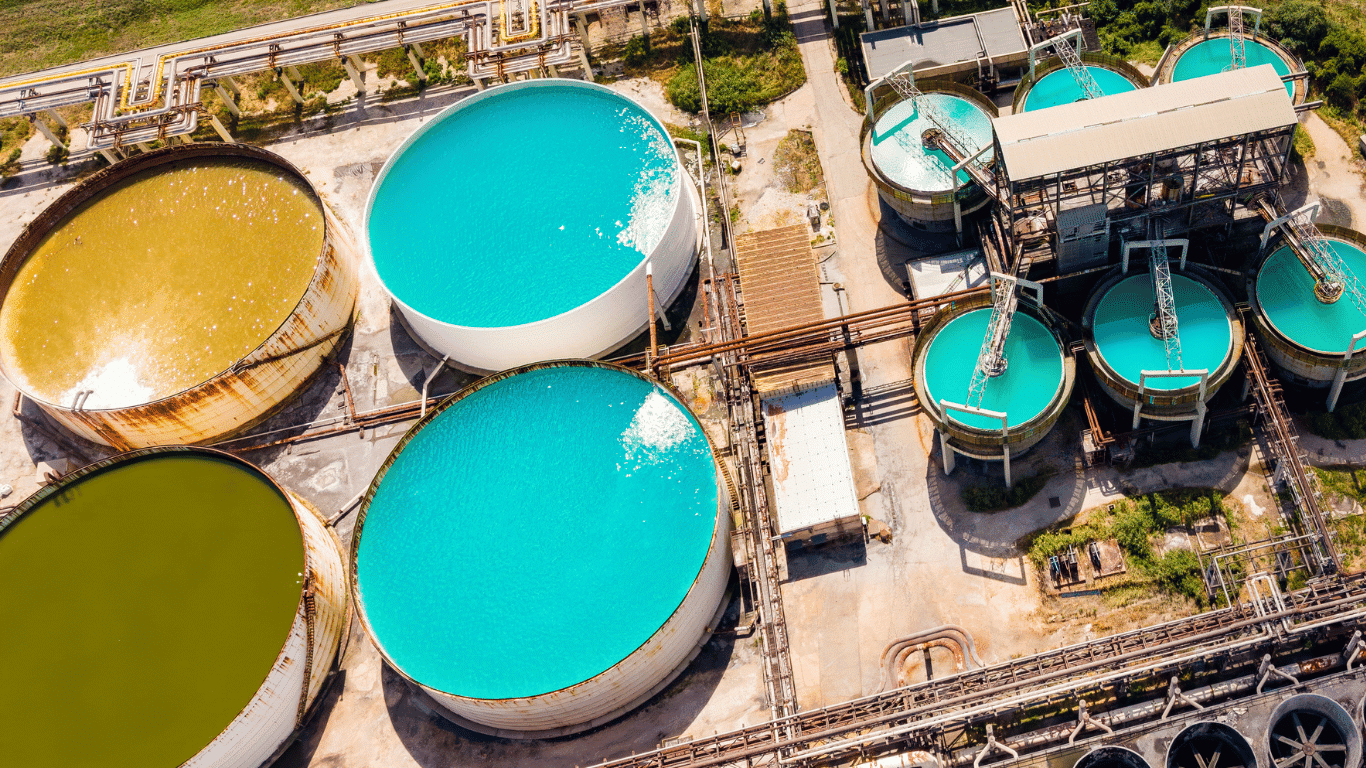
Industrial facilities rarely receive water that is ready for every process or treatment stage. Depending on the source and the operation, water can carry suspended solids, dissolved salts, hardness minerals, organic compounds, microorganisms, and other contaminants. At the same time, industrial wastewater can vary significantly from one facility to another because manufacturing processes, production schedules, and raw materials all influence wastewater quality. Industrial water pretreatment gives facilities a way to condition that water before it reaches more sensitive treatment equipment or downstream processes.
A good pretreatment strategy starts with understanding the water itself. Operators need to know what enters the system, what the facility needs the water to accomplish, and what contaminants could interfere with treatment. From there, the right combination of treatment methods can improve water quality, protect equipment, support regulatory compliance, and create a more reliable overall treatment process.
What Industrial Water Pretreatment Does
Industrial water pretreatment prepares incoming water or industrial wastewater for the treatment stages that follow. Think of it as the point where operators remove or control the contaminants most likely to create problems later. Depending on the application, this can include screening, sedimentation, media filtration, softening, pH adjustment, chemical treatment, ion exchange, or membrane filtration. The goal is not always to remove every contaminant at once. Instead, each stage should address a specific water quality concern and make the next stage work more effectively.
The exact approach depends on the facility and its water source. A food processing operation may need to manage high organic loads, while a metal processing facility may need to address heavy metals and suspended solids. Chemical manufacturing can introduce complex organic compounds and chemical constituents, while pulp and paper operations can contribute lignin and cellulose fibers. Textile operations also generate wastewater from processes such as dyeing, bleaching, finishing, and washing. Facilities can review available water treatment systems to understand how different technologies fit into a broader treatment strategy.
Why Pretreatment Matters for Industrial Facilities
The biggest reason to prioritize pretreatment is simple: problems that enter a treatment system early can become much more expensive later. Suspended solids and turbidity can clog filters, hardness minerals can contribute to scale, and dissolved contaminants can foul membranes. If operators allow these issues to build, treatment efficiency can decline while maintenance costs, chemical use, energy consumption, and operational costs increase. A well-designed pretreatment stage gives downstream equipment a cleaner and more consistent feed.
Pretreatment also plays an important role in wastewater treatment and regulatory compliance. In the United States, the Clean Water Act establishes the framework for regulating pollutant discharges, while EPA develops national effluent guidelines for specific industrial categories. Industrial users that discharge to publicly owned treatment works may also need to meet pretreatment standards designed to prevent interference with the treatment plant. Facilities should therefore evaluate their treatment process against applicable local, state, and federal requirements rather than assuming one treatment approach fits every discharge.
There is also a practical operational lesson here. A treatment system should not simply meet a discharge requirement on a good day. Teams should build enough control into the process to handle changes in flow, contaminant loading, and production conditions. Recent research on industrial wastewater treatment plants in Gansu Province, China, illustrates why this matters. A 2022 to 2024 investigation found compliance rates ranging from 57.9% to 100%, with 34.4% of plants reporting compliance below 90%. The study also reported average operational costs of 3.91 CNY/m³ and an average unit sludge yield of 2.02 t/10⁴ m³. These figures describe a specific regional study, not a universal industry benchmark, but they show how influent conditions, process design, and operating practices can affect treatment performance.
Common Pretreatment Methods
Physical treatment is often the first step because it can remove larger or easily separable contaminants before more intensive treatment begins. Screening can capture larger debris, while sedimentation allows heavier particles to settle. Media and sediment filtration can then capture suspended solids and turbidity. Dissolved air flotation offers another option when oils, grease, or fine suspended particles require separation. The process uses micro-bubbles to attach to contaminants and lift them toward the surface for removal. These methods can reduce the contaminant load entering downstream equipment.
Chemical treatment addresses contaminants that physical separation cannot handle efficiently on its own. Coagulants can destabilize small suspended particles, allowing them to form larger flocs that are easier to separate. Flocculation encourages those particles to gather, while neutralization adjusts pH to create more stable water chemistry. Granular activated carbon can help remove free chlorine and certain dissolved organic compounds. For facilities dealing with hardness, ion exchange can reduce hardness-causing ions and help control scale formation. ProChem’s ion exchange systems provide one example of how this technology can fit into an industrial treatment train.
Membrane and advanced treatment technologies can provide another layer of protection when facilities need tighter control over dissolved contaminants. Ultrafiltration can target fine particles and macromolecules, while nanofiltration and reverse osmosis can reduce dissolved salts and other constituents. Biological treatment can reduce biodegradable organic matter through microbial processes such as activated sludge and moving bed biofilm reactors. Oxidative approaches, including ozonation and UV-based treatment, can address specific organic or microbial concerns. Electrochemical treatment, including electrocoagulation and electrodeionization, can also serve specialized applications. The right combination depends on the water, the desired treated water quality, and the downstream process.
Matching Treatment to Water Quality
The first question operators should ask is not, “Which treatment technology should we install?” It is, “What is actually in the water?” Testing can identify suspended solids, total suspended solids, total dissolved solids, dissolved salts, hardness, heavy metals, organic compounds, microorganisms, and chemical oxygen demand, or COD. Chemical oxygen demand COD can help indicate the amount of oxidizable material in wastewater, although facilities should consider other parameters when characterizing their wastewater. A clear contaminant profile gives engineers a much stronger starting point for selecting different treatment methods.
The second question is what happens after pretreatment. Water destined for a high-purity process may need substantially different treatment than water intended for cooling, washing, process use, or discharge. For example, high total dissolved solids may point toward softening, ion exchange, or membrane treatment, while high suspended solids may call for clarification or filtration first. Heavy metals may require targeted chemical or physical separation. Organic loading may call for biological, adsorption, or oxidation processes. This is where understanding the entire water treatment process becomes important, rather than choosing equipment in isolation.
Facilities should also look at how wastewater changes throughout production. Food processing, for example, can create wastewater with substantial organic matter, while chemical and metal processing can produce very different contaminant profiles. Production changes can affect flow and loading, which means a system designed around one operating condition may struggle during another. Teams that track wastewater quality over time can make better decisions about capacity, chemical dosing, filtration rates, and treatment performance.
Designing a Practical Pretreatment Train
A practical pretreatment train usually follows a logical sequence. Start with the easiest contaminants to remove, then protect each downstream stage from the contaminants that could interfere with it. A facility might use screening and sedimentation first, followed by filtration, pH adjustment, softening, ion exchange, or membranes as needed. In applications that require high-purity water, pretreatment can condition raw intake water before it reaches more sensitive membrane or purification stages. ProChem’s industrial wastewater treatment systems provide a useful reference for seeing how treatment stages can work together as a larger system.
Operators should also pay attention to flow, hydraulic retention time, loading rates, pressure, chemical dosing, and energy consumption. These operating details can directly influence treatment efficiency. For instance, a filter that receives excessive solids may require frequent cleaning, while a membrane that receives poorly conditioned water may foul prematurely. Monitoring pressure changes, turbidity, conductivity, pH, and other relevant indicators can help teams catch early changes before they affect the rest of the system.
Building a More Reliable Treatment Approach
The most effective approach starts with characterization, then moves into technology selection, system design, commissioning, and ongoing monitoring. Teams should identify contaminants, define the required water quality, account for changes in flow and loading, and select treatment stages that address those conditions in sequence. From there, regular monitoring and maintenance help keep treatment performance consistent. A thoughtful approach can reduce fouling and scaling, improve operational efficiency, support water recycling and reuse, and reduce unnecessary chemical, energy, and maintenance costs.
Reviewing your facility’s current process or planning a new one? ProChem can help you evaluate the treatment steps that make sense for your application. Talk with our water treatment team to develop a practical pretreatment approach that supports reliable water quality, protects downstream equipment, and helps your facility use water more efficiently.
