
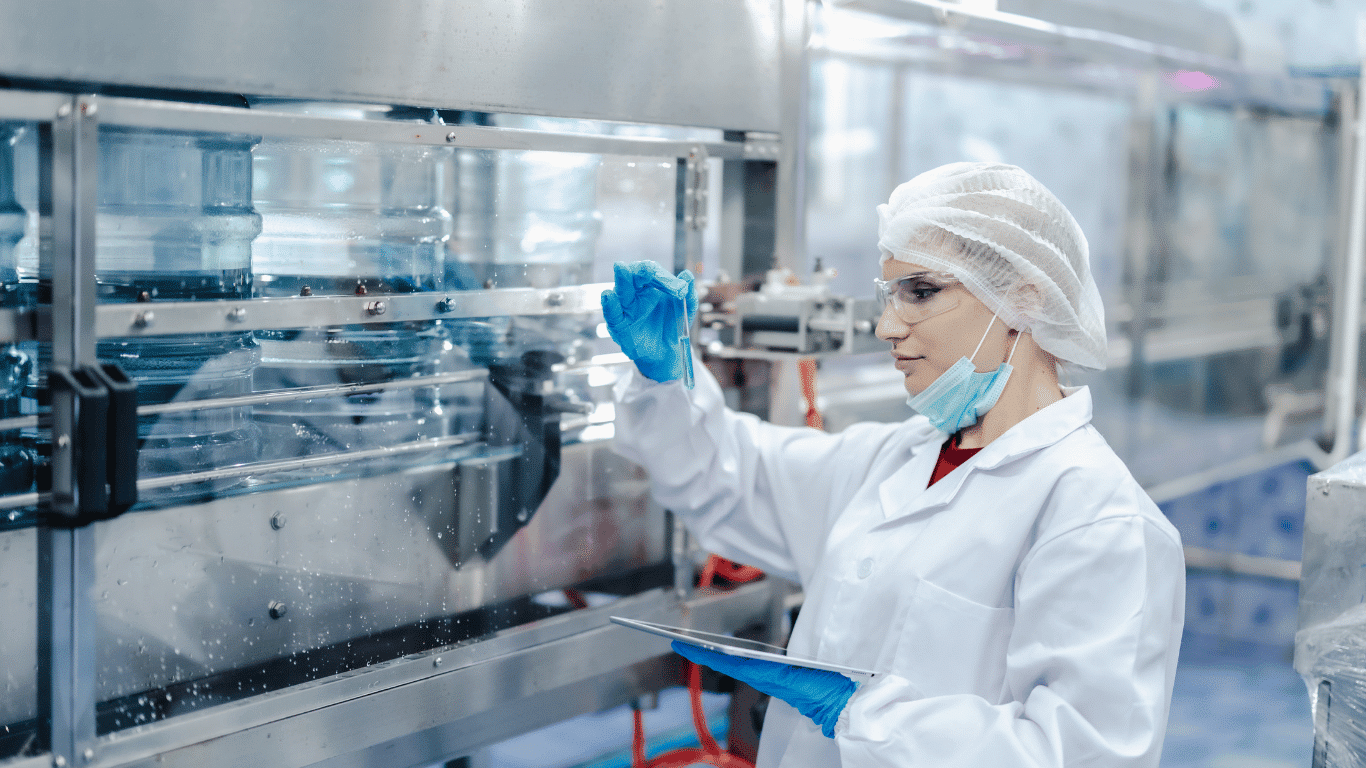
Producing a beverage that tastes right every time takes more than a good recipe. Teams need to monitor ingredients, water quality, processing conditions, sanitation, packaging, and finished products throughout the operation. That is where beverage quality control gives manufacturers a practical way to catch problems early and keep production on track.
A strong program also protects food safety, product consistency, and customer trust. When operators monitor the right conditions and respond quickly to changes, they can reduce waste, limit contamination risks, and maintain the standards customers expect from every batch.
Why Beverage Quality Control Matters
Beverage quality control gives production teams a structured way to inspect and test materials and products throughout the manufacturing process. It starts before production with raw material inspection and continues through mixing, processing, filling, packaging, storage, and distribution. The goal is simple: identify problems early instead of discovering them after a product reaches the market.
For beverage manufacturers, water deserves particular attention because it can become part of the product or support critical production steps. Changes in pH, dissolved minerals, microbial content, or other water characteristics can affect taste, appearance, consistency, and food safety. A well-designed water treatment approach can help maintain the conditions required for reliable beverage production. ProChem’s food and beverage water treatment solutions provide one example of how facilities can address water quality as part of a broader manufacturing strategy.
Quality control also supports operational efficiency. A small process deviation caught during production usually costs less to correct than a large batch that requires disposal or rework. Regular inspections, testing, and documentation help teams identify trends, reduce variability, and protect brand reputation. Over time, these quality control practices can also support continuous improvement across the entire manufacturing process.
Controlling Raw Materials and Water Quality
Quality starts with what enters the facility. Beverage producers should establish clear specifications for incoming raw materials, including ingredients, additives, water, and packaging materials. Raw material sourcing should consider supplier performance, material specifications, certificates, and testing requirements. Supplier audits and raw material inspection can also help confirm that incoming materials meet established quality standards before they reach the production line.
Water quality requires the same level of attention. Depending on the source, process water may contain suspended solids, hardness minerals, dissolved salts, organic compounds, or microorganisms that can affect production. Routine chemical monitoring and microbiological testing help teams understand changing conditions. Operators should establish testing frequencies based on the source water, production requirements, treatment system, and applicable regulatory requirements rather than relying on a single testing schedule for every facility.
When water treatment forms part of the production process, the treatment system itself needs routine monitoring. Teams should track relevant parameters such as pH, conductivity, turbidity, microbial indicators, and other site-specific measurements. ProChem’s water treatment systems and technologies can include filtration, membrane treatment, ion exchange, and other technologies selected around specific water quality requirements. The right treatment train helps facilities maintain consistent water conditions without adding unnecessary complexity.
Monitoring the Production Process
Once approved materials enter production, in process control becomes essential. Beverage teams should monitor conditions during mixing, blending, heating, cooling, carbonation, and other processing steps that can influence the final product. Parameters such as pH and Brix often provide useful indicators of consistency, while process-specific measurements can help operators detect changes before they affect an entire batch.
Teams should also establish critical control points based on their hazard analysis and food safety program. HACCP systems help identify where hazards could occur and where preventive controls can reduce those risks. Alongside HACCP, quality management systems can give teams a broader framework for documentation, corrective actions, process performance, and continuous improvement. These systems work best when operators understand why each control matters instead of treating quality checks as paperwork.
Automation can make monitoring more consistent, especially in high-volume beverage manufacturing. In-line sensors and automated controls can continuously track selected process conditions and alert operators when readings move outside defined limits. Statistical process control can also help teams identify trends and process deviations before they become larger quality problems. The goal is not to automate every decision, but to give operators better quality data so they can respond sooner and make informed adjustments.
Sanitation, Testing, and Product Safety
Sanitation remains one of the most important quality control practices in beverage production. Beverage products can provide favorable conditions for microbial growth when sanitation breaks down or processing conditions drift. Facilities should maintain hygienic design principles, follow documented standard operating procedures, and verify that cleaning and sanitation activities achieve their intended results.
Clean-In-Place protocols play an important role in controlling contamination between production runs. A properly designed CIP process can remove product residues, microorganisms, and other contaminants from tanks, piping, fillers, and associated equipment without requiring complete disassembly. Teams should pay attention to cleaning time, temperature, chemical concentration, flow conditions, and rinse requirements, then verify performance through appropriate testing.
Beverage testing should cover the characteristics that matter for both safety and product quality. Microbiological testing can identify unwanted bacteria, yeast, or molds, while chemical tests and chemical analysis can help verify composition and process conditions. Sensory evaluation adds another layer by checking appearance, aroma, taste, and mouthfeel. Together, these testing processes give manufacturers a more complete picture of the finished product.
Protecting the Finished Product
Final product testing helps confirm that a beverage meets established specifications before release. Teams may evaluate microbial content, pH, Brix, appearance, flavor, carbonation, nutritional value, and other characteristics depending on the product. Regular testing provides an additional safeguard against unsafe or substandard products reaching consumers, especially when the facility links test results to defined release criteria.
Packaging also deserves attention because a beverage can meet every internal specification and still experience problems during storage or distribution. Packaging integrity checks can identify leakage, poor seals, oxidation risks, or other defects. Shock testing and other distribution tests can help teams understand how packaging performs under real handling conditions. For products with strict temperature requirements, cold chain management and data loggers can help verify that storage and transportation conditions stay within acceptable limits.
Shelf life should also form part of the quality program. Shelf-life testing helps manufacturers understand how a product changes over time and whether taste, appearance, microbial stability, packaging integrity, or other characteristics remain acceptable. Strong traceability systems make this information even more useful because teams can connect finished product results to specific batches, raw materials, processing records, and distribution information.
Traceability, Compliance, and Continuous Improvement
Traceability gives quality teams a practical way to investigate problems. Batch records should connect raw materials, production dates, equipment, operators, testing results, packaging, and distribution information where appropriate. If a defect appears after release, this information helps teams pinpoint the affected product and make a focused recall instead of unnecessarily removing unrelated batches from the supply chain.
Regulatory compliance should remain part of everyday quality management rather than something teams address only before an audit. Beverage producers may need to meet local and international food safety requirements, HACCP expectations, customer specifications, and applicable industry standards. Food quality assurance supports this effort by covering activities from raw material sourcing through production, storage, and distribution. Clear records also help demonstrate that the facility follows its established procedures.
Quality control relies on more than testing a finished product at the end of the line. Teams should review quality data regularly, identify trends, investigate recurring deviations, and adjust production methods when evidence supports a change. Effective inspections and early detection can reduce waste, prevent production delays, and support operational efficiency. In a competitive market, that steady approach helps beverage manufacturers protect customer satisfaction while maintaining consistent production.
Building a Practical Beverage Quality Control Program
A practical program starts with a clear map of the entire production process. Identify the materials entering the facility, define the important quality characteristics at each stage, establish critical control points, and determine which tests provide useful information. From there, document standard operating procedures for inspection, sanitation, testing, corrective actions, traceability, and product release.
Next, make sure the monitoring program matches the actual risks. Test incoming raw materials before use, monitor water and process conditions routinely, verify sanitation, and perform final product testing before release. Keep equipment calibration current so instruments provide dependable measurements. Most importantly, give operators clear limits and response procedures so they know what to do when a result falls outside the expected range.
Finally, review the program as production changes. New ingredients, equipment, suppliers, packaging, production methods, or regulatory requirements can introduce new risks. A strong beverage quality control program should evolve with the facility, using testing results, production records, customer feedback, and quality trends to guide improvements. If you want to strengthen the water and process side of your quality program, connect with ProChem to discuss a treatment and monitoring approach suited to your facility’s production needs.
Frequently Asked Questions (FAQ)
What are common beverage quality control methods?
Common quality control methods include raw material inspection, water testing, in process control, microbiological testing, chemical analysis, sensory evaluation, packaging checks, and final product testing. The specific methods should reflect the beverage, production process, hazards, regulatory requirements, and customer expectations.
How does quality assurance differ from quality control in beverage production?
Quality control focuses on inspections, measurements, and testing used to identify problems with materials, processes, and products. Quality assurance takes a broader approach by establishing systems and procedures that help prevent problems across the operation. Together, they support food safety, regulatory compliance, and consistent product quality.
Why is microbiological testing important for beverages?
Microbiological testing helps identify unwanted microorganisms that can cause spoilage or create safety concerns. Regular sampling can help teams detect problems before contaminated products reach consumers. Testing should complement sanitation, preventive controls, hygienic design, and other food safety practices.
How can beverage manufacturers maintain quality standards across batches?
Manufacturers can maintain quality standards by controlling incoming materials, monitoring key process parameters, using consistent production procedures, calibrating equipment, testing finished products, and reviewing quality data. Batch traceability also helps teams investigate process deviations and identify the source of recurring defects.
How does quality control help reduce production costs?
Effective quality control catches defects early, which can reduce waste, rework, product disposal, recalls, and production interruptions. Consistent monitoring also helps teams identify process inefficiencies and recurring problems. Over time, these improvements can lower costs while supporting product safety, customer satisfaction, and brand reputation.
