
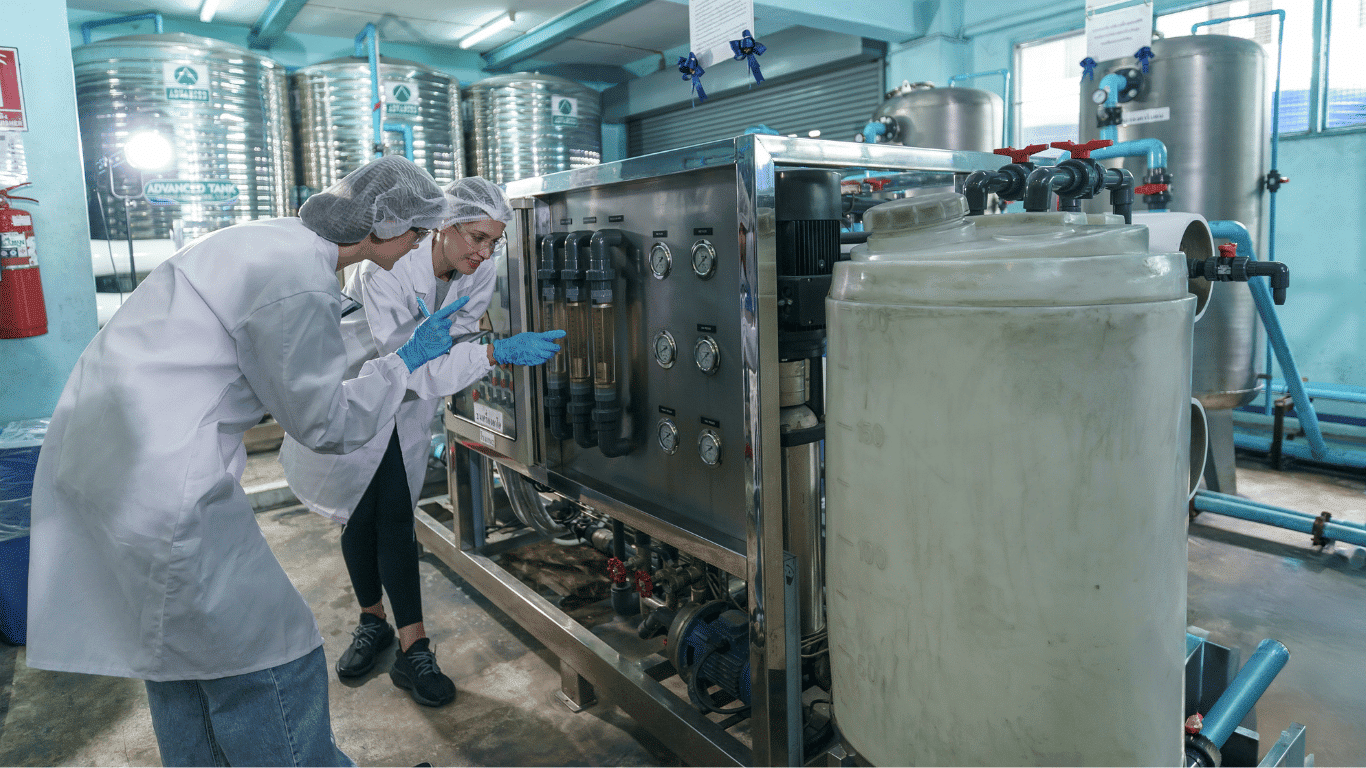
Water systems today face pressures that didn’t exist a decade ago. From stricter discharge limits to higher expectations for drinking and process water, facilities now need more reliable ways to manage impurities without overcomplicating operations. This is where the ultrafiltration system plays a practical role in modern water treatment, offering a dependable way to improve separation performance while maintaining stable system operation.
Across both industrial and municipal environments, water quality challenges continue to grow as sources become more variable. Operators often deal with fine particles, fluctuating contaminants, and inconsistent influent conditions that can disrupt downstream processes. A well-designed ultrafiltration system supports the broader water treatment strategy by acting as a consistent barrier within the filtration process, helping stabilize performance before water moves into more sensitive stages of treatment.
What an Ultrafiltration System Is
An uf system is a pressure-driven membrane filtration setup designed to separate particles based on size. In simple terms, it pushes feed water through a specialized barrier so only water and very small molecules pass through. This makes it a reliable step in modern filtration methods, especially when consistent water treatment performance is required across varying water conditions.
At the core of the process are ultrafiltration membranes, which function as a highly selective barrier with microscopic pore size control. These membranes act as a semipermeable membrane, allowing water to pass while retaining suspended solids, bacteria, and other unwanted particles. Because of this structure, the uf system delivers stable separation performance without relying heavily on chemical inputs, making it a practical choice for both industrial and municipal applications.
How Ultrafiltration Works
In a typical uf system, everything starts when feed water enters the unit under controlled pressure. As it moves forward, it passes through an uf membrane with carefully defined pore size, which determines what can and cannot pass. This is where the real separation begins, and the stability of the flow rate plays a big role in keeping performance consistent. When the flow is properly balanced, the system avoids sudden pressure drops and maintains steady filtration efficiency.
During the ultrafiltration process, the membrane acts as a physical barrier that retains suspended solids, fine particles, and microscopic contaminants that would otherwise affect downstream water quality. The pore size is small enough to block these impurities while still allowing clean water to pass through efficiently. As more feed water continues through the system, consistent flow rate ensures the membrane performs at its intended capacity without overloading, helping maintain reliable separation throughout operation.
UF Membrane Structure and Technology
Inside a modern uf system, the most important component is the uf membrane, and in many applications, it comes in the form of hollow fiber design. These fibers are extremely thin strands bundled together, creating a large filtration area in a compact space. Each uf membrane contains countless microscopic pores that allow water to pass while blocking unwanted particles. This structure makes hollow fiber technology highly efficient for continuous water treatment operations where stability and space efficiency matter.
The membrane surface is where separation actually happens, while the membrane wall provides structural support and controls how water moves through each fiber. These fibers are grouped into membrane modules, which make it easier to scale systems depending on capacity needs. Over time, however, the uf membrane can experience membrane fouling when suspended solids accumulate on the surface, which may reduce efficiency if not properly managed. That is why design, monitoring, and system configuration are critical in maintaining long-term performance.
For a closer look at how membrane-based systems are structured, you can explore our membrane filtration systems overview here.
Applications in Water and Wastewater Treatment
An ultrafiltration system plays a practical role in both municipal and industrial settings where consistent water treatment is essential. In drinking water production, it helps remove fine particles and microbial contaminants before water reaches distribution. In industrial water treatment, it supports stable process water quality, especially in facilities that deal with variable raw water conditions. As water passes through the system, it undergoes a controlled separation step that improves clarity and reduces load on downstream equipment.
In wastewater treatment, the system is commonly used as part of tertiary filtration, where it provides an additional barrier after biological and chemical processes. This stage helps polish effluent by removing remaining suspended particles and fine contaminants that other processes may miss. Many systems also integrate activated carbon as a complementary step to further reduce organic compounds and improve overall water quality. Together, these technologies strengthen the performance of a modern ultrafiltration system, ensuring more reliable and consistent treatment outcomes.
A common application can be seen in industrial wastewater treatment systems using membrane-based processes, where performance stability is critical.
UF vs Other Filtration Systems
An ultrafiltration system sits in the middle of the filtration spectrum, bridging the gap between conventional filtration methods and high-precision separation like reverse osmosis. While traditional media filters mainly capture larger particles, UF goes further by removing suspended solids and microscopic contaminants without significantly affecting mineral content. In contrast, a ro system uses RO membranes with much tighter separation, removing dissolved salts along with impurities, which results in higher filtration accuracy but also higher energy demand. This is why UF is often used as a pre-treatment step before reverse osmosis, helping protect downstream systems and improve overall efficiency across other filtration methods in a treatment train.
Operation Challenges, Fouling, and Cleaning
Even in a well-designed uf system, operators will eventually deal with membrane fouling, especially when feed water carries high levels of suspended solids or fluctuating contaminant loads. As these particles accumulate on the membrane surface, the system may experience a gradual flow rate decline, which directly affects overall performance. When this happens, routine membrane cleaning becomes necessary to restore efficiency and keep the system stable.
Most facilities rely on scheduled chemical cleaning to remove built-up deposits and recover lost permeability. This process helps control membrane fouling and extend membrane life when done correctly. However, it also adds to energy consumption, since cleaning cycles and recovery steps require additional system operation time. In practice, consistent monitoring and timely maintenance help ensure the uf system continues to perform reliably without unexpected downtime or efficiency loss.
ProChem Systems Integration and Support
An ultrafiltration system rarely operates alone. It works best when integrated into complete water treatment systems that are designed around stable performance and long-term reliability. Proper system design ensures the UF stage aligns with pre treatment processes, helping reduce load on the membranes and improving overall efficiency across the entire treatment train. When everything is balanced correctly, operators see more consistent output quality and fewer operational disruptions.
This kind of integration becomes especially important in demanding industrial processes, where fluctuations in raw water quality can quickly affect production stability. Continuous system monitoring, proper hydraulic design, and well-managed upstream treatment all contribute to smoother operation and longer equipment life. In many facilities, strong design support and ongoing service programs help maintain dependable performance while reducing unexpected downtime. For teams looking to strengthen system reliability and maintenance strategy, structured operational support can make a significant difference.
Next Steps
An ultrafiltration system continues to prove its value in modern water treatment because it delivers consistent separation performance, strengthens process stability, and improves overall water quality across a wide range of applications. When properly designed and maintained, it supports reliable operation while helping facilities manage variability in raw water conditions without unnecessary complexity. It also contributes to better efficiency by reducing strain on downstream processes, which can help control energy consumption over time.
In practice, the strongest results come when the system is matched correctly to the application, supported by proper pre-treatment, and monitored throughout operation. If you are evaluating options for upgrading or optimizing your ultrafiltration system, it helps to look at the full picture, from design to long-term performance goals.
Want guidance on system selection, integration, and optimization? Reach out to ProChem’s water treatment team for consultation and support in building a more efficient and reliable solution.
