
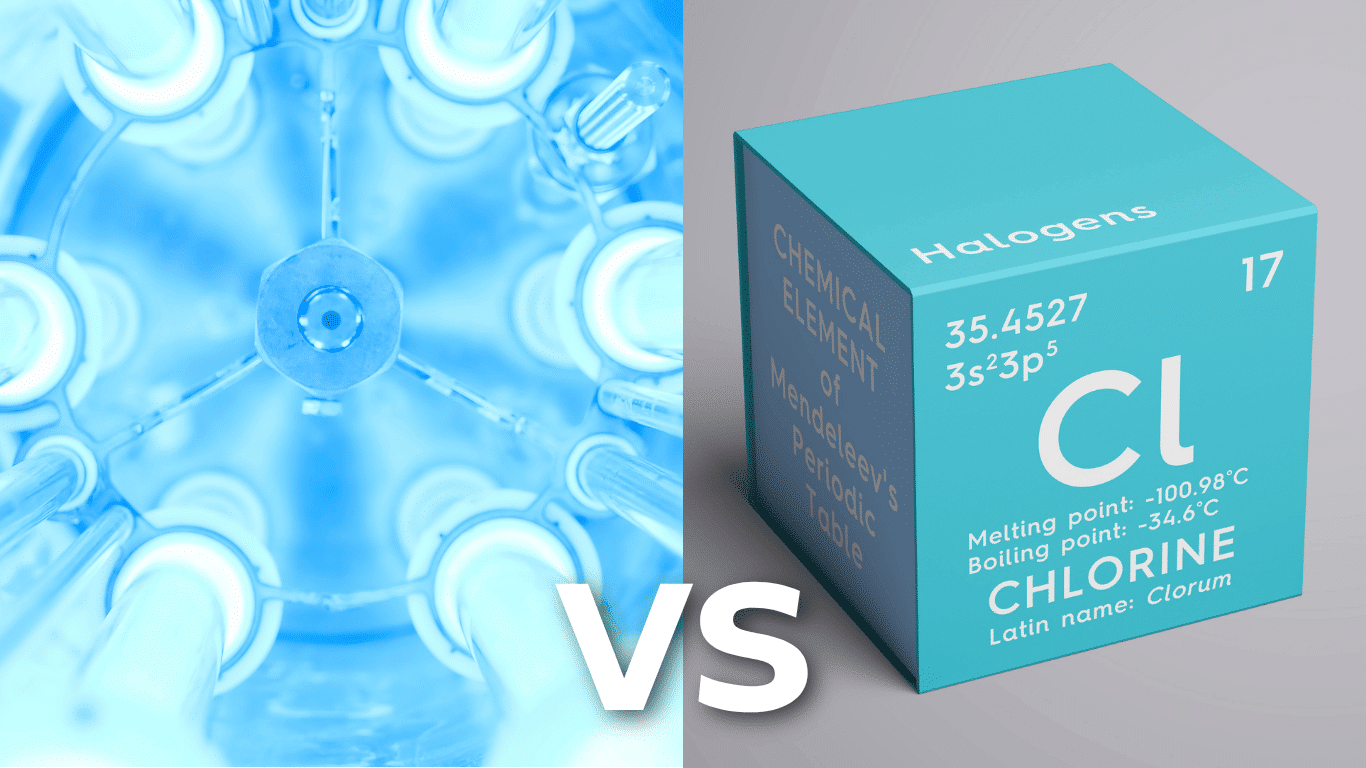
Facilities have several options when they need dependable water disinfection, but two of the most established approaches are ultraviolet treatment and chlorination. Choosing between them involves more than deciding how to control microorganisms. Operators also need to consider water quality, system conditions, maintenance requirements, operating costs, and how water moves through the facility. Understanding the differences between uv vs. chlorine for water treatment gives teams a better starting point for selecting a disinfection approach that fits their process, treatment goals, and long-term operating needs.
How UV Disinfection Works
UV disinfection uses ultraviolet light as a physical process to neutralize harmful microorganisms in water. A UV system typically directs water through a UV reactor or chamber containing one or more UV lamps. As water flows through the chamber, the lamp produces UV light at a germicidal wavelength, which disrupts the genetic material of microorganisms and prevents them from reproducing. The system relies on factors such as UV intensity, flow rate, and exposure to deliver the required treatment. Operators should also verify a validated UV dose rather than assuming that lamp output alone guarantees effective disinfection.
Water clarity plays an important role in UV performance. Suspended solids, turbidity, color, and other materials can interfere with ultraviolet light and reduce the amount that reaches microorganisms. For this reason, operators often evaluate UV transmittance and use appropriate pre-treatment when the incoming water contains particles or other conditions that can limit light penetration. With suitable water quality and system design, UV disinfection can provide rapid treatment of bacteria and viruses, including microorganisms that show greater resistance to some chemical disinfectants.
How Chlorine Disinfection Works
Chlorine disinfection takes a different approach by introducing a chemical disinfectant into the water. Facilities may use chlorine gas, liquid chlorine, or sodium hypochlorite, depending on the application, scale, and available handling infrastructure. Once introduced, chlorine reacts with microorganisms and other substances in the water. Operators control the process through factors such as chlorine concentration, contact time, pH, water temperature, and chlorine demand. Properly designed chlorination systems maintain enough disinfectant to achieve the required treatment without unnecessarily increasing chemical use.
One important characteristic of chlorine treatment is its ability to remain active after the initial treatment point. This residual disinfectant can provide ongoing protection as water moves through storage tanks and distribution systems, which makes chlorination particularly useful when treated water needs protection beyond the treatment chamber. Chlorine also provides established control for many common microorganisms and can help oxidize iron bacteria and other substances. However, organisms such as Cryptosporidium and Giardia can present greater challenges for conventional chlorine treatment, so operators need to evaluate the specific organisms and treatment objectives involved.
UV vs. Chlorine for Water Treatment: Key Differences
When comparing uv vs. chlorine for water treatment, start with the way each technology delivers disinfection. UV can work within seconds as water passes through the reactor, provided the system delivers the required dose. Chlorine generally needs sufficient contact time for the disinfectant to react with microorganisms. The exact requirement depends on chlorine concentration, temperature, pH, water quality, and the organisms being targeted. UV also avoids adding a chemical to the process, while chlorine introduces a disinfectant that remains in the water after treatment.
Pathogen control provides another important point of comparison. Properly designed UV disinfection systems can deliver very high inactivation of bacteria and viruses, including organisms that resist chlorine more readily. Chlorine, however, remains a widely established method for broad water disinfection and offers an advantage that UV does not: residual protection. UV does not leave a residual disinfectant once water exits the reactor, while chlorine remains available to provide continued protection as water flows through piping, storage, and distribution systems. For drinking water applications, that difference can significantly influence the overall treatment strategy.
Water quality also affects the choice. UV systems need adequate clarity and UV transmittance so the light can reach microorganisms effectively. Chlorine performance depends more heavily on water chemistry, including chlorine demand and the substances that consume the disinfectant. Facilities also need to consider whether they want a chemical-free disinfection step, need to preserve the chemical composition of the water, or require protection throughout a distribution network. Looking at these conditions together gives operators a much clearer picture of which disinfection method fits the application.
Byproducts, Taste, and Water Quality Considerations
One reason facilities consider UV treatment involves what remains in the water after disinfection. UV uses light rather than a chemical disinfectant, so the process does not leave chemical residues or a residual disinfectant. Proper UV treatment also does not add chlorine taste or significantly change the water’s chemical composition. This characteristic makes UV attractive for applications where maintaining specific water quality characteristics matters, including certain high-purity water processes and applications where chemical-free treatment offers an operational advantage.
Chlorine requires a closer look at water chemistry because chlorine reacts with organic matter and other substances present in the water. Under certain conditions, these reactions can form disinfection byproducts, including trihalomethanes. That does not mean chlorine automatically creates unsafe water, but it does mean operators need to monitor treatment conditions and manage disinfectant levels appropriately. Facilities should consider chemical contaminants, organic matter, and potential effects on human health when developing a complete water treatment strategy.
Cost, Maintenance, and Operating Requirements
Initial equipment cost can also influence the decision. UV systems generally require a higher upfront investment than basic chlorine systems, particularly when the facility needs larger reactors, controls, monitoring equipment, or supporting pre-treatment. However, UV systems can provide a cost-effective solution over time because they do not require continuous chemical purchases. Operators typically plan for annual lamp maintenance, cleaning, UV intensity checks, and periodic replacement of lamps or related components. The actual operating cost depends on system size, energy consumption, water quality, and maintenance practices. Some comparisons cite savings of approximately $20,000 over five years, but that figure should not serve as a universal expectation because every facility has different chemical, energy, labor, and maintenance costs.
Chlorination systems may have a lower initial equipment cost, but the long-term picture includes chemical purchases, monitoring, storage, handling, training, and safety requirements. Teams must maintain appropriate chemical levels and verify that the chlorine system continues to meet treatment targets. Those requirements can increase operating and maintenance costs over time. Before selecting a system, it helps to compare the complete lifecycle rather than focusing only on the purchase price. Facilities evaluating their options can also review ProChem’s broader water treatment systems to see how disinfection can fit within a larger treatment strategy.
Choosing the Right Disinfection Method
The best choice in the uv vs. chlorine discussion depends on what the facility needs the disinfection step to accomplish. UV makes sense when water has good clarity, the application calls for chemical-free disinfection, high-purity water matters, or chlorine-resistant pathogens require additional control. Chlorine often makes more sense when operators need a residual disinfectant, water enters storage tanks or distribution systems, or the facility already has the infrastructure and procedures needed for chemical treatment. Treated wastewater can also require a different approach depending on its quality and intended reuse or discharge.
In some applications, combining the two technologies provides a stronger overall strategy. A facility may use UV first for rapid pathogen inactivation and then add chlorine to provide residual protection downstream. This approach can work well when teams need both immediate treatment and ongoing disinfection. Still, UV performance depends on water quality, so pre-treatment may become necessary when turbidity, suspended solids, or other materials interfere with UV transmission. Rather than asking which technology is universally better, look at the complete treatment train and select the disinfection alternatives that support the system’s actual requirements.
Building a Reliable Disinfection Strategy
A reliable strategy starts with the water itself. Test the source water and identify the microorganisms, organic matter, chemical contaminants, and other characteristics that the treatment system needs to address. From there, review flow rates, water clarity, UV transmittance, contact requirements, storage conditions, and distribution needs. If UV is under consideration, make sure the system can maintain the required dose at the expected water flows. If chlorine is part of the strategy, establish appropriate monitoring and chemical-control procedures. It also helps to review the full range of available water treatment technologies rather than selecting a disinfection method in isolation. Equipment price matters, but long-term performance, maintenance, operating cost, and compatibility with the rest of the treatment process matter just as much.
Supporting Effective Water Disinfection
The practical steps are straightforward: test the source water, identify the contaminants and microorganisms that require control, review flow and water clarity, evaluate UV transmittance when appropriate, determine if residual protection is necessary, and compare capital, chemical, energy, monitoring, and maintenance requirements. From there, select the technology that fits the complete treatment train rather than relying on one performance factor. If UV fits your application, you can also review ProChem’s water UV disinfection system and contact our team to discuss how the right approach can support reliable water quality and system performance.
