
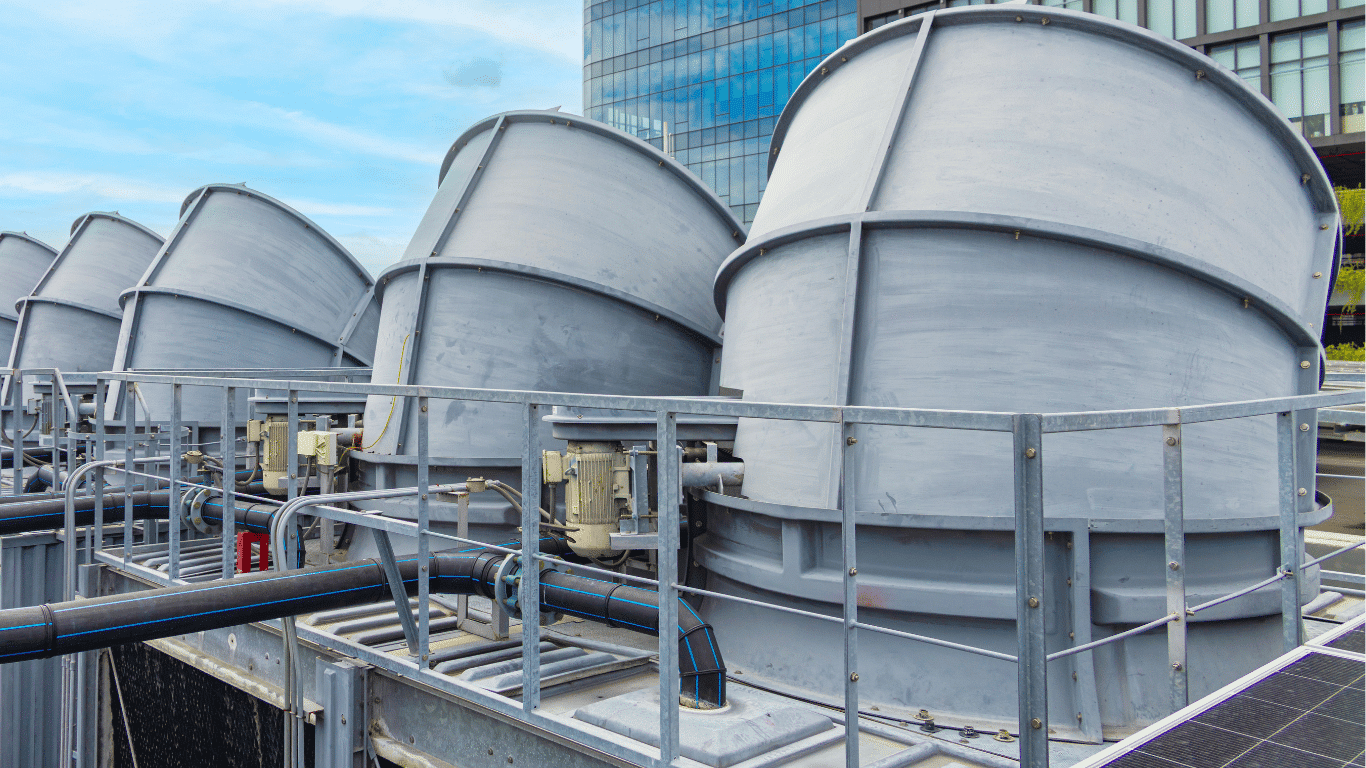
If you’ve ever asked yourself how does the cooling tower work, you’re really asking how industries manage massive amounts of heat energy every day. In simple terms, a cooling tower is a key part of a larger cooling system that removes excess heat generated from industrial processes, power generation, and mechanical equipment. You’ll find it in everything from manufacturing plants to power facilities where stable operating temperatures matter.
In the next sections, we’ll walk you through how this system actually works in practice, breaking it down in a way that’s easy to follow and directly tied to real industrial applications.
The Basic Principle Behind Cooling Towers
Cooling tower work is all about managing heat energy through controlled rejection to the environment. In most industrial systems, hot water picks up heat from equipment or processes, then needs to be cooled before it can be reused. This is where heat transfer plays a central role.
Inside the system, circulating water carries heat away from equipment and brings it to the cooling tower. Once there, the system promotes heat energy rejection into the atmosphere, mainly through evaporative cooling. A small portion of the cooling water evaporates, and in doing so, it removes a significant amount of heat from the remaining water. This process allows the water to be cooled efficiently and returned back into circulation for reuse.
Evaporative Cooling and Heat Removal
A major reason how does the cooling tower work so efficiently comes down to evaporative cooling. When warm water is distributed inside the tower, a small portion of it evaporates into the surrounding air. That phase change uses latent heat, which is pulled directly from the remaining water, effectively lowering its temperature.
This process depends heavily on ambient air conditions, especially the wet bulb temperature, which determines how much cooling potential the air can actually provide. As air moves through the system, it absorbs moisture and heat, allowing more heat to be released from the water.
In simple terms, when water evaporates, it carries heat away with it. This is the key mechanism behind how cooling towers manage heat removal in large industrial systems.
Types of Cooling Towers Used in Industry
In practice, cooling tower systems are not all built the same. The design depends on the heat load, space, and efficiency requirements of the facility. One common configuration is crossflow cooling towers, where air moves horizontally across falling water. Another is the counterflow cooling tower system, where air flows upward against the downward water stream for more direct heat exchange.
Large facilities like thermal power plants often rely on natural draft cooling towers, which use height and natural air movement instead of mechanical fans. In contrast, induced draft cooling tower designs use fans to actively pull air through the system, improving control over airflow.
Across industrial facilities, these different draft cooling tower configurations ensure the system matches performance needs while maintaining stable heat rejection.
Main Components of a Cooling Tower
To really understand cooling tower work, it helps to look at the main components that make the system function as a whole. At the base, the cooling tower basin, also called the tower basin or cold water basin, collects the cooled water before it is sent back into circulation. Above this, the cooling tower fan drives air flow through the system, ensuring continuous heat exchange.
Inside the tower, water is distributed into fine water droplets, increasing surface area for better heat transfer. Drift eliminators help capture and reduce water loss by preventing droplets from escaping with the exhaust air.
In many modern installations, a plastic cooling tower structure is used for improved corrosion resistance and durability. Each of these parts works together to keep cooling tower systems efficient and stable.
Step-by-Step Cooling Process
To understand how does the cooling tower work in real operation, it helps to follow the actual cooling process step by step. It starts when warm condenser water, also known as circulating water, leaves the heat exchanger after absorbing heat from equipment. This hot water carries excess heat from industrial processes and power systems.
The water is then distributed inside the cooling tower, where it breaks into small droplets. At the same time, air flows vertically upward through the structure, creating strong contact between air and water. As this happens, a portion of the water evaporates, removing heat energy from the remaining fluid.
Once cooled, the water collects in the cooling tower basin and is returned as cold water back into the system. This continuous cooling cycle allows the heat transfer fluid to be reused efficiently, maintaining stable operating temperatures in the process.
Where Cooling Towers Are Used
You’ll find cooling towers wherever large amounts of waste heat need to be managed efficiently. In thermal power plants and other power plants, they play a critical role in handling the heat load generated during power generation. The same applies to steel mills, petrochemical plants, and food processing plants, where continuous industrial processes produce excess heat that must be removed to maintain stable operation.
In these environments, large cooling towers become essential infrastructure for maintaining safe and efficient equipment performance. When you step back and think about how does the cooling tower work, it becomes clear that its role is not just cooling water, but supporting entire industrial systems that rely on controlled heat rejection.
To better understand system components and maintenance considerations, you can also explore cooling tower design and upkeep practices through our guide on cooling tower components.
Efficiency Factors and Performance
The performance of a cooling tower system depends heavily on environmental and operating conditions. One of the most important factors is the wet bulb temperature, which directly limits how much cooling the system can achieve. When ambient air is dry, the tower performs more efficiently, but in humid air conditions, cooling capacity naturally drops.
Air flow also plays a major role in heat transfer efficiency. Proper movement of air through the tower improves evaporation and helps maintain stable tower temperatures. When airflow is restricted or uneven, energy consumption increases and overall efficiency drops.
In well-optimized systems, strong heat transfer efficiency allows operators to save energy and reduce operating costs. However, cooling tower systems always show some performance variability depending on seasonal changes, load demand, and ambient air conditions, so consistent monitoring is key to stable operation.
Maintenance and Water Treatment Importance
Even when cooling tower work is efficient by design, performance will still depend on how well the system is maintained. Over time, circulating water can introduce impurities that lead to scaling, fouling, and reduced heat transfer efficiency. This is where proper water treatment chemicals become essential. They help control microbial growth and prevent deposits that can restrict water flow and heat exchange.
Regular inspection of drift eliminators is also important, since damaged or blocked sections can increase water loss and reduce system stability. Operators should also manage make up water quality carefully to maintain balance in the cooling tower basin and support consistent operation.
Routine cooling tower cleaning helps prevent fouling buildup and protects long-term efficiency. For a deeper look at system solutions, you can explore our treatment systems overview.
How ProChem Supports Cooling Tower Performance
When we look at cooling tower systems in real industrial settings, the difference between stable performance and recurring issues often comes down to water quality control and system optimization. At ProChem, we focus on supporting process cooling reliability so facilities can maintain consistent operation without unnecessary downtime.
We help industries improve heat rejection efficiency, reduce scaling risks, and stabilize overall system performance. This directly impacts energy efficiency and helps control operating costs over time, especially in high-load environments where cooling demand is constant.
In practice, stronger chemical control and proper monitoring of circulating water conditions can significantly extend equipment life and improve cooling consistency. For facilities looking to strengthen their water treatment approach, you can explore our chemical programs and custom solutions, designed to support demanding industrial cooling environments.
Why Cooling Tower Understanding Matters
At its simplest, how does the cooling tower work comes down to one idea: it removes unwanted heat energy from water so it can be reused safely and efficiently. In industrial systems and power plants, this process keeps equipment stable, prevents overheating, and supports continuous operation.
When a cooling tower runs well, it improves efficiency, reliability, and overall system performance across demanding applications. That’s why understanding its role in heat removal is so important for long-term operation.
Reviewing your system performance or planning upgrades? Our team can help you assess your cooling strategy and optimize it for better efficiency and reliability.
