
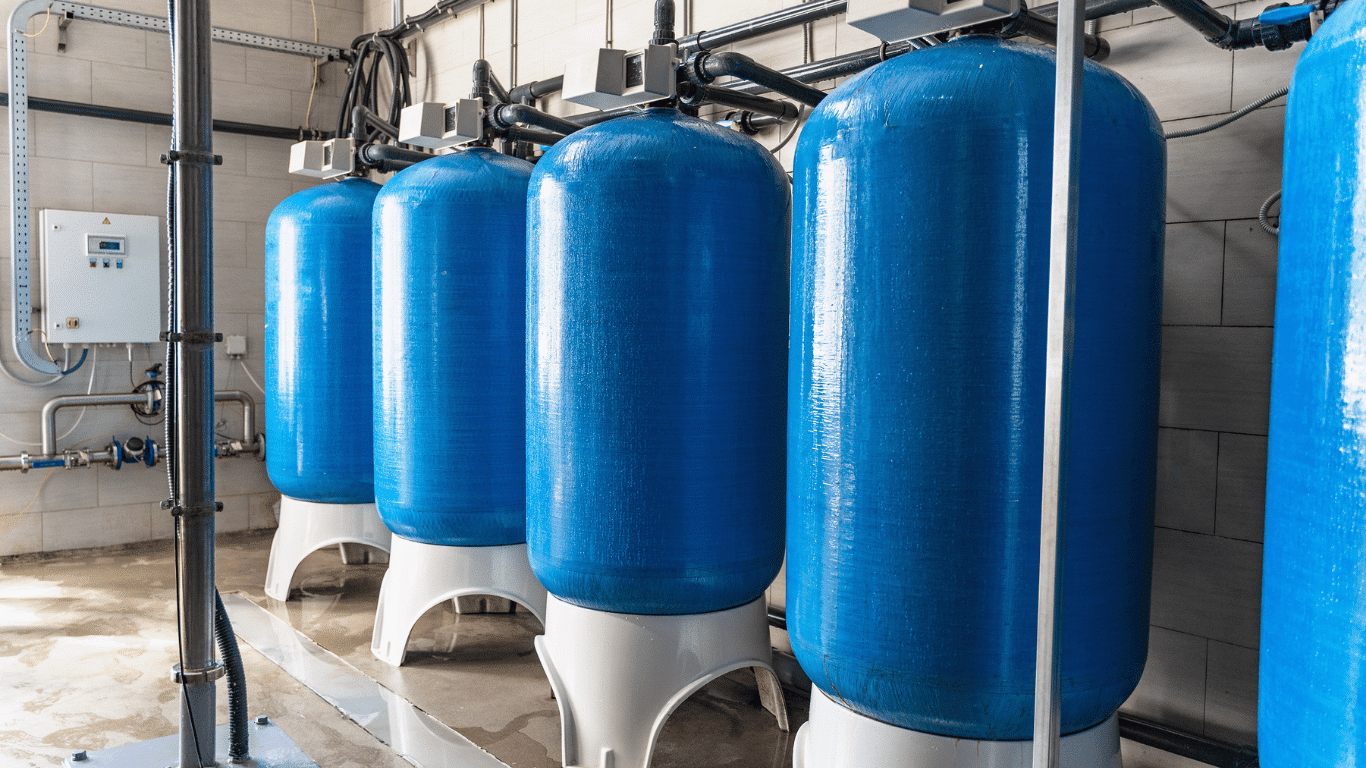
An industrial water softener system plays a critical role in maintaining stable water quality across demanding industrial water and commercial water systems. In many facilities, hard water carries high levels of calcium and magnesium, which gradually build up and form scale inside pipes, boilers, and other critical systems. Over time, this scaling reduces flow efficiency, increases maintenance needs, and affects overall operational performance. In industrial applications, consistent water treatment is not just a supporting process but a core requirement for reliable operations. That is why managing hardness early helps protect equipment and ensures more stable system performance.
What is an Industrial Water Softener System?
An industrial water softener system is a key component of modern water systems designed to reduce hardness in large-scale industrial water and commercial water softener systems. It works as part of a broader water treatment systems approach, focusing specifically on removing hardness minerals before they can impact equipment performance. In most setups, the system uses ion exchange, a controlled process where hard minerals like calcium and magnesium are replaced with sodium ions. This exchange takes place inside specially designed resin tanks, which are filled with resin beads that act as the active medium for water softening.
As hard water flows through the resin bed, the system gradually converts it into soft water, preventing scale buildup and improving overall system stability. Once the resin becomes saturated with hardness ions, it undergoes a regeneration cycle to restore its effectiveness. This continuous process ensures consistent performance across demanding operations. In both commercial water softener systems and industrial water softener setups, this technology helps maintain reliable flow conditions and protects downstream equipment from long-term damage caused by untreated hard water.
How it fits in industrial operations
In real-world use, industrial water softening supports a wide range of industrial water applications where consistency is critical. Facilities rely on it to stabilize incoming water quality before it enters boilers, cooling systems, and production equipment. Without proper water softening, even minor hardness levels can accumulate over time and disrupt water systems performance.
How the System Works
At the core of an industrial water softener system is the ion exchange process, which is what actually removes hardness from industrial water. As water flows through the system, it passes over a bed of resin inside systems designed for continuous treatment. The resin beads are charged with sodium ions, and they attract hardness minerals like calcium and magnesium, exchanging them in a controlled reaction. This is what transforms hard water into stable, usable soft water for downstream equipment. Over time, the resin becomes saturated, which means it can no longer continue the exchange effectively without recovery.
To restore performance, the system uses salt and brine during a process called regeneration. A concentrated salt solution is flushed through the resin bed, removing the captured hardness minerals and resetting the resin for another cycle. In many setups, a twin tank configuration is used so one tank remains online while the other regenerates, ensuring uninterrupted water supply. This design helps maintain consistent flow rate, stable efficiency, and reliable performance across demanding industrial water systems.
You can see how this process integrates into a full treatment setup here. When properly balanced, regeneration timing, flow rate control, and system design all work together to protect equipment and maintain long-term operational stability.
Why Industries Need Water Softening
Hard water creates one of the most persistent challenges in industrial water systems, especially in boilers, cooling towers, and other critical industrial applications. When water contains high levels of calcium and magnesium, it reacts under heat and pressure to form scale on internal surfaces. This buildup restricts heat transfer in boilers and reduces overall efficiency, forcing equipment to work harder to achieve the same output. In cooling systems, scale and mineral deposits disrupt water flow and reduce heat rejection performance, which directly impacts system stability and reliability.
Over time, these issues increase energy consumption, raise operating costs, and place unnecessary stress on mechanical components. Facilities often experience reduced equipment lifespan and more frequent maintenance interruptions, especially when water quality is not properly controlled. In large-scale industrial water systems, even minor inefficiencies can quickly escalate into significant operational downtime. That is why consistent water treatment is essential to maintain stable performance and protect long-term productivity.
In cooling environments specifically, proper water management is critical. You can see how water quality directly affects system performance here. When hardness is left untreated, scaling continues to accumulate across boilers and cooling towers, gradually reducing heat exchange efficiency and limiting the overall performance of industrial water systems. This makes water softening a foundational step in maintaining reliable operations.
Key Components of the System
A typical industrial water softener system relies on several core components working together to maintain stable performance in systems handling high-volume industrial water. The resin tanks hold the ion exchange media where hardness removal takes place, while the twin tank design ensures continuous operation by allowing one tank to regenerate while the other stays online. The brine tank stores the salt solution needed for regeneration, keeping the resin effective over repeated cycles.
Proper face piping and system configuration help maintain balanced water distribution and prevent pressure loss across the system. At the same time, accurate flow rate control is essential to ensure consistent softening performance without overloading the equipment, ultimately protecting durability and extending operational life in demanding industrial environments.
Industrial Applications
An industrial water softener system supports a wide range of industrial applications where consistent water quality is essential for daily operations. In manufacturing, it protects machinery and production lines from scale buildup caused by hard industrial water. Car washes rely on softened water to prevent spotting and improve cleaning results, while food processing facilities use it to maintain hygiene standards and protect water using equipment from mineral damage.
In institutional applications such as hospitals and large facilities, stable water conditions help maintain reliable systems performance across multiple utilities. Across all commercial and industrial environments, water softening integrates into larger commercial water and industrial setups, ensuring equipment runs efficiently, downtime is minimized, and operational consistency is maintained even under heavy demand.
Key Benefits
The industrial water softener system delivers clear operational benefits that directly improve day-to-day performance across industrial water operations. One of the biggest advantages is improved water quality, which reduces scale formation on internal surfaces and helps maintain consistent system conditions. With less scaling, equipment runs more efficiently, lasts longer, and requires fewer repairs, extending overall service life.
Facilities also see better efficiency in heat transfer systems and fluid handling processes, especially when producing reliable soft water for critical operations. Over time, these improvements support more cost effective operations by lowering maintenance needs and reducing downtime. In demanding environments, this balance of performance and reliability makes the system a practical long-term solution.
Integration with Other Water Systems
An industrial water softener system often works as an essential part of larger water systems, especially when paired with reverse osmosis units and advanced treatment systems. In many facilities, it serves as a pre-treatment step before finer filters and membrane-based technologies, helping reduce hardness and protect downstream equipment from scaling and fouling. This integration improves overall system stability and ensures more consistent industrial water and commercial water quality across operations. By removing calcium and magnesium early, the softener reduces strain on reverse osmosis membranes, which enhances efficiency and extends service intervals.
You can learn more about how RO systems fit into treatment design here. When properly integrated, these systems work together as a unified solution, supporting reliable performance across demanding commercial environments.
ProChem Systems Approach & Support
In real-world operations, no two facilities handle industrial water the same way, which is why a custom designed industrial water softener system often delivers the most reliable results. At ProChem, we focus on building systems that match actual site conditions, from flow demands to existing water treatment infrastructure. Instead of a one-size-fits-all setup, we develop customized solutions that align with process needs, helping improve performance while protecting critical equipment.
Our approach also includes ongoing service support, system optimization, and performance tuning to keep operations stable over time. When needed, adjustments to regeneration cycles, flow rate balance, and configuration ensure the system continues operating at peak efficiency. Learn more about our approach and solutions here.
Next Steps
A properly designed industrial water softener system is not just an upgrade, it is a foundational part of maintaining stable industrial water performance across any facility. When water softener systems operate correctly, they directly improve efficiency, protect critical equipment, and keep systems running with fewer interruptions caused by scale and hardness issues. Strong water treatment practices also help extend equipment life and reduce long-term operational strain, especially in high-demand environments. Over time, this creates a more reliable and predictable operating condition across both industrial water and commercial water systems.
If your facility is still dealing with scaling, fluctuating performance, or rising maintenance demands, it is worth taking a closer look at your current setup. Our team can help assess your water conditions and recommend a solution that fits your operational needs and long-term goals. Talk to ProChem today to explore a better approach to water softening and system performance improvement.
