
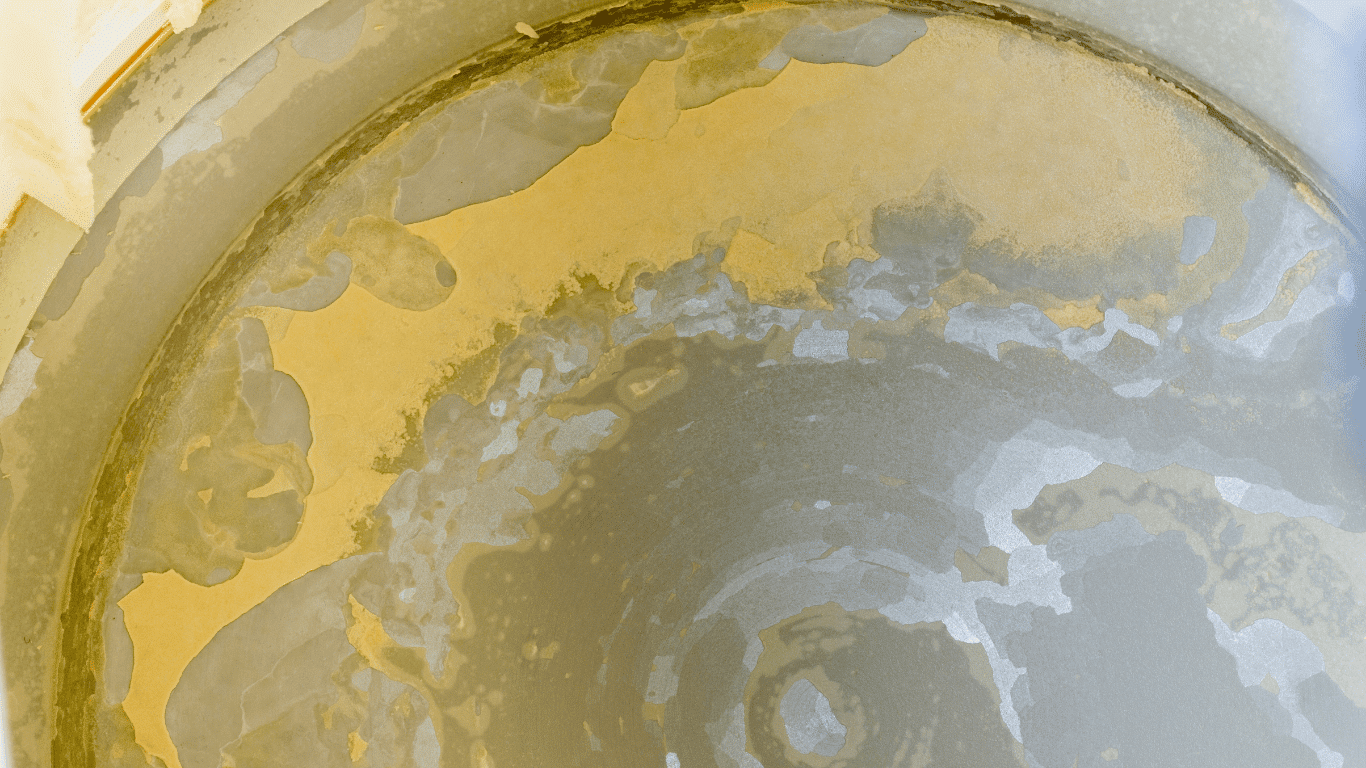
If you have ever noticed white buildup around faucets, cloudy residue on appliances, or reduced performance in a heating system, you have already seen the effects of scale. Many people ask, what is scale in water, especially when hard water starts creating visible limescale inside pipes and equipment. These deposits form from naturally occurring minerals in the water, and over time they can affect system performance, cleaning efficiency, and overall water treatment results. Commercial facilities and industrial operations all experience challenges related to water hardness, especially when mineral levels remain unmanaged.
What Causes Scale in Water?
To really understand what is scale in water in industrial systems, it starts with water hardness and the behavior of dissolved minerals. Hard water contains significant levels of calcium and magnesium, which naturally come from geological sources as water moves through soil and rock. These minerals stay dissolved until conditions change inside equipment or process systems.
When water is heated in boilers, heat exchangers, or other water using equipment, the balance shifts. Dissolved calcium and carbonate ions combine and lose solubility, leading to the formation of calcium carbonate. At this point, the minerals no longer stay in liquid form and begin to precipitate out.
This scale formation process creates mineral deposits that attach to internal surfaces. Over time, these deposits form a hardened layer commonly known as limescale. In industrial environments, this buildup becomes more aggressive when hard water is repeatedly heated, causing scale deposits to form faster and spread across system components.
How Scale Builds Up in Systems and Equipment
Scale build up does not happen all at once. It develops gradually as mineral deposits accumulate on internal surfaces where water flows through pipes, valves, and process equipment. In industrial water systems, this limescale build up becomes more noticeable in areas with continuous heating or high water hardness, especially where flow conditions change or turbulence slows down circulation.
As scale deposits increase, they restrict flow and reduce the efficiency of many water using appliances and production equipment. Operators often see reduced heat transfer in water heaters, uneven performance in plumbing networks, and energy losses across the system. Even surfaces inside heat exchangers or connected appliances can develop buildup that affects overall output stability.
You can also explore how hard water contributes to these conditions in our guide on what is hard water.
Signs That Scale Is Becoming a Problem
In industrial water systems, early detection of scale matters because scale rarely develops in isolation. One of the first signs operators notice is a chalky deposit forming on equipment surfaces, valves, or internal piping. These scale and limescale residues often indicate that mineral concentration in the water supplies is becoming unstable.
Another common signal is reduced equipment efficiency. As scale and sediment accumulate, heat transfer drops and water using appliances begin to work harder than expected. This affects overall process stability and increases energy demand across systems that rely on consistent water flow.
Operators may also notice soap curd or residue in cleaning or pre-treatment stages, especially when water becomes more concentrated with calcium and magnesium. When these symptoms appear together, they usually point to developing scale issues that should be addressed before they affect critical equipment performance.
Why Scale Creates Long-Term Operational Problems
In industrial water systems, scale becomes a long-term issue once minerals repeatedly settle during process conditions where you heat water or work with already heated streams. As deposits accumulate inside pipes, heat exchangers, and water using equipment, overall efficiency drops quickly. Energy demand increases because systems must work harder to maintain stable output. In commercial operations and industrial process environments, even small changes in water hardness and mineral concentration can steadily affect performance across the system.
Over time, these deposits interfere with treatment consistency and increase reliance on chemicals to control further buildup. This creates added operational cost and places stress on the entire system as scale development continues. Operators often link these challenges to reduced heat transfer performance, which you can explore further in our guide on fundamentals of heat transfer.
How Water Treatment Helps Prevent Scale
Effective water treatment plays a critical role in controlling scale inside industrial systems. When facilities produce soft water through ion exchange, calcium and magnesium are removed before they can form deposits. This directly reduces water hardness and helps prevent limescale from developing on internal surfaces. In many systems, filtration and chemical treatment work together to control impurities that exist in the liquid stream at significant levels.
When properly designed, water treatment process strategies help dissolve or neutralize minerals before they can settle. This makes it easier to remove limescale buildup and protect critical equipment such as boilers, cooling systems, and water using equipment. Even in drinking water applications within facilities, controlling other minerals helps maintain consistency and system stability.
For continuous protection, operators often integrate solutions like an industrial water softener system to maintain stable water quality and reduce long-term scaling inside the system.
Building a Smarter Scale Prevention Strategy
A strong approach to scale control always starts with understanding how water supplies behave across the entire system. Operators should consistently monitor treatment performance, especially where variations in hardness and mineral content can influence scaling trends. When the process is stable, equipment efficiency stays predictable, and scale deposits are less likely to form in critical areas.
Regular inspection of water using appliances and connected infrastructure helps catch early buildup before it spreads. In commercial operations, even small changes in flow or treatment balance can trigger scaling issues that grow over time if not corrected.
A smarter strategy combines monitoring, preventive maintenance, and consistent process control across the system. Looking to strengthen your approach? ProChem provides tailored water treatment support designed to help teams manage scaling risks, improve efficiency, and maintain long-term equipment reliability.
