
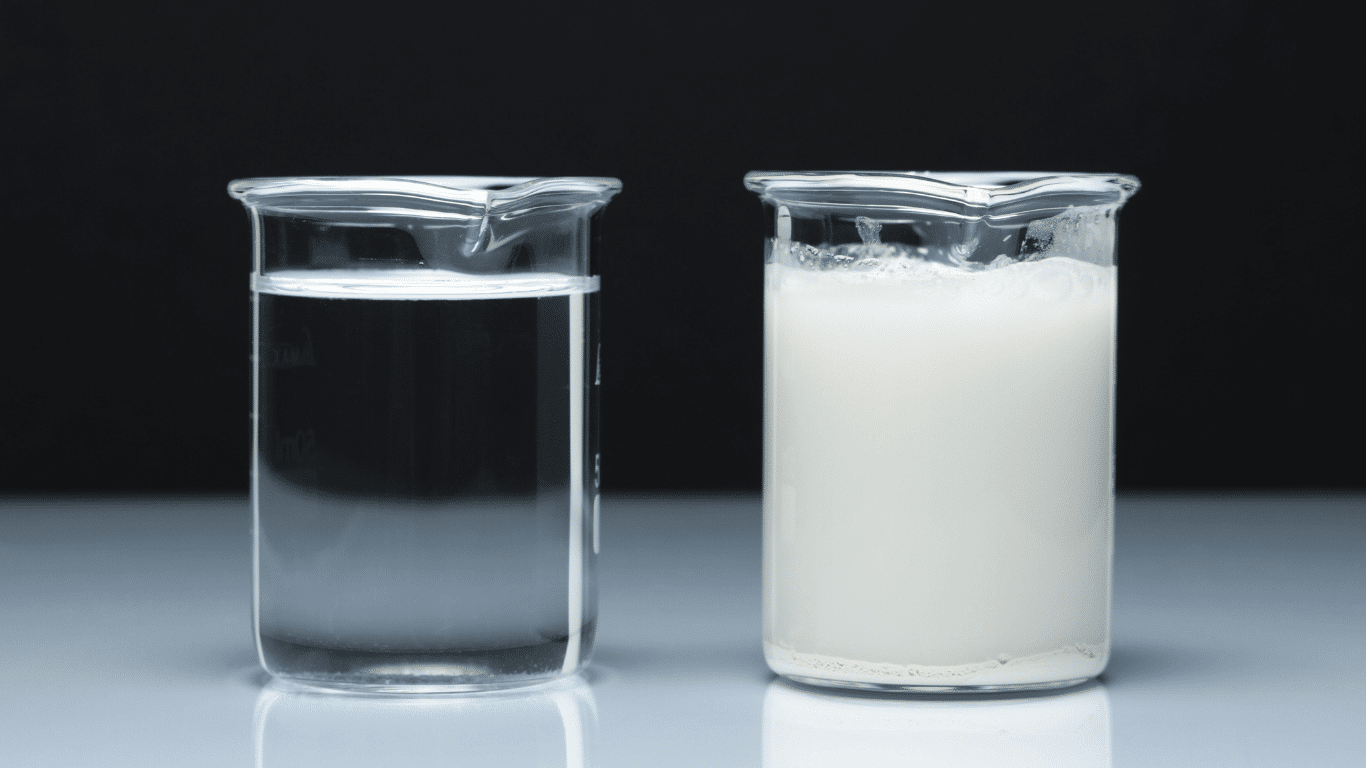
Glycol mixtures play an important role in industrial cooling, HVAC systems, and other applications that require reliable temperature control. They help prevent freezing, protect equipment, and maintain consistent heat transfer under changing operating conditions. However, getting the right balance between glycol and water matters just as much as choosing the right fluid. Too little glycol can leave equipment vulnerable to freezing, while excessive concentrations can reduce heat transfer efficiency and increase operating costs. Understanding how these mixtures work helps facility teams make better decisions about fluid selection, system performance, and long-term maintenance.
Understanding Glycol Mixtures and How They Work
A glycol mixture is a solution of glycol and water designed to provide freeze protection and support heat transfer. Pure water transfers heat effectively, but it freezes at 32°F (0°C), which creates problems for equipment operating in low-temperature environments. Adding glycol lowers the freezing point, allowing the fluid to circulate at temperatures that would otherwise cause water to freeze and expand inside pipes, pumps, and heat exchangers.
The two most common glycol types are ethylene glycol and propylene glycol. Both mix readily with water and provide useful antifreeze properties. Ethylene glycol water solutions are completely miscible across their concentration range, meaning the two liquids form a uniform solution rather than separating into layers. However, the final mixture’s physical properties depend on its glycol concentration, operating temperature, and water quality. These factors influence density, specific gravity, viscosity, and overall heat transfer performance.
In a typical cooling application, the fluid circulates through a closed loop system, absorbs heat from equipment or a process, and carries that energy toward a heat exchanger or chiller. It then releases the collected heat before returning to the system. This continuous circulation helps maintain stable temperatures while reducing the risk of freezing. For a closer look at system configurations, explore our guide to glycol cooling systems.
Types of Glycol and Their Industrial Applications
Choosing between ethylene glycol and propylene glycol requires more than comparing their prices. Each fluid has different physical properties, safety considerations, and performance characteristics. The right choice depends on the application, operating temperature, equipment materials, and potential for human contact.
Ethylene glycol is widely used in automotive antifreeze and industrial cooling applications. It offers favorable heat transfer properties, relatively low viscosity, and good freeze protection when mixed at the correct concentration. However, ethylene glycol is toxic if ingested, so facilities must manage its storage, handling, and disposal carefully. Operators should generally reserve it for properly contained systems where accidental exposure is unlikely. Mono ethylene glycol (MEG) is another common name used in industrial applications.
Propylene glycol offers a lower-toxicity alternative for applications where accidental human exposure presents a concern. Facilities often choose it for food processing, pharmaceutical manufacturing, and certain HVAC applications. Food-grade propylene glycol also serves as a food additive in approved applications. However, it generally has higher dynamic viscosity than ethylene glycol, which can affect pumping requirements and heat transfer efficiency. If you’re comparing their characteristics, our guide on ethylene glycol vs. propylene glycol provides a closer look at their differences.
Other glycol types also serve specialized industrial purposes. Diethylene glycol and triethylene glycol have high boiling points and hygroscopic properties, making them useful in particular chemical processes. For example, triethylene glycol helps remove water vapor from natural gas during dehydration. However, these glycols do not serve as direct substitutes for standard HVAC heat transfer fluids.
Choosing the Right Glycol-to-Water Ratio
The mixing ratio determines how much freeze protection a system receives and how efficiently its fluid transfers heat. Most industrial applications use glycol concentrations ranging from approximately 30% to 50%, although the correct amount depends on the lowest expected operating temperature and the manufacturer’s recommendations.
A 40% glycol mixture commonly provides a practical balance between freeze protection and thermal performance. However, operators should never assume that one concentration works for every application. A system exposed to more severe temperatures may require a different ratio, while equipment operating in milder conditions may perform better with a lower concentration.
When preparing a mixture, consider these important factors:
- Minimum operating temperature: Determine the lowest temperature the fluid may encounter, including during shutdowns.
- Required freeze protection: Select a concentration that keeps the freezing point below the expected minimum temperature.
- Equipment specifications: Check pump capacity, heat exchanger requirements, and material compatibility.
- Water quality: Use appropriate deionized or otherwise manufacturer-approved water to avoid introducing minerals and contaminants.
- Manufacturer guidelines: Follow the recommended mixing ratio and concentration limits for the selected glycol product.
Remember that freeze protection and burst protection are not the same. A fluid may begin forming ice crystals before it becomes solid enough to cause pipes to rupture. Therefore, select the concentration based on the protection your equipment actually needs, rather than relying on a general antifreeze percentage.
How Glycol Concentration Affects Heat Transfer Performance
Adding glycol changes how efficiently a fluid absorbs and releases heat. Although higher concentrations provide greater freeze protection up to a certain point, they also change the fluid’s thermal conductivity, specific heat capacity, and viscosity. These changes directly affect cooling system performance.
One important consideration is viscosity. As glycol concentration increases, the fluid generally becomes thicker, especially at lower temperatures. Higher viscosity creates additional resistance as the fluid moves through pipes, pumps, and heat exchangers. Consequently, the system may require more pumping energy to maintain the desired flow rates and system pressure.
Specific heat capacity also decreases as glycol concentration increases. This means the fluid generally carries less heat per unit of mass for each degree of temperature change compared with pure water. Thermal conductivity also tends to decline as glycol concentration rises. Together, these changes can reduce heat transfer efficiency and affect overall cooling capacity.
Operators should also consider the boiling point. Glycol mixtures generally raise water’s boiling point, which can provide additional operating flexibility in certain applications. However, the actual boiling temperature depends on the glycol type, concentration, and system pressure. A properly designed mixture balances its freezing point, boiling point, and heat transfer requirements rather than maximizing glycol content.
For example, a 50% ethylene glycol solution has a specific heat of approximately 0.815 Btu/lb·°F under certain reference conditions. Actual values change with temperature and concentration basis. Density and specific gravity also vary, so engineers should use manufacturer property tables when calculating pump requirements, flow rates, and heat exchanger sizing. You can learn more about these considerations in our guide to glycol heat exchangers.
Additives and Corrosion Protection in Glycol Mixtures
Glycol and water alone do not provide complete protection against corrosion. As the fluid circulates through a system, it comes into contact with different metals, including steel, copper, brass, and aluminum. Changes in water chemistry, oxygen exposure, and fluid degradation can contribute to corrosion over time.
This is why industrial glycol products often contain corrosion inhibitors and other additives. These chemicals help protect metal surfaces, maintain appropriate pH levels, and stabilize fluid performance. Some formulations also include pH buffers, antifoam agents, and leak detection dyes to support easier operation and maintenance.
However, operators should remember that inhibitors lose effectiveness as the fluid ages. Glycol can also degrade under excessive heat or unfavorable chemical conditions. Therefore, simply maintaining the correct glycol concentration does not guarantee adequate corrosion protection. Teams should monitor both glycol strength and inhibitor condition to keep the system operating reliably.
Where Glycol Mixtures Are Commonly Used
Glycol serves several purposes across industrial and commercial operations. In HVAC systems, it circulates through chillers and cooling loops to prevent freezing when equipment operates in colder environments. It also supports temperature control in industrial refrigeration, process cooling, and other applications that require consistent heat transfer.
Food processing facilities use propylene glycol solutions in approved secondary cooling applications to maintain controlled temperatures around production equipment. Automotive antifreeze also relies on glycol to protect engines from freezing and overheating. Meanwhile, solar thermal systems use glycol-based heat transfer fluid to collect and transport heat, particularly when outdoor temperatures could freeze untreated water.
Glycol also appears in specialized applications beyond conventional cooling. Triethylene glycol, for instance, helps dehydrate natural gas by absorbing moisture. These different uses highlight why operators must select the correct glycol product for each application. A formulation designed for automotive cooling may contain additives that do not suit industrial heat transfer equipment or food-related processes.
One important distinction concerns microbial control. Glycol does not automatically prevent microbial growth in HVAC systems. In fact, certain microorganisms can use diluted glycol as a nutrient source. Proper water chemistry, concentration management, and routine system maintenance remain essential for controlling biological activity.
Maintaining Glycol Mixtures for Reliable Operation
Even a properly formulated mixture requires regular monitoring. Over time, fluid contamination, dilution, oxidation, and chemical degradation can affect its performance. Operators should establish a testing schedule instead of waiting for freezing problems, corrosion, or declining cooling capacity to appear.
During routine inspections, pay attention to the following:
- Glycol concentration: Use a suitable refractometer to verify the concentration and compare it with the required freeze protection.
- pH levels: Monitor acidity and alkalinity to identify conditions that may contribute to corrosion.
- Inhibitor levels: Check whether corrosion inhibitors remain within the manufacturer’s recommended range.
- Fluid appearance: Look for discoloration, sediment, unusual odors, or signs of contamination.
- System performance: Watch for changes in pump operation, pressure drop, flow rates, and heat exchanger performance.
Also, avoid topping up the system with untreated water without checking how it affects the overall concentration. Unplanned dilution can reduce freeze protection and inhibitor levels at the same time. When replacing or replenishing fluid, use compatible glycol products and follow the manufacturer’s water quality specifications.
Building a Reliable Glycol Management Strategy
A dependable glycol program starts with the right fluid, the correct mixing ratio, and a clear understanding of operating conditions. Facility teams should identify the required freeze protection, select an appropriate glycol type, calculate the correct water-to-glycol ratio, and verify that pumps and heat exchangers can handle the resulting fluid properties. From there, establish routine testing for concentration, pH, and corrosion inhibitors. These steps help maintain stable operation while protecting equipment from freezing, corrosion, and unnecessary energy consumption.
If your facility needs help evaluating its cooling water chemistry or maintaining a reliable closed-loop system, talk to us. Our team can help you assess your water treatment requirements, identify potential performance concerns, and develop a treatment approach that supports equipment protection and dependable operation.
