
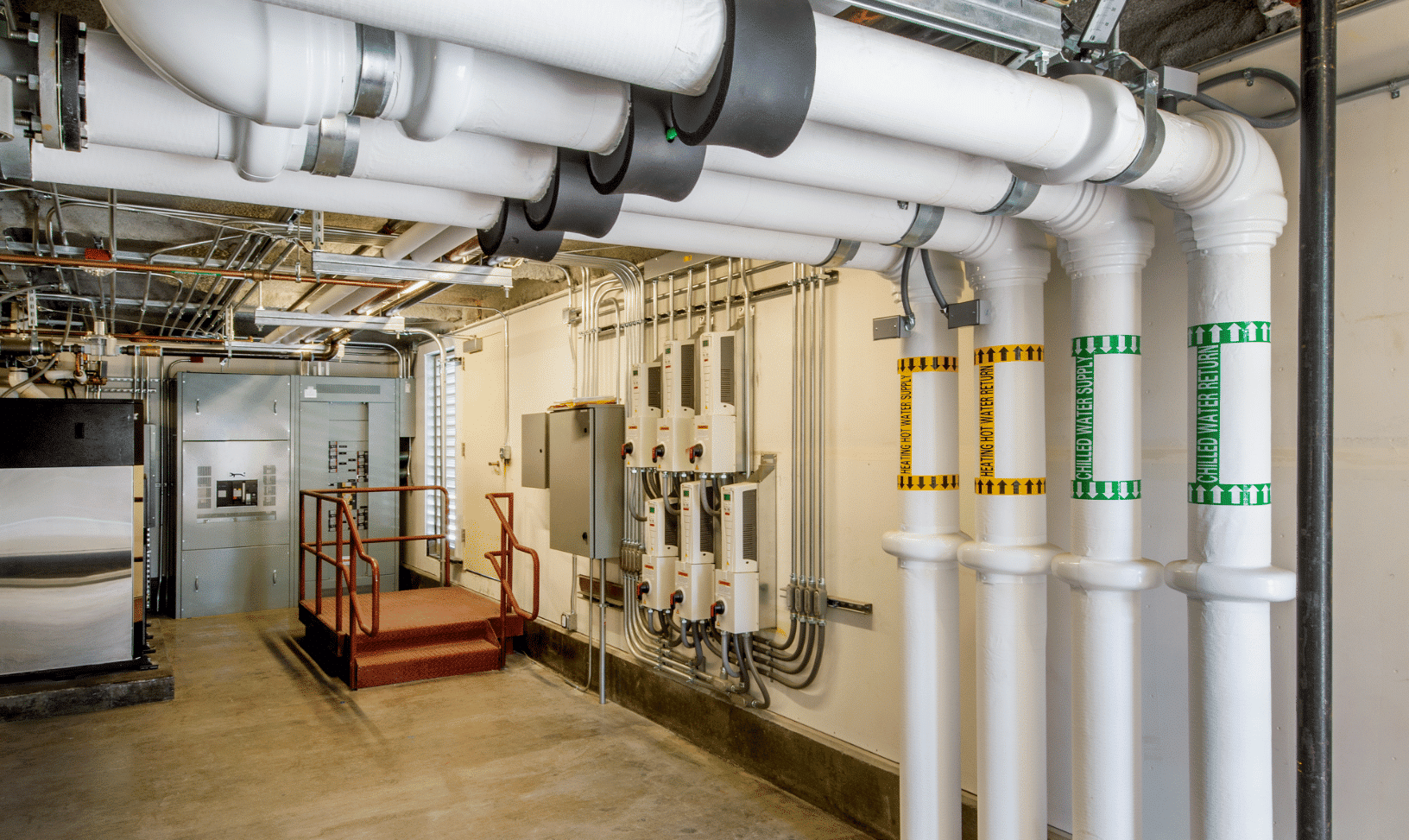
Closed loop systems play an important role in industrial cooling, heating, and HVAC operations. They circulate the same water or coolant through connected equipment to transfer heat while limiting water loss. However, a closed system still faces corrosion, scale formation, and biological contamination. These problems can gradually affect equipment performance and increase maintenance costs. Understanding how closed loop water treatment chemicals work helps facility teams protect their systems, maintain water quality, and support reliable operation over time.
Understanding Closed Loop Water Systems
A closed loop water system circulates water or a water-based fluid through pipes, pumps, heat exchangers, and other connected equipment. Unlike an open cooling tower, which continuously loses water through evaporation and requires regular makeup water, a closed loop generally reuses its circulating fluid. Common applications include chilled water systems, hot water heating systems, industrial process cooling, and HVAC systems.
Although these systems limit outside exposure, they are not completely protected from water quality problems. Oxygen can enter through leaks, improperly sealed connections, or frequent makeup water additions. Dissolved minerals, suspended solids, and contaminants can also enter during installation or maintenance. Over time, these conditions encourage corrosion, scale formation, and deposits that restrict flow and reduce heat transfer. You can learn more about their operation in our guide to closed loop water systems.
Common Types of Closed Loop Water Treatment Chemicals
Corrosion inhibitors are among the most important chemicals in a closed loop treatment program. They protect metal surfaces by forming a protective barrier that limits contact between the metal, water, and dissolved oxygen. Common formulations include nitrite, molybdate, phosphates, and organophosphonates. Nitrite-based corrosion inhibitors remain widely used because they help protect ferrous metals. However, facilities must maintain the correct concentration to achieve reliable corrosion protection. Tolyltriazole also plays an important role in protecting yellow metals, including copper and brass.
Scale inhibitors help control mineral deposits that can accumulate on internal surfaces. Calcium and magnesium are common contributors to scale formation, particularly when makeup water introduces additional dissolved minerals. Phosphonates, polyacrylates, phosphates, and silicates are among the compounds used in scale control formulations. Although scaling generally presents less risk in a properly maintained closed loop than in an open cooling tower, leaks and repeated makeup water additions can change that condition. Scale inhibitors help limit mineral buildup and protect heat exchangers from reduced heat transfer efficiency.
Other chemicals address specific water quality and operating concerns. Oxygen scavengers, including sodium sulfite and sodium erythorbate, react with dissolved oxygen to help reduce corrosion risk. Nitrite also contributes to oxygen-related corrosion control in certain inhibitor formulations. Meanwhile, pH stabilizers such as borates and sodium hydroxide help maintain conditions that support inhibitor performance. Some systems also require glycol for freeze protection, cleaning agents to remove existing contaminants, or compatible non-oxidizing biocides to control microbial growth. The right combination depends on system materials, fluid composition, and operating conditions.
How Treatment Chemicals Protect System Components
Corrosion can damage pipes, pumps, tanks, and heat exchangers from the inside. As metal surfaces react with water and oxygen, rust and other corrosion products develop. These materials can circulate throughout the system, settle in low-flow areas, and accumulate around equipment components. Eventually, corrosion can cause leaks, restrict water flow, and reduce heat transfer. Corrosion inhibitors help prevent these conditions by establishing protective films on internal metal surfaces. Passivation chemicals can also help develop a protective layer, particularly after installation, cleaning, or system restoration.
Scale and biological deposits create additional challenges. Mineral buildup acts as an insulating layer on heat transfer surfaces, forcing equipment to work harder to maintain the required temperatures. Meanwhile, bacteria can form biofilms that trap deposits and contribute to microbiologically influenced corrosion, even when the system contains corrosion inhibitors. Appropriate filtration, chemical treatment, and periodic inspections help control these risks. Keep in mind that oxidizing and non-oxidizing biocides serve different purposes, and operators should select products based on system design, microbial conditions, and chemical compatibility.
Selecting the Right Chemical Treatment Program
Start with the materials and operating requirements of your system. Steel, copper, brass, and other metals may respond differently to treatment chemicals. For example, a formulation designed primarily for ferrous metals may not provide sufficient protection for yellow metals without an additional inhibitor. You should also consider the type of circulating fluid, system temperature, makeup water quality, and existing corrosion or scaling problems. Glycol-based systems require particular attention because glycol concentration, fluid degradation, and inhibitor compatibility can affect overall treatment performance.
Next, establish a chemical program that addresses the system’s actual water quality conditions. Avoid selecting products based on price or a standard dosing recommendation alone. A proper chemical treatment program should account for inhibitor concentration, pH, conductivity, dissolved solids, and potential microbial activity. It should also include an appropriate initial cleaning and passivation procedure when necessary. Add corrosion inhibitors immediately after system flushing and preparation, following the product manufacturer’s recommendations. This helps establish corrosion protection before untreated water can cause additional damage.
Testing and Maintaining Water Quality
Chemical treatment only works as intended when operators monitor its effectiveness. Regular testing helps identify changes before they develop into serious equipment problems. At a minimum, include pH, inhibitor concentration, conductivity, and relevant microbiological indicators in your testing schedule. Nitrite-based programs, for example, require regular nitrite measurements to confirm that the system maintains the recommended residual. Operators should also monitor glycol concentration when the system uses antifreeze protection.
Pay attention to trends rather than relying on individual test results. A sudden drop in nitrite concentration may indicate dilution, chemical consumption, or contamination. Rising conductivity can suggest repeated makeup water additions or an increase in dissolved contaminants. Changes in pH may also affect inhibitor performance and metal stability. Although a pH range of 7.0 to 8.5 can serve as a general reference for some programs, the correct operating range depends on the treatment formulation and system materials. Always follow the chemical supplier’s recommendations.
Testing should go hand in hand with physical inspections and routine maintenance. Check pumps, expansion tanks, strainers, and accessible pipe connections for leaks, rust, sludge, and unusual deposits. Review makeup water records and investigate unexplained fluid losses. If you find recurring contamination or inconsistent chemical readings, evaluate the cause instead of simply increasing the chemical dose. A consistent monitoring schedule helps operators maintain water quality, verify treatment effectiveness, and identify developing problems early.
Common Problems and How to Prevent Them
Corrosion and scale formation often develop gradually, so operators may not notice the early warning signs. Rust-colored water, recurring leaks, clogged strainers, and unexplained temperature changes can indicate underlying problems. Sludge and suspended solids may also accumulate in areas with poor circulation, affecting pump performance and restricting flow. These conditions deserve attention, particularly when heat exchangers struggle to maintain their normal operating temperatures.
Microbial contamination requires a separate level of attention. Bacteria can develop biofilms on internal surfaces, contributing to fouling and microbiologically influenced corrosion. Some closed loop systems benefit from periodic non-oxidizing biocide applications, especially when testing identifies biological activity. However, biocide selection and dosing must account for the existing inhibitor program and system materials. Operators should also remember that closed loop treatment does not replace appropriate cooling tower water treatment or a separate Legionella water management program when an associated facility has open cooling equipment.
Supporting Long-Term System Performance
A reliable treatment program requires more than adding chemicals at scheduled intervals. Review water quality results, chemical consumption, maintenance records, and equipment conditions together. Establish clear testing frequencies, document every chemical addition, and investigate recurring changes in pH, conductivity, and inhibitor residuals. If the system undergoes repairs, flushing, or major fluid replacement, reassess the treatment requirements before returning it to normal operation.
Maintaining Reliable Closed Loop Water Systems
Protecting a closed loop system starts with understanding its water chemistry and selecting compatible treatment chemicals. Corrosion inhibitors, scale control products, oxygen scavengers, pH stabilizers, and biocides each address different operating concerns. However, their effectiveness depends on correct application, consistent testing, and regular maintenance. Review your system materials, evaluate makeup water quality, establish appropriate chemical concentrations, and track important water quality parameters.
If your facility needs help developing or improving its treatment strategy, contact ProChem Inc. to discuss a chemical program that supports equipment protection, dependable heat transfer, and long-term system performance.
