
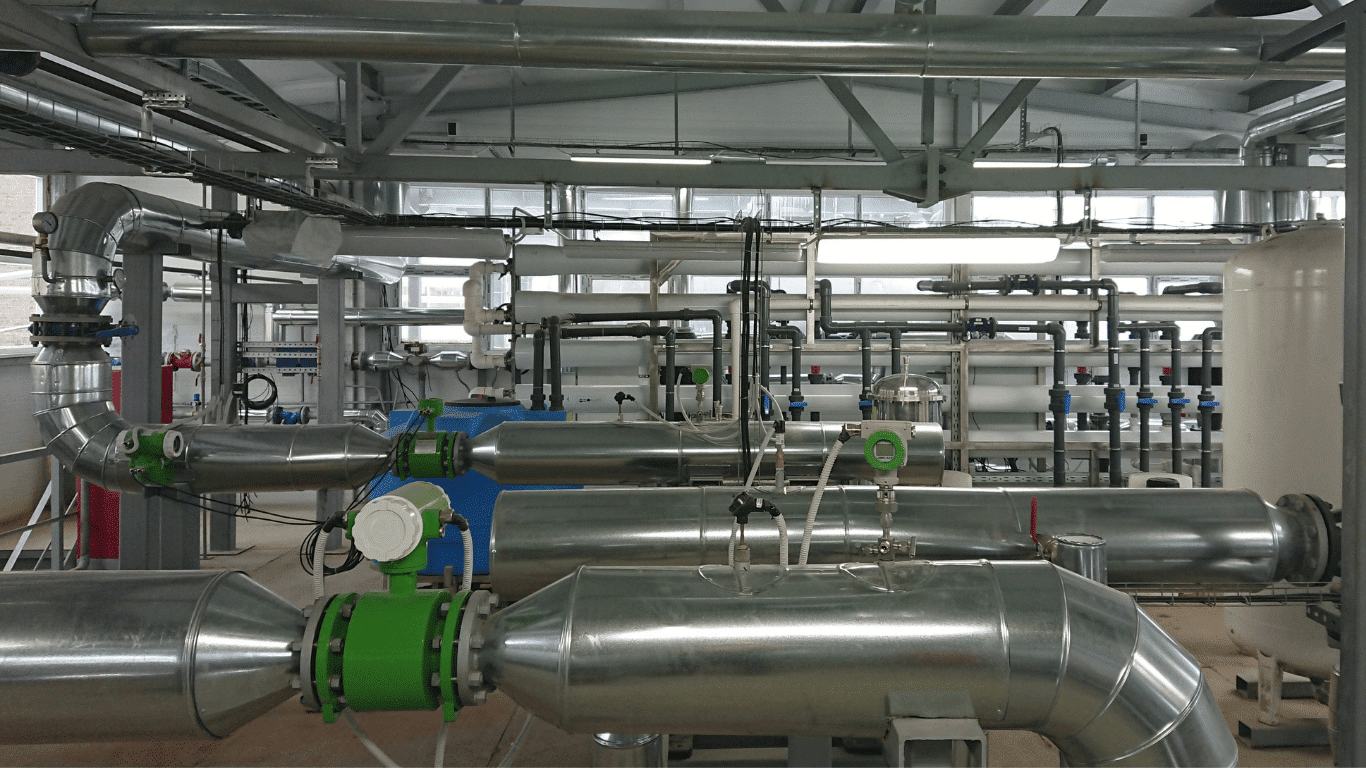
Membrane filtration water treatment has become a core part of modern industrial water management, especially as facilities deal with tighter discharge limits and higher efficiency demands. In many industries today, water treatment systems are expected to do more than just remove basic impurities; they need to consistently handle changing water quality while maintaining stable system performance. As operations scale, even small shifts in contaminants or suspended solids can affect the overall process, making reliable treatment essential for long-term efficiency.
Membrane filtration water treatment relies on membranes acting as selective barriers that separate unwanted contaminants from water using pressure-driven processes. These membranes allow water to pass through while restricting particles, microorganisms, and other impurities based on size and characteristics. The combination of osmosis principles and engineered systems helps maintain consistent output quality across a broad range of industrial applications. In practice, this process supports more controlled and efficient water treatment systems that industries can depend on.
Fundamentals of Membrane Filtration
A membrane works as a physical barrier that controls what passes through a water stream. These membranes are engineered with extremely small pores, designed to allow water molecules to pass while blocking unwanted materials. In membrane filtration water treatment, this selective separation is what makes the process so effective for industrial applications where consistency matters.
During the membrane filtration process, water flows across the membrane surface while particles, suspended solids, and even microscopic organisms are retained on one side. This separation helps reduce contaminants that would otherwise affect system performance. In many water treatment applications, this step is critical in maintaining stable filtration output and protecting downstream equipment from buildup and damage.
The process relies heavily on controlled pressure to drive liquid through the membrane. As pressure increases, water is pushed through the membrane while impurities are left behind. This pressure-driven flow makes membrane systems highly efficient for separating fine particles and dissolved materials that conventional filtration cannot easily remove.
Membrane Types and Technologies
Different membrane types are used in membrane filtration water treatment, and each one is designed to handle specific levels of separation. Ultrafiltration membrane systems are commonly used to remove fine particles, bacteria, and larger organic molecules. Moving further along the separation scale, nanofiltration and reverse osmosis systems are used when tighter control is needed, especially for dissolved salts and smaller contaminants. These membrane filtration technologies give engineers flexibility depending on water quality goals.
In many industrial systems, membrane design also plays a major role in performance. Spiral wound membranes are widely used because they offer a compact structure with high surface area, making them efficient for continuous flow applications. On the other hand, tubular membranes are often selected for streams with higher suspended solids because they are easier to clean and maintain under demanding conditions.
All of these membranes are built around the concept of semi permeable membranes, which allow selective passage of water while blocking unwanted substances. This principle is what makes modern membrane filtration water treatment so effective across a broad range of industrial applications.
Filtration Processes in Action
In membrane filtration water treatment, cross flow filtration plays a key role in keeping systems stable during operation. Here, the flow moves tangentially across the membrane surface instead of directly through it, which helps reduce buildup. This process allows continuous separation of particles while maintaining consistent pressure across the membrane. In many systems, this design improves overall filtration performance by limiting immediate blockage and supporting steady operation.
On the other hand, dead end filtration forces all the feed water directly through the membrane. While this approach can be efficient in simpler setups, it often leads to faster accumulation of particles and suspended solids on the surface. Over time, this increases fouling, raises pressure, and reduces system stability. Operators often need to monitor this process closely to avoid performance drops in demanding water treatment applications.
Both cross flow filtration and dead end filtration are used depending on system design and water quality needs. The key difference comes down to how flow is managed and how quickly fouling develops. In well-optimized systems, balancing pressure, flow rate, and filtration method is what keeps membrane filtration water treatment running efficiently and reliably.
RO, Nano & Advanced Separation
Advanced membrane filtration water treatment often relies on reverse osmosis membranes to achieve high-level separation of dissolved substances. These ro membranes use pressure to overcome natural osmosis, forcing water through a dense semi-permeable layer while rejecting dissolved salts, divalent ions, and a wide range of contaminants. This makes reverse osmosis one of the most effective methods in modern water treatment when high purity is required.
In applications like seawater desalination, reverse osmosis systems play a critical role in converting saline water into usable supply. Along with nanofiltration, these technologies improve overall water quality by targeting even trace-level impurities and emerging contaminants. The purification process is not only about removing visible particles, but also controlling microscopic compounds that affect long-term system performance. As industries tighten standards, membrane-based separation continues to set the benchmark for reliable water treatment outcomes.
Fouling, Efficiency & System Performance
In membrane filtration water treatment, fouling is one of the most common challenges that affects long-term performance. As bacteria, organisms, and organic materials like proteins accumulate on the membrane surface, they restrict flow and increase pressure drop across the system. This directly reduces efficiency and can disrupt the overall filtration process if not addressed early. In many systems, even small buildup can escalate quickly under continuous operation.
That’s why consistent monitoring and maintenance are essential in any treatment setup. Operators need to watch pressure trends, clean membranes on schedule, and ensure the process stays stable under varying load conditions. When managed properly, membrane systems can maintain reliable performance and extend operational life without major disruptions.
Industrial Applications & Water Reuse
Membrane filtration water treatment is widely used across industrial applications where consistent water quality directly supports production efficiency. From power generation to food processing and chemical manufacturing, industries rely on membrane-based systems to manage fluctuating water conditions and control contaminants that can interfere with operations. The ability to fine-tune filtration makes these technologies suitable for a broad range of industrial demands.
In wastewater treatment, membrane systems help transform complex effluent streams into usable water, while similar approaches are used in drinking water production where strict quality standards must be met. These process configurations improve stability, reduce discharge issues, and support more sustainable water management across facilities. As demand grows, more systems are being designed to handle higher recovery rates without compromising performance.
Water reuse strategies continue to expand, especially with advanced recovery concepts like direct potable reuse. In many facilities, engineers integrate solutions similar to those found in modern membrane filtration systems to ensure reliable separation and consistent output quality.
ProChem Systems & Support
In membrane filtration water treatment, performance depends heavily on how well systems are designed and integrated. At ProChem, we work closely with facilities to engineer membrane systems that match real operating conditions, not just theoretical targets. That means looking at flow balance, pressure control, and how each process interacts with upstream and downstream components. When everything is aligned, membranes operate more consistently and deliver stronger long-term efficiency across the entire water treatment setup.
We also focus on practical solutions that extend beyond equipment. Chemical programs, cleaning strategies, and monitoring support all play a role in protecting membranes from fouling and performance loss. This integrated approach helps stabilize system efficiency and reduces unplanned downtime. You can explore how these strategies come together in our system solutions and features overview.
For facilities that need tailored support, our custom water treatment solutions are designed to fit specific operating challenges and improve overall process reliability. When systems, chemistry, and operation are aligned, membrane performance becomes far more predictable and efficient.
Next Steps
Membrane filtration water treatment has become a core part of how modern industries manage water quality, improve efficiency, and maintain stable operations. When systems are properly designed and operated, they consistently reduce contaminants while supporting reliable filtration across demanding environments. The real advantage comes from control; you are not just treating water, you are actively stabilizing the entire process so it performs predictably under changing conditions.
As water regulations tighten and sustainability targets become more important, facilities can’t treat membrane performance as an afterthought. Strong water treatment strategies need proactive monitoring, proper system design, and consistent optimization to prevent inefficiencies before they grow. When membrane systems are managed correctly, they support long-term reliability and reduced operational risk.
Planning upgrades or reviewing your current setup? The right guidance can make a measurable difference in performance. Our team can help you assess your membrane filtration water treatment strategy, identify gaps in your systems, and improve overall process efficiency. Talk to ProChem today to build a more efficient and reliable water treatment system designed for your industry’s needs.
